
Kaylie Pferten says that if Donald Trump bans diesel exports, Britain will suffer for two decades of deindustrialisation.
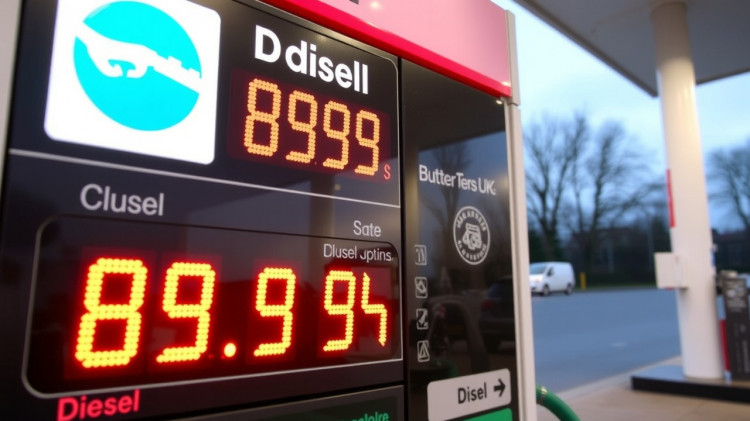
On Monday, the UK's average diesel price moved past 2 per litre, and further increases are expected. Since the Iran war began, diesel has risen 54%, leaving drivers with diesel cars to absorb the shortage's full cost. Haulage firms face the same pressure, since their vehicles depend on the fuel.
Why? Much of the traffic through the Strait of Hormuz has stopped, tightening oil supplies. The conflict has also damaged refining capacity across the Persian Gulf, and shipments of refined products have dropped by as much as half in recent months.
Ukrainian drone strikes far inside Russia have damaged much of its oil capacity. Their main aims were to disrupt supplies for the Russian army and cause the greatest possible economic harm, but the attacks have also tightened global diesel supplies. Western sanctions may officially bar Russian oil, yet large quantities were still reaching international markets.
Supplies were already tight, and the situation could deteriorate sharply. As US prices climb, Republican members of Congress are pressing Donald Trump to halt diesel exports for 90 days. Keeping American consumers supplied is a reasonable political priority, but such a move could trigger a worldwide diesel crisis.
Britain would face a grim winter. Diesel reserves are estimated to cover just 42 days of emergency demand - the smallest cushion among major developed countries. A third of the diesel we use comes from the US, yet it is hard to see how much more we could obtain on the open market. European neighbours hold only marginally larger stocks, so they are unlikely to have much spare to share.
Britain may run out of diesel
Britain could simply exhaust its diesel supplies. Prices would shoot up, forcing the government to consider an extremely costly subsidy program and perhaps rationing. Emergency services would need fuel first, along with the industrial operations considered most important.
The deeper problem is what the diesel crisis will reveal about Britain's weakened industrial capacity. In 1995, the country still exported more diesel than it imported. British oil wells fed domestic refineries, which supplied Europe and markets beyond it.
That position has disappeared. Only four refineries remain, after five closed during the past 15 years, leaving imports to fill the gap. The North Sea oil industry has also been steadily scaled back: licences for new drilling have been refused, while environmental activists have kept developers tied up in repeated legal disputes. Windfall taxes make the industry even harder to run profitably.
That still matters. North Sea production alone cannot move the global oil price, but during an emergency, a country with domestic oil and refineries can keep its own fuel supply going. It can restrict exports and prioritize the home market. A country that imports both crude oil and refined fuel has no such option.
For the past 20 years, Britain has steadily lost its industrial base. Punitive taxes, an overriding focus on net-zero targets and some of the world's most restrictive planning laws have made manufacturing here exceptionally difficult. The decline shows up across the economy: cement production has fallen to levels last seen in the 1950s, car production has dropped back to where it stood in the early 1960s, and much of the petrochemicals industry has shut down. Domestic production keeps giving way to imports because operating in the UK costs too much.
If winter brings serious shortages - or even rationing - we will see the cost of spending 20 years allowing basic industrial capacity to decline. Once a country can no longer produce what it needs, any crisis abroad can leave it dangerously exposed. The bill will be steep.






Leave a comment on: ‘The diesel crisis will reveal how weak Britain has become'