

According to the British Chambers of Commerce, removing the triple lock could save the Treasury £33 billion over a two-year period
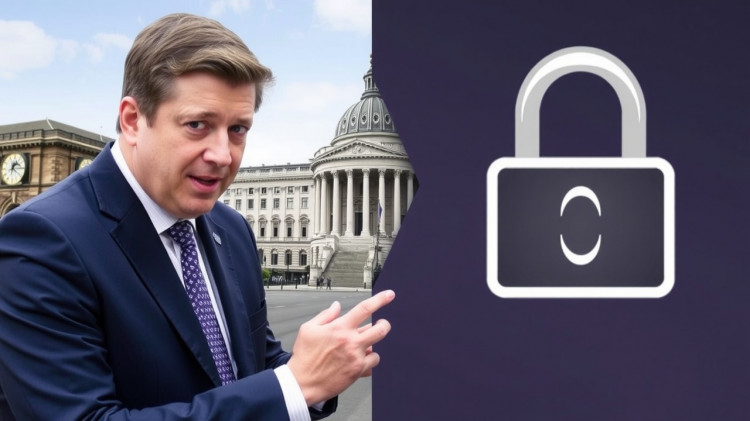
Removing the triple lock pensions system could save the Treasury £3.3 billion, but Andy Burnham's government will still need to find ways to reduce spending as costs continue to rise.
According to the triple lock pension plan, state pension payments will rise annually in proportion to either wage growth, inflation, or 2.5 percent, whichever is higher.
The Lib-Dem coalition government first implemented the system in 2010, and subsequent administrations have pledged to maintain it.
However, after sixteen years, it is still regarded as one of the most costly policies in use, depleting public coffers.
Instead, the mechanism should increase annually in accordance with the Consumer Prices Index (CPI) inflation, according to the British Chambers of Commerce (BCC), which represents over 50,000 businesses in the UK.
In order to finance a reduction in employer National Insurance contributions (NICs) for companies hiring younger employees, the BCC is requesting that the chancellor address it in the Autumn Budget.
Why is the triple lock something that the government should abolish?
According to the BCC, the Treasury would receive £3.3 billion over the course of two years if the triple lock was removed and the state pension was raised in accordance with the CPI.
Alternatively, the current zero rate of employer NICs could be extended to employees between the ages of 21 and 24. Businesses hiring entry-level employees would save money as a result, and more young people might find employment.
According to calculations made by the retirement company Standard Life, people receiving a full new state pension would be 120 less wealthy annually in April 2026 if the pension had increased in line with inflation rather than wages.
John Healey talked about the NEET crisisyoung people who are not in school, work, or trainingin his first speech as chancellor.
He recognized that businesses and the government had a moral obligation to help young people find employment, given that over a million young people were classified as NEETS.
However, Healey merely stated that he agreed that youth unemployment was a problem when asked if he would consider an alternative to the triple lock.
"We will lay out our plans based on the findings and suggestions made by Alan Milburn," he declared.
Regarding changing the triple lock, he said nothing.
According to a snapshot survey, 74% of BFIA readers thought the triple lock was essential for retirees, while 22% thought it was costly and unfair.
The BCC also suggested lowering business rates and energy costs while boosting assistance for companies looking to export internationally in its submission to the Treasury.
"Pro-growth choices have never been more important," stated Shevaun Haviland, director general of the BCC. The chancellor's first budget must be used to reduce operating expenses so that everyone can profit economically.
"Increasing taxes on businesses would be disastrous. The fastest method of undermining business trust."
Triple lock when under duress.
Due to its rising cost, the triple lock has been questioned in recent years by a number of think tanks, including the BCC.
Due in part to an aging population and the expense of the triple lock, the Office for Budget Responsibility (OBR) predicts that the state pension will cost 9 percent of GDP by 2075/76, up from 5 percent currently.
However, because the mechanism is so well-liked by voters, particularly older voters, policymakers are reluctant to alter it despite the skyrocketing costs.
Steve Webb, the former pension minister who was in office when the triple lock system was implemented, vehemently defended it on the most recent BFIA Talks podcast, claiming it served a purpose.
"The issue with that is that if you make money and then stop making money, the thing you fall back on must be related to a percentage of what you were making. Otherwise, your standard of living collapses and you simply fall off a cliff," Webb stated.
Therefore, for 30 years, before the triple lock, the state pension must be based on a percentage of people's earnings."
The entire interview is available for viewing or listening on any podcast platform.






Leave a comment on: Businesses advise Burnham to abandon the triple lock