
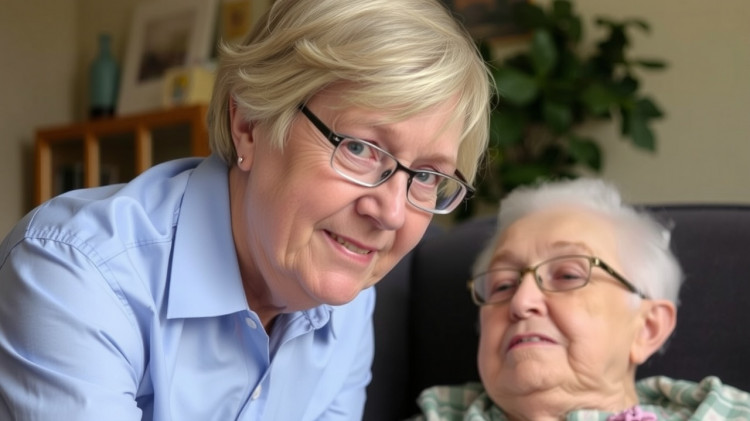
Finding the best way to care for Britain's aging population has proven to be a recurring political and economic challenge
What state is adult social care in right now?
The adult social care system in England was aptly described as "unfair, confusing, demeaning and frightening" by a parliamentary committee a few years ago.
The "care lottery," which involves a convoluted patchwork of funding regulations, means testing, local authority decisions, and private providers with families picking up the slack, is a major issue.
Even moderately wealthy people may be forced to sell their homes in order to pay for residential care costs, which can easily exceed £100,000or even multiples of that for the most unfortunatewhile a patient with dementia must pay for long-term care costs themselves if they have assets worth more than £23,250. In contrast, a patient with cancer receives free state-funded treatment on the NHS.
Watch the entire video here: It has proven impossible to address that injustice in a way that is acceptable to taxpayers, those in need of care, and those keen to safeguard hard-earned assets.
How about the standard of adult social services?
According to the Financial Times, a "fragile and fragmented market of providers" resulting in even lower pay levels, difficulties in hiring and retaining staff, and significant disparities in quality has been caused by the financial strain on local authorities, which provide social care.
Only 42% of requests for assistance can currently be fulfilled due to the aging population and rising demand. It's not just about age, though; working-age adults, whose care needs can last much longer, receive half of council care budgets.
Over 30,000 people died last year while awaiting the provision of a social care package, such as residential care, and two million people have unmet care needs due to their inability to pay for assistance.
Unpaid family caregivers bear significant personal costs under this dysfunctional system, and nearly one in ten hospital beds are delayed discharges due to social care gaps, which increases expenses and strain on the NHS.
What has been revealed by Andy Burnham?
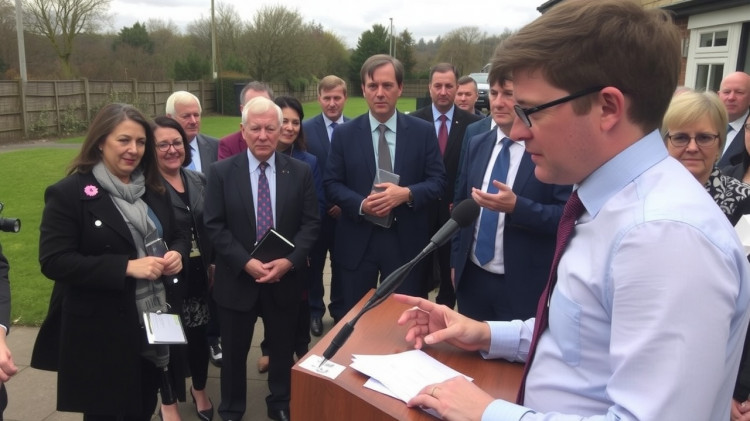
Andy Burnham has reaffirmed Labour's commitment to establish a National Care Service in order to reform and reconstruct adult social care in England.
However, as of right now, neither a clear picture of what that service will look like nor a set plan on how to achieve it exist.
In order to gain support for whatever funding model is ultimately suggested, Burnham has also started cross-party discussions and initiated a "big conversation" with the public last month.
Additionally, he has requested that cross-bench peer Louise Casey postpone the completion of her Independent Commission, which was started under Starmer, until the summer of 2027.
We have been here before, right?
Many times. Even Andy Burnham has been here before, which is concerning. Burnham proposed a national-care plan in 2009 while serving as health secretary to revitalize and finance social care in England.
The funding model was quickly dubbed a "death tax" by the Conservatives, a term that persisted. However, Labor entered the 2010 election with a policy that sounded very familiar: the establishment of a National Care Service that would be implemented gradually.
Theresa May's attempt at the 2017 election backfired spectacularly with voters, and a number of white papers were promised under the Conservatives but were never implemented by subsequent prime ministers.
Although she had suggested a rather promising state-sponsored equity-release scheme that protected assets up to £100,000, Labor accused her of preparing a "dementia tax."
What are the options for funding?
The term "National Care Service" alludes to a universal, NHS-style service that is paid for by general taxes and is free at the point of use. However, the UK's precarious fiscal position, demographics, and slow-growing economy make such a scenario extremely unlikely. The Health Foundation estimates the costs at 18.5 billion annually.
More funding will be required, either through a hypothecated tax or mandatory social insurance that pools risks and caps liabilitiesa model that has proven successful in Germany and Japan. In order to finance a national Later Life Care Fund, civil servants have developed a model in which workers over 34 pay an additional 1.8 percent income tax (above a threshold of 6,240).
Burnham has also proposed eliminating inheritance tax and imposing a 10 percent tax on all estates, not just the biggest 5 percent or so. Such a system would be easy to implement and could generate significant sums of money, but it would be difficult to sell politically and vulnerable to the "death tax" charge.
What is the answer, then?
According to Eamonn Butler on CapX, Britain cannot afford a "blank cheque" National Care Service that pours funds into a "taxpayer money hole." However, it requires a "targeted safety net against genuine catastrophe" immediately.
According to the FT, the first step of any resolution will undoubtedly be based on the 2011 Dilnot report: raise the assets threshold for making individuals pay and impose a lifetime cap on their contribution to care costs. The threat of crippling costs that would overwhelm everyone but the extremely wealthy would be eliminated with such a cap. Additionally, it would "create an insurable risk against which consumers could obtain private insurance, avoiding the need to sell their homes during their lifetime."
According to Bloomberg, the second pillar should be to "make more private provision workable"for instance, by enforcing stricter regulations that promote comparability and transparency and guaranty that no one is penalized for insuring themselves. "If properly regulated, new financial instruments like annuities linked to home equity and auto-enrollment pensions with a social-care component could play a part."
There "will be fights over thresholds, taxes and who gets what" when it comes to funding. That's fine. For decades, governments have chosen to pretend that the bill vanishes if no one opens it, which Burnham cannot afford."




Leave a comment on: Can the funding crisis for adult social care in Britain be resolved by Andy Burnham?