
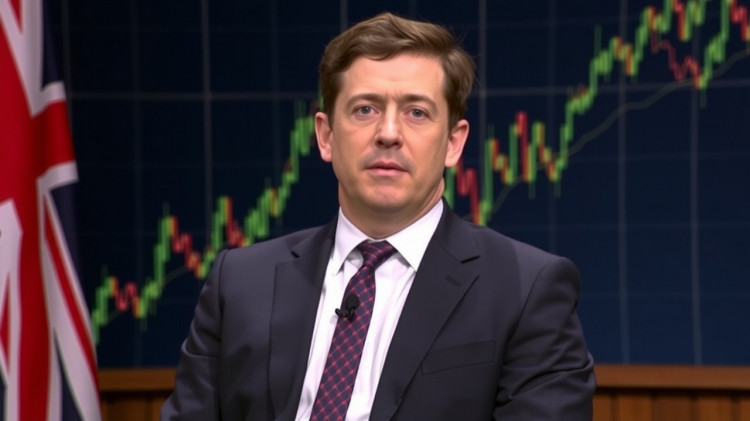
According to Helen Thomas, Andy Burnham's biggest adversaries are not in the House of Commons but rather in the bond market
Bond markets often serve as a reminder to governments that they, not politicians, decide how much the state can borrow. Ten-year gilt yields are still at levels not seen since the fallout from the Truss-Kwarteng mini-Budget, despite Andy Burnham's statement to the New Statesman last September that we need to "get beyond this thing of being in hock to the bond market."
Without a doubt, Andy Burnham's friendly demeanor and astute TikTok strategy are a welcome change from the rigidity of his predecessor. However, investors are focused on profits, whereas politicians deal in popularity.
The stock market does not always reflect a prime minister's rising stock. In fact, over the past ten years, every resident of Downing Street has had their plans derailed by outside shocks. And both parties, Conservative and Labor, have aimed for essentially the same economic strategy: increased borrowing, increased spending, a bigger government, and eventually higher taxes. Burnham might be the first prime minister to find out if that playbook has finally reached its limits given the already high level of public debt and the increasingly limited fiscal space.
The June public-sector finance data was slightly better than anticipated, with borrowing 300 million less than what the Office for Budget Responsibility (OBR) had predicted. As energy prices decreased due to the ceasefire in the Iranian conflict, the cost of inflation-linked debt interest decreased. It served as a timely reminder that the most crucial factors in government fiscal projections are beyond their control. Burnham's fiscal headroom will be constrained as hostilities resume and inflation is unlikely to continue to behave so well.
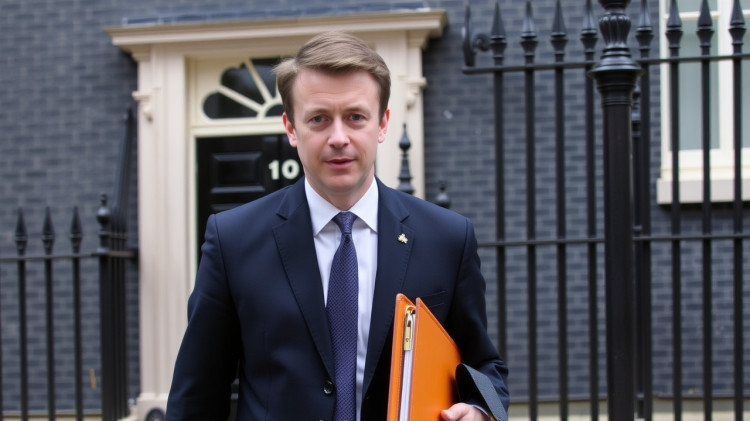
When the new prime minister arrived at Downing Street, one official allegedly said, "You may not be interested in foreign policy, but it's interested in you." An indebted government may be forced to make unpopular decisions due to events abroad. According to the National Institute of Economic and Social Research (NIESR), the majority of the government's 24 billion dollars in fiscal headroom has been depleted due to rising energy costs and slower growth.
The Treasury is put under a double squeeze by rising debt-interest costs and decreased departmental budgetary capacity. "Commitments must be funded thru taxation or savings elsewhere, not thru further borrowing," states David Aikman, director of the NIESR. That is the bare minimum required to keep the debt level at its current level.
Burnham versus the bond market.
Burnham may wish to move on from bond markets, but he will be doomed to repeat the vicious cycle of rising debt, rising deficits, and stagnant growth unless he can break it. Rachel Reeves planted the seeds of her own downfall in her first act as chancellor by attempting to raise public-sector wages by eliminating the winter fuel allowance. Raising the minimum wage and taxing jobs thru increased national insurance made employment more expensive, which hindered growth. Because Labor had promised in their manifesto not to raise the three main taxes, she then put together a smorgasbord of wealth taxes. Reeves decreased gilt issuance, but it is still at a historically high level. In comparison to 2022-2023, the Debt Management Office intends to issue about 50% more gilts this year. Burnham inherits the same financial limitations, but he has less political and financial leeway because Labor is currently polling about ten points below the level that produced its 2024 landslide.
If he makes an attempt at revolutionary change, there is a deeper issue. Like all previous unelected prime ministers, he was not even involved in Labour's 2024 election victory, and he will be criticized for lacking the authority to make tough choices. He has emphasized time and time again that Britain is a parliamentary democracy in which parties elect their own leaders. Twelve of the 19 prime ministers who have held office since 1945 entered Downing Street in between general elections, so this is not unusual. However, that has never made governing simple. At the next election, only four went on to secure a majority.
Burnham may only need 25 percent plus one vote to secure a majority in an electorate that is divided at least four ways. However, erratic voters are unpredictable."Thatcher tribute act" Nigel Farage, his favorite boogeyman, will be called upon in an attempt to bring the left together. If not, his programwhich includes a National Care Service, reindustrialization, stronger public control over utilities, and a cap on household billshas a decidedly left-wing flavor. In terms of politics, it's an effort to reassemble Labour's coalition. However, it is predicated on the idea that world events will continue to be largely benign.
However, the bond markets will push him to the right the more he speaks left. His priorities are costly, and there are fewer ways for him to afford them. The disappointing revenues produced by a tax burden that has reached its highest level in decades are already a living example of the Laffer Curve.
He cannot afford to lose credibility by violating the fiscal rules, gilt issuance is still high, and inflation is a constant threat. Even the best-laid plans can still be overtaken by "events, dear boy, events," as Harold Macmillan once said. The bond market may be Burnham's biggest rivals rather than members of the House of Commons.




Leave a comment on: Andy Burnham will be burned by the bond market