
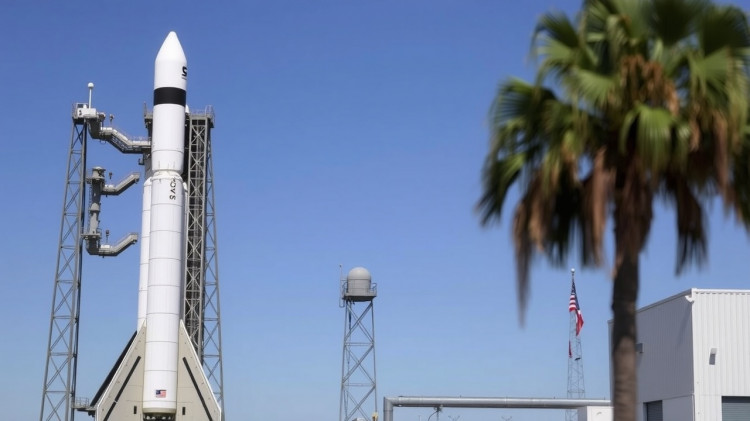
SpaceX's stock plummeted after its Q2 results, despite exceeding revenue targets, and there may be more selling this week
Track every market on TradingView SpaceX (NASDAQ:SPCX) released its first results as a publicly traded company on August 4 after breaking the record for the biggest initial public offering (IPO) in history back in June.
SpaceX's shares surged during its initial public offering (IPO), rising 19% on the first day and an additional 25% over the next two sessions.
However, by the time the market closed on August 4, before the earnings were announced, they had dropped to £125.33, which was 44% below their peak of £225.64 on June 16 and 7% below the IPO price of £135.
And this crash-landing was made worse by the response that followed the findings. Despite some impressive headline numbers, the stock opened more than 10% lower on August 5, the day following the results. Many investors appear to be alarmed by increased spending.
"Part of a SpaceX rocket crashing into the moon this morning is probably a good metaphor for the share price performance so far," stated Chris Beauchamp, chief market analyst at trading and investing platform IG. Watch the full video here.
With a 92% year-over-year increase to £7.8 billion, revenue was encouraging. This represented a healthy beat, at least theoretically, as the LSEG survey of analysts had produced a consensus estimate of £6.9 billion.
According to Matt Britzman, senior equity analyst at investment platform Hargreaves Lansdown, "beating consensus carries little real weight because it's so early in SpaceX's life as a public company." "Analysts are still attempting to determine the ideal business structure."
Investors seem to have concentrated on the drawbacks instead of these projections, such as growing expenses in every area, especially artificial intelligence, where spending increased by £1.6 billion.
Elon Musk pushed the company's goal of £1 trillion in annual revenue forward by one year, from 2031 to 2030, while overall losses decreased to £541 million from £1 billion.
Musk became a trillionaire after SpaceX's initial successful IPO, but his nominal wealth has since fallen below the threshold due to share price declines.
But when Musk and other seasoned investors attempt to realize this wealth, might there be issues?
How might SpaceX shares be affected by lock-up expiries?
The first of several lock-up periods for longstanding SpaceX shareholders ended on August 6.
According to investment research firm Morningstar, these lock-up expiries may trigger waves of sales.
Pre-existing shareholders (mostly company insiders, investment trusts, and other institutional investors who invested in the company when it was private) are prohibited from selling their shares during lock-up periods, which occur after an IPO.
Since these existing shareholders are theoretically highly motivated to realize some of the value or profits from their shareholdings when a company lists, this theoretically shields new investors from a sharp sell-off once the company goes public. A chance to stabilize the share price on the public market is provided by staggering the times at which they can sell.
Between August 6 and the IPO's one-year anniversary, SpaceX's lock-up periods expire in several installments.
It is anticipated that many long-standing shareholders will take advantage of each lock-up window expiration to bank profits.
A company's share price typically declines during this time due to an unexpected surge in sellers.
On August 6, 911 million SpaceX shares went on sale, surpassing the quantity sold during the initial public offering.
Although Musk has previously stated that he won't sell his shares even in June 2027, he won't be able to do so until then.
"SpaceX has the longest series of lock-up releases we've ever seen," senior strategist Matthew Kennedy of investment firm Renaissance Capital told Morningstar.
When the first expiry occurred, there was no unexpected surge in sales. On August 6th, SpaceX shares actually increased by more than 6%.
However, SpaceX's share price may continue to change in the upcoming weeks as more unlocks in August, September, and October get closer.
"A growing public float and upcoming Starship launches are likely to keep the shares volatile in the near term lock-up expiries," stated Britzman.





Leave a comment on: The share price of SpaceX plummets after the results