

Because of declining costs and growing private involvement, the space economy is growing
What are some ways to invest in space?
Our lives are becoming more and more impacted by space, which is getting closer. Additionally, investment opportunities are growing quickly, much like the universe.
According to space consulting firm Novaspace, the space economy will be worth £626 billion in 2025, of which £236 billion will come from the space market and £329 billion from space-enabled applications.
In contrast to the mid-to-late 20th century space races, which were largely fueled by government spending, this time is different. Currently, about 70% of the funding for space exploration comes from private companies, giving investors unprecedented access to the expanding space economy.
Current BFIA issues. What is the benefit of launching so many payloads into orbit, and why is all this money being spent on space?
Answers come in two varieties. Some space applications have an effect on the earthly economy, while others are connected to the effects of the expanding economy outside of the atmosphere.
Currently, space-enabled applications on Earth account for nearly all of space-related revenue. Consider GPS trackers or satellite-enabled internet connectivity. In essence, satellites are launched into space to provide data or functionality related to events occurring on Earth.
This is generating enormous value on its own, but the applications that are still in space may benefit the most.
The space economy's future.
Moon landings are once again the center of attention, as demonstrated by the most recent Artemis moon flight. NASA is open about the fact that returning astronauts to the moon's surface in the 2020s will provide the technology and experience needed to carry out the first human missions to Mars.
The lunar economy may be worth £127 billion by 2050, according to a January estimate from professional services firm PwC. Meanwhile, NASA projects that Moon to Mars initiatives could generate over £14 billion in total economic output and 69,000 jobs.
The Artemis mission took this picture of the moon with the earth in the background.
By 2050, the lunar economy is predicted to be worth £127 billion.
The potential of the various economic activities that can occur in space itself is only now beginning to be investigated. These include building research facilities that capitalize on zero-gravity and other special conditions in space, operating data centers in orbit, or mining asteroids for valuable resources.
According to Evelyn Chow, portfolio manager of the Neuberger Berman Next Generation Space Economy Fund, these kinds of activities are "technologically nascent," "so the ability to commercialize it is still some time away." For instance, even if the solar energy and semiconductor hardware used to build orbital data centers could tolerate the radiation levels they would encounter in space, the cost of launching them would still be unaffordable.
"Based on estimates that we've run, orbital data center power costs about 810 times more per megawatt than even gas turbine power today," Chow stated.
But things might change in the future.
According to Chow, "the initial Apollo missions in the 1950s and 60s cost about £400,000/kg to launch something into space."
Reusable rockets have been one of the major innovations. It should go without saying, but if you use a rocket twice instead of just once, the return on investment from building it is doubled (not to mention any additional expenses associated with reusing it).
Earth is orbiting the International Space Station.
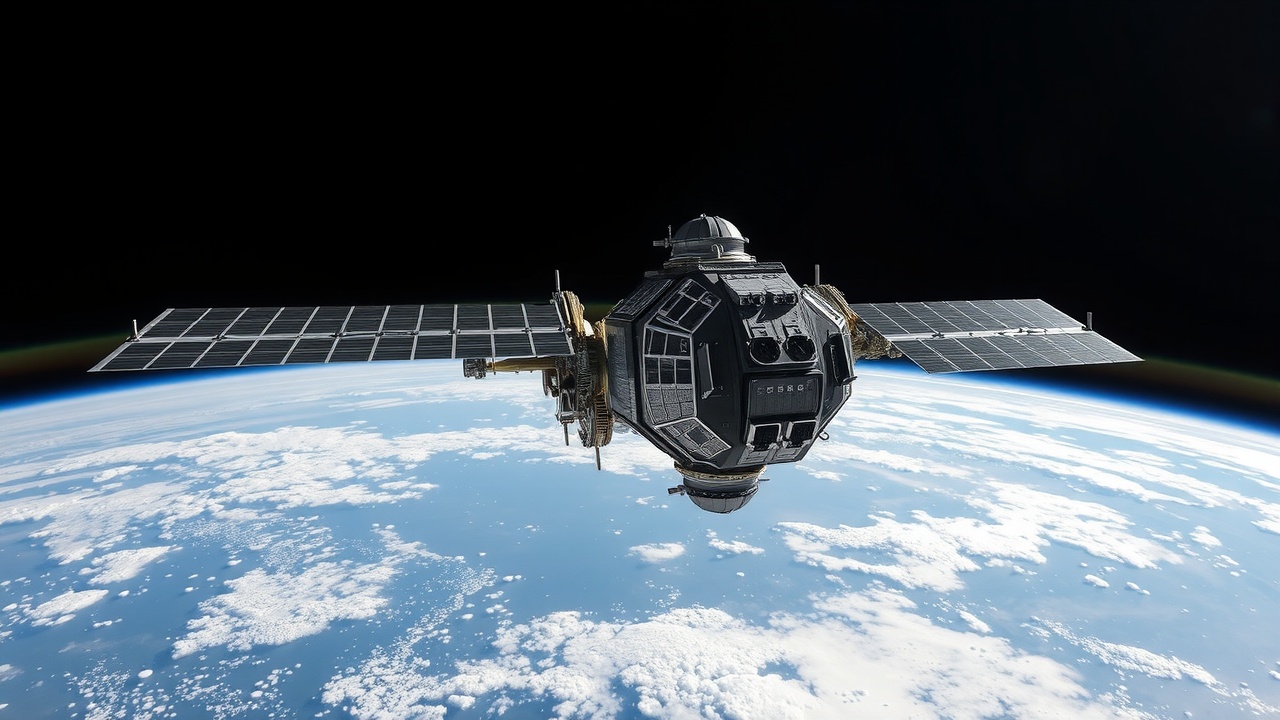
The International Space Station and tens of thousands of satellites are in orbit around the planet.
In the 17 years since 2008, launch costs have decreased from roughly £15,600/kg to less than £1,000/kg, according to research from ETF issuer ARK Invest.
Google's analysis indicates that by the mid-2030s, launch costs might drop to £200/kg. At this point, the energy costs of AI on Earth would be equal to those of operating data centers in space.
The cost of satellites has also significantly decreased. Smaller satellites are becoming more prevalent in our skies, and low-earth-orbit (LEO) satellites are typically smaller and less expensive to launch than other kinds. According to Chow, there are currently about 15,000 satellites in orbit, and some experts believe that number could rise to about 100,000 by 2030. This is driving an increase in the total number of satellites that can be launched.
SpaceX: initial public offering and beyond.
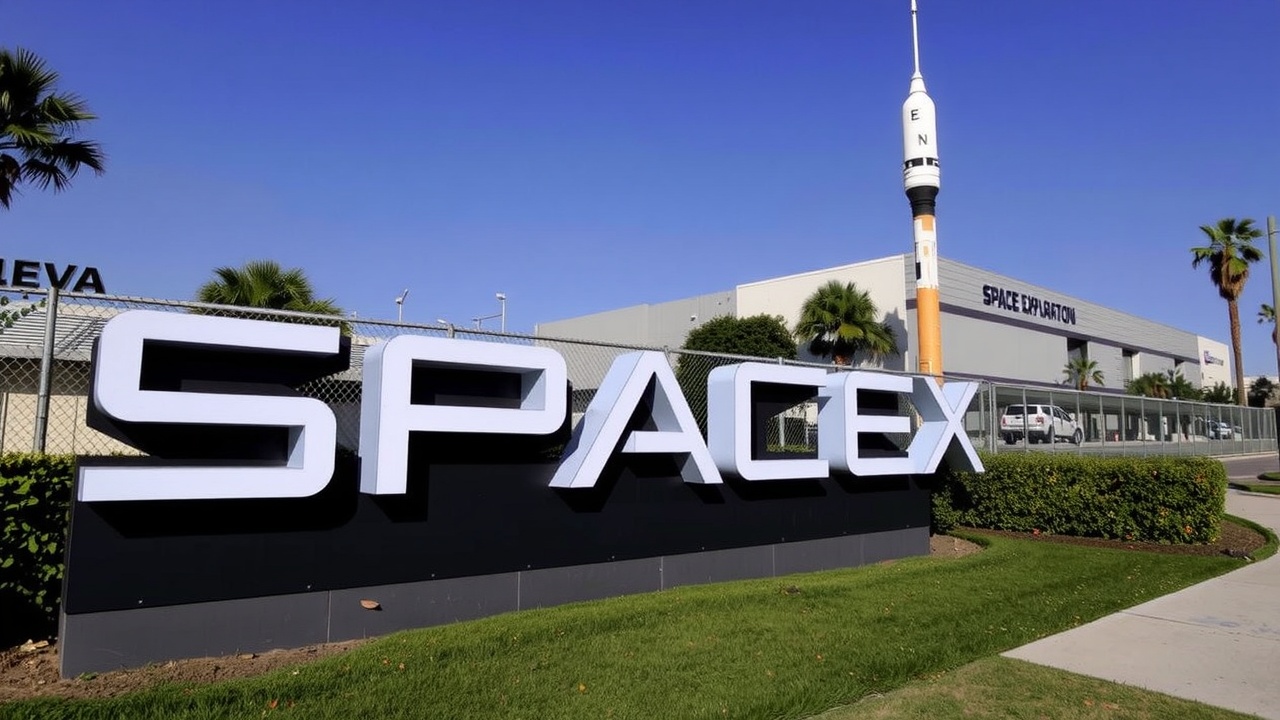
Elon Musk's Space Exploration Technologies (SpaceX) has been a key factor in many of these cost reductions.
Falcon 9, the company's reusable rocket, has reduced launch incremental costs to about £1,500/kg, and Chow claims that its upcoming Starship model could cut this cost in half.
SpaceX is the industry leader in launches. The US Federal Aviation Administration reports that SpaceX launched 161 of the 199 licensed space launches that occurred last year, accounting for more than 80% of the market share.
At the US Cape Canaveral Space Force Station, a SpaceX Falcon 9 rocket takes off from pad 40.
A SpaceX Falcon 9 rocket takes off from Cape Canaveral Space Force Station pad 40.
In addition to making money off of these launch services, SpaceX has a network of more than 9,000 satellites that make up its Starlink network, which offers internet access all over the world. It is estimated that between 50 and 80 percent of SpaceX's revenue comes from Starlink.
It's interesting to note that SpaceX also owns xAI, which creates the social media network X (formerly Twitter) and the chatbot Grok. Thus, SpaceX also has an artificial intelligence (AI) perspective.
According to Dan Coatsworth, head of markets at AJ Bell, "running AI requires immense power for storage and processing, and Musk reckons the only way to scale up is to tap into solar power from space." While Musk wants xAI to become a major AI provider, SpaceX intends to use its satellite network to function as orbital data centers. SpaceX can therefore power AI in a variety of ways by parking the two companies together. The "
Since SpaceX is currently a private company, the majority of investors are unable to purchase its shares directly. However, there are a number of ways to gain exposure, which we will discuss soon.
However, it won't remain private for very long. According to reports, SpaceX is aiming for an IPO that could make it one of the most valuable companies in the world, with a valuation of £1.75 trillion.
Shares of SpaceX will be available for purchase like any other once it goes public.
When will SpaceX go public?
Although SpaceX's IPO has not yet been finalized, the most recent reports indicate that it will happen in June 2026.
When SpaceX goes public, how much will it be worth?
According to the most recent reports, SpaceX might be valued at £1.75 trillion when it goes public.
If that happens, SpaceX would become one of the most valuable companies in the world right away. SpaceX would easily rank in the top ten if it were valued at £1.75 trillion today (though, ironically, it would push Musk's company Tesla out of this list).
How to put money into SpaceX prior to its initial public offering.
You can learn more about SpaceX in the interim. Several funds and investment trusts hold it.
For instance, Scottish Mortgage (LON:SMT) is the largest holding with 19% of its portfolio invested in SpaceX.
This is a good way to get some exposure and put yourself in a position to profit should the IPO meet or surpass expectations, even though it isn't exactly the same as investing in SpaceX because less than 20p of every pound you invest will be held in SpaceX shares.
Do you want to invest in the IPO of SpaceX?
SpaceX's possible £1.75 trillion listing comes with a warning. According to KeyBanc analysts, SpaceX generated £21 billion in revenue last year, despite the fact that private businesses are exempt from the same financial disclosure requirements as public companies. The estimated IPO valuation is more than 83 times that sum. As of April 23, Nvidia is trading at about 23 times sales, while Tesla is trading at about 14 times.
According to Coatsworth, "Bulls might contend that SpaceX's earnings growth potential is so great that valuing it using 2027 or 2028 forecast earnings might make the equity rating look less outrageous." "In response, bears might claim that SpaceX is too young or too risky a company to justify an exorbitant valuation. The "
Therefore, it is worthwhile to think about the risks involved in the event that SpaceX fails to live up to its stratospheric valuation in the long run before joining the frenzy of investors hoping to purchase the company during its IPO.
How to make space investments.
Space pure-plays and SpaceX rivals.
If you think SpaceX is overpriced, there are other options; however, it should be noted that many of these also have high valuations.
RocketLab (NASDAQ:RKLB) is a major rival of SpaceX in terms of launch. RocketLab, which was founded in New Zealand and has its headquarters in Los Angeles, reported £602 million in revenue in 2025.
Although RocketLab is the second-largest launch company, it is still far behind SpaceX's dominance of this market, as evidenced by the fact that that revenue figure is a tiny portion of SpaceX's reported sales.
In a similar vein, after Starlink, AST SpaceMobile (NASDAQ:ASTS) is the second-biggest internet connectivity provider.
These kinds of businesses are pure-play space stocks. However, many of them are not yet profitable even though they generate a lot of revenue. Chow looks at more diverse companies that are more established and are making use of the expanding space economy.
Defense stocks such as BAE Systems (LON:BA) are among them. and Leonardo (MI:LDO), many of which have access to space-related technology and income sources, like BAE's satellite missile tracking contract with the US military.
The benefit of investing in defense/space double-plays, according to Angeline Ong, senior investment analyst at trading platform IG, is that they provide growth potential in addition to the stability of government-backed contracts.
"Names like L3Harris (NYSE:LHX), RTX (NYSE:RTX), and Kratos (NASDAQ:KTOS) sit at this intersection - spanning satellite systems, communications, surveillance, and missile technology - while players like BlackSky (NYSE:BKSY) add a data layer through geospatial intelligence used commercially and by defense," Ong explained.
Industrial companies that provide diversified space exposure include Mitsubishi Heavy Industries (TOKYO:7011).
"Of course, it's really, really critical to Japan's satellite manufacturing as well, but Mitsubishi gets a lot of airtime for gas turbines and the AI boom," Chow stated.
Space shovels and picks.
As a result, Mitsubishi could be a picks and shovels stock for the space economy. The well-known stock market proverb states that during the gold rush, companies selling picks and shovels made more money than the miners themselves.
"Don't try to pick the winner - back the companies supplying all of them," Ong advised. "In space, that refers to companies that supply infrastructure, satellite data, and mission-critical componentsbusinesses that profit whether SpaceX or Rocket Lab prevails in the launch race or whether Starlink or AST prevails in the connectivity battle. A "
Greg Eckel, portfolio manager at Canadian General Investments (LON:CGI), has a preference for the Canadian company MDA Space (TORONTO:MDA).
The company manufactures satellites, supplies parts to space exploration firms, and creates the Canadarm robotic arm that will be utilized on NASA's Gateway space station, which is in orbit around the moon.
"They have a backlog of £4 billion," stated Eckel. "That's a good sign that something positive is going on behind the scenes for a company with revenues of not even £2 billion yet." This is particularly true in light of MDA's recent decision to double its satellite production capacity at its Montreal facility.
It might also be worthwhile to investigate the Italian solid rocket motor (SRM) manufacturer Avio (MI:AVIO).
According to Chow, "SRMs are probably one of the biggest defense pinch points globally." They power everything from missile launches to rocket launches. Chow stated, "These SRMs are being depleted at an astounding rate, just in this Iran conflict alone." "They're very specialized; perhaps only six companies worldwide can produce them, and Avio is one of the few large players in this market.
Space trusts and funds.
Ong identifies three investment trusts and funds that investors may use to gain exposure to space.
Seraphim Space (LON:SSIT) VanEck Space Innovators ETF (LON:JEDG) ARK Space and Defence ETF (LON:ARCX) Scottish Mortgage is another option for investors who specifically want SpaceX exposure, though it should be noted that this is a diversified investment trust and isnt specifically focused on space.





Leave a comment on: How to invest in SpaceX and Space