
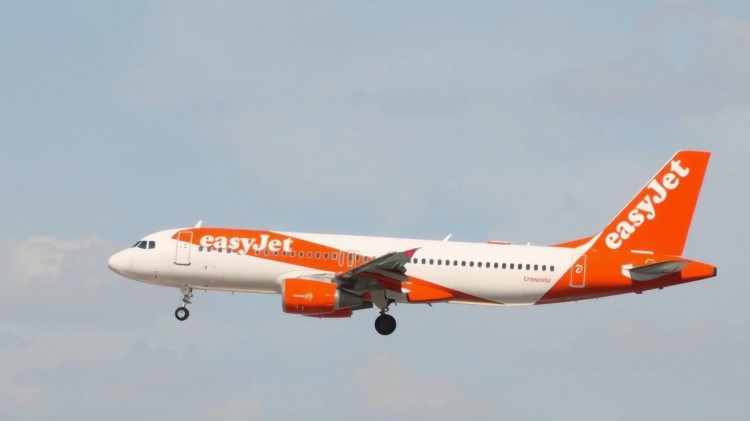
According to James Mackreides, EasyJet is one of the most prosperous British businesses of the last 30 years and shouldn't be sold to foreign investors
EasyJet has fared well. In the last two months, Castlelake, a US investment firm with over £25 billion in assets, has made a number of increasingly attractive offers that its board has rejected. It finally blinked on Monday. The board stated that it was prepared to accept the most recent offer of £5.2 billion, and that formal talks will now begin to finalize the deal.
The challenges still exist. Castlelake must figure out how to abide by EU regulations, which mandate that airlines operating on the continent must be primarily owned by European investors. It must be approved by the British competition authorities. Additionally, it will still require a shareholder vote. However, easyJet will vanish into an American company that specializes in asset-based investments, such as aircraft leasing, if those issues can be resolved.
Anyone who owns shares of easyJet should be happy about that. Since the May lows before the takeover talks were made public, the share price has increased by over 80%. Additionally, Castlelake might make a good long-term owner. However, the British economy as a whole suffers from it.
Among the most prosperous British businesses over the previous 30 years is EasyJet. With a strong brand, it has established one of the best route networks in Europe and is well-positioned in one of the fastest-growing industries on the continent. With 90 million passengers annually, it has an impeccable safety record and is currently the fifth largest airline in Europe, slightly ahead of Turkish Airlines and just behind Air France-KLM.
The fact that it has strategically placed itself in the middle of the market is perhaps most significant. In addition to being significantly less expensive than conventional national carriers, it provides a marginally more refined experience than Ryanair's extremely combative style. With lowish fairs and passable service, it has taken up residence in the middle market. There is no reason to believe that aviation will be any different from the majority of industries, where the middle market is where the most money is made over time. It has the potential to expand if its mid-market, low-cost model can be replicated in US or Asian markets, given the steady growth of air travel in Europe.
Investors have sold out British companies far too quickly in recent years. The US competitor Ingredion purchased sugar manufacturer Tate & Lyle in the last few months alone; private equity firm EQT purchased Intertek; and Greek casino operator Bally's Intralot purchased Evoke, the owner of the William Hill betting chain. The biggest commercial broadcaster in Britain, ITV, will be acquired by Comcast, the American parent company of Sky, this week. The list continues to grow.
The deal should be rejected by EasyJet shareholders.
Everyone can understand why. It is now extremely difficult to make money in Britain. Real wages are hardly rising, the economy has stagnated, and the government is determined to extract more taxes from businesses wherever it can.
EasyJet's profits would have been much higher and it would not have been a target for a takeover in the first place if it had not been required to pay higher national insurance charges, if airport rates (a 40 million increase at Gatwick, one of its main hubs, last year) had not increased so much that they were passed on to airlines in landing fees, and if air passenger duty had not increased so much (an additional 2 per ticket on short-haul flights in the most recent budget).
Similarly, a stagnant, overly regulated stock market results in the undervaluation of many essentially good companies by international standards. Foreign competitors gradually take over them, and no new businesses emerge to take their place. The foundation of Britain's economy is gradually eroding.
Britain cannot afford to lose EasyJet. It is a respectable company with a bright future, even though it might not be a national treasure. British companies would be less susceptible to foreign predators if business taxes were reduced, the stock market was deregulated, and demand began to increase.
Maybe, for once, the airline's shareholders ought to defy the board's recommendations and insist that it continue to be a separate business with a London stock exchange listing.





Leave a comment on: Why Britain cannot afford to lose EasyJet