
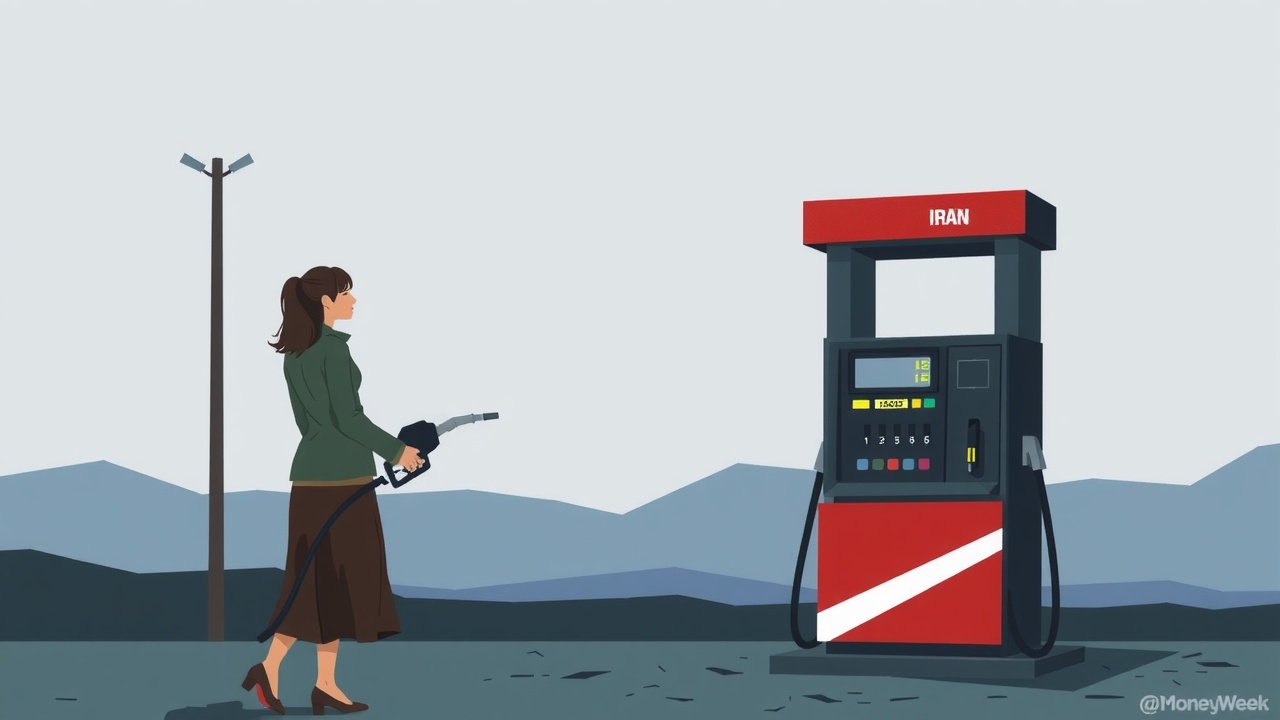
The Middle East is not the only place where the war on Iran is having an impact
How much worse will it get?
What has transpired in the conflict with Iran?
Global financial markets have been rocked by the US-Israeli war on Iran, Iran's military retaliation, and the de facto closure of the crucial Strait of Hormuz chokepoint. Expectations of future growth (down), inflation (up), and interest rates (up) have been shaken by the war, which has caused oil and gas prices to soar and stocks to fall (unless you're a major oil company; Shell hit record highs). Fuel prices skyrocketed for consumers in the UK, and mortgage lenders were rushing to withdraw fixed-rate offers. Meanwhile, wholesale gas prices increased by two-thirds, which would soon result in higher domestic bills. Even if the conflict stays largely contained, it is already bad news for the world economy and will have varying effects on different regions, with net energy importers (like the UK, Europe, and much of Asia) suffering more than net exporters (like the US).
What makes the Strait of Hormuz so significant?
Four of the world's five largest oil fieldsin Saudi Arabia, Kuwait, and Iranship their products out through the Persian Gulf and its immediately surrounding regions, which have the highest concentration of hydrocarbons in the world. For example, 31% of crude oil, 34% of the world's fertilizer supply, and 32% of methanol went through Hormuz last year, according to trade analysis firm Kpler. This week's wild swings in the price of oil were caused by the Strait's closure. Depending on what was happening and the US president's most recent irrational thoughts about the war, there were double-digit increases and decreases.
And what about gas?
The fact that 24% of natural gas liquids and 19% of liquefied natural gas (LNG) also flow through the strait may be of even greater concern to the UK. Britain is beginning a historic transition away from its reliance on Norwegian and domestic gas and toward much larger imports of Qatari gas, which comes from within the Persian Gulf and is expected to account for a larger portion of the mix than North Sea gas by 2035. Petrol and diesel prices have slightly increased at the pump, but wholesale gas prices have increased by about 60%, which will soon be reflected in household and business expenses. According to Neil Shearing on Capital Economics, it goes beyond hydrocarbons and associated goods. Chokepoints that were previously concealed are frequently exposed by crises like this one. For instance, 40% of the world's helium, which is essential for the manufacture of semiconductors, is produced in Qatar.
The article is continued below.
Try six for free to gain unmatched financial knowledge, analysis, and professional advice that can benefit you.
Launch your trial.
Who is most likely to be impacted?
The Middle East itself will suffer the most in terms of economic damage, human casualties, and community destruction. In the second quarter of last summer, Israel's economy shrank by about 1% due to the 12-day conflict. Both Israel and the Gulf economies could experience a decline in output of a comparable order of magnitude if the current conflict is short-lived. Iran may anticipate a 10 percent decline in GDP. Otherwise, Asia, the largest growth engine in the world, is the most vulnerable region. According to The Economist, 4080% of China, India, Japan, and South Korea's seaborne crude imports come from the Gulf. Additionally, it supplies more than half of India's LNG imports, nearly a third of China's, and even more for some smaller Asian nations. Asia received 87% of the crude and 86% of the LNG that crossed the Strait of Hormuz last year, so any protracted closure would be extremely dangerous for the area.
Will the war on Iran cause the world GDP to decline?
Yes, but most predictions center on a moderate global slowdown (of less than 1% of global GDP) rather than a catastrophic collapse unless the conflict escalates into a larger regional conflict in which oil supplies are severely disrupted for an extended period of time. However, the circumstances are very difficult to forecast. Analysts predict a 3% decline in the world economy in the event of, say, a months-long closure of the Strait of Hormuz, significant harm to Gulf oil infrastructure, and oil prices rising toward £150. According to Paul Krugman on Substack, macroeconomists are still largely optimistic while experts in the oil sector are in a panic.
This is partly due to significant changes in the US and other major economies since the 1970s. Their reliance on oil has significantly decreased, and they are likely to be less vulnerable to inflationary spirals following a shock to oil prices.".
How long could the conflict with Iran last?
Rana Faroohar writes in the Financial Times, "My bet: longer than you would wish." The Iranian regime has "arguably much to gain by prolonging the pain with drone strikes and attacks on neighbors in the Gulf," but Donald Trump has good reason to want the conflict to end quickly given the lack of clear objectives and the political damage caused by rising gas prices. These would further upend the energy markets, increasing global inflation. In a recent newsletter, analyst Luke Gromen stated, "Iran does not have to defeat the US military; it just has to defeat the US Treasury market."
What's coming up next?
As the war in Ukraine demonstrated, "inflation is not a single punch"it affects fuel first, followed by food and other consumer sectors. China may still "leverage its own geo-economic advantage of having purchased ports all over the world" and "control most of the ships on the planet," despite being by far the biggest buyer of Iranian oil. More inflationary pain results from higher shipping costs. Additionally, the fact that more short-term, price-sensitive investors now own corporate and government bonds exacerbates potential bond-market weakness. All of this makes it simple to envision a crisis in the US and international markets developing quickly. The US and global economies will suffer greatly if Trump's international travels "push up bond yields, inflation (which will only be partially mitigated by America's own domestic energy supply), and US deficits and ultimately trigger a big Treasury sell-off." Sadly, I believe that this market story and this war will last for a while.




Leave a comment on: The impact of the war on Iran on the world economy