
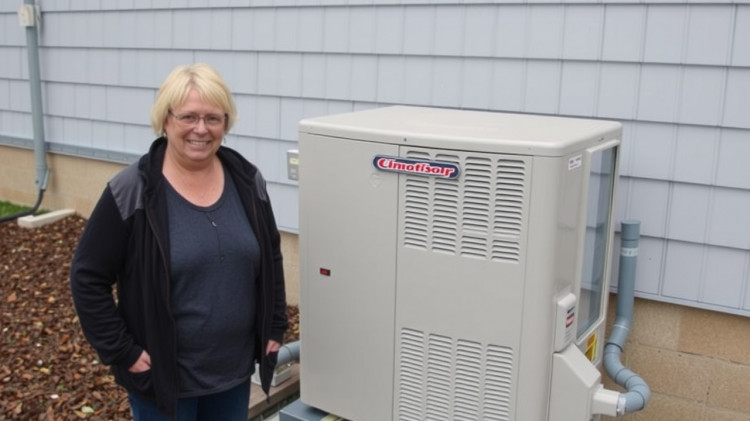
The air source heat pump owned by Kaylie Pferten has turned one
Has she reduced her energy costs in the last 12 months? Will the upcoming Autumn Budget jeopardize the 7,500 grant?
The two most common inquiries from friends and family regarding my heat pump are "Is your house actually warm" and "Are you saving money".
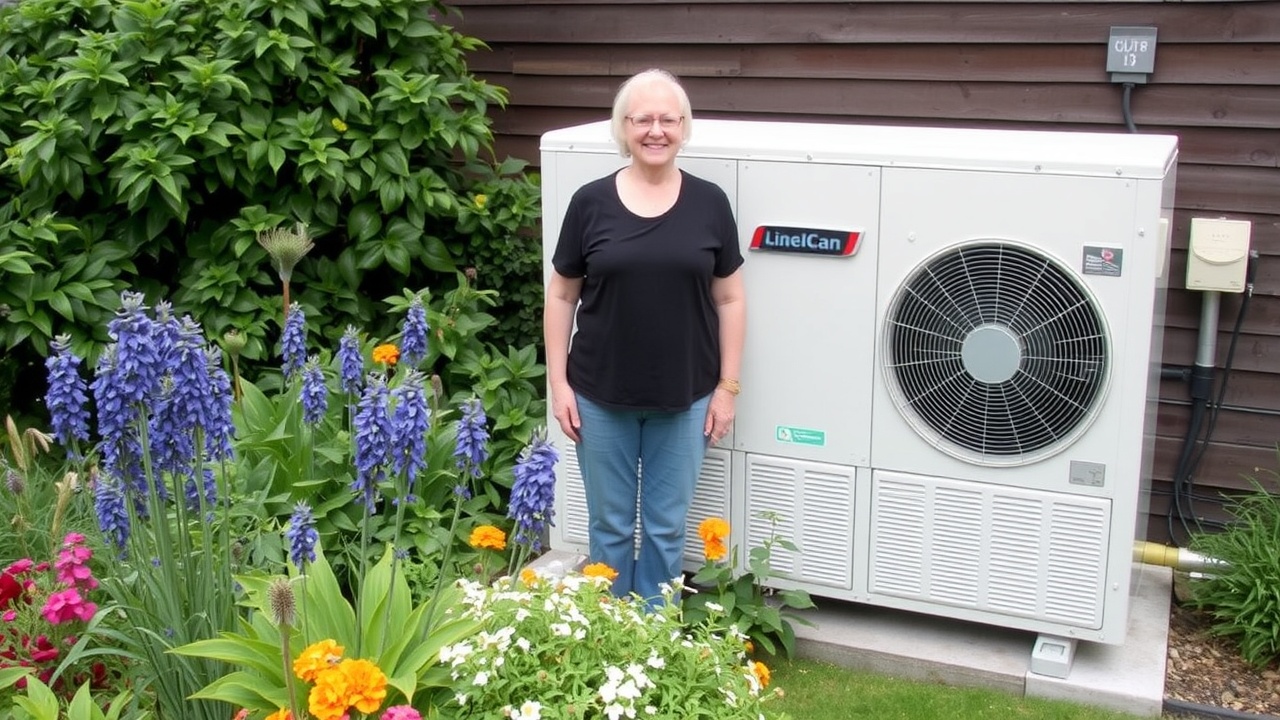
I wrote a piece back in May about what I discovered while setting up and utilizing an air source heat pump for six months. It has been a year since my spouse and I welcomed the Daikin heat pump into our garden and had an old boiler removed from our home.
So, are we staying warm and have our energy costs decreased after a full year of use?
The first question is quite easy to answer: our house is cozy and warm.
Our Edwardian terraced home in north London underwent a major renovation last year that included new radiators and insulation.
The heat pump does maintain a pleasant, steady temperature in our home after a period of teething. Compared to when we lived with the outdated gas boiler, which we estimate had been in the house for at least 30 years, my spouse, my two kids, ages seven and eight, and I are all definitely warmer.
The house is 20 degrees as I write this because the heat pump produces the heat during the inexpensive off-peak times, and this warmth is maintained throughout the day. The radiators are barely lukewarm.
What was the price of the heat pump?
Let's move on to the crucial topic of expenses. The net cost of the heat pump was approximately 6,000 because we were eligible for the 7,500 government grant as part of the Boiler Upgrade Scheme (BUS). We are making interest-free monthly payments to pay this off.
The installer applied for the grant, and it was simple and easy, so it worked well for us.
However, with the Autumn Budget scheduled for November 26th, is it possible that the generous grants will be cut or eliminated? Chancellor Rachel Reeves has not ruled out raising income tax, which would violate an election pledge, so it appears that nothing will be off limits in this fiscal event.
"Funding for the Boiler Upgrade Scheme will continue up to 2029/30," a government spokesperson said in response to my inquiry about whether the BUS program could be included in the budget. Our Warm Homes Plan will specify funding allotments for specific initiatives, such as the Boiler Upgrade Scheme. A "
The grants appear to be secure for the time being.
Heat pumps are gradually gaining popularity. According to the most recent data from the Department for Energy Security and Net Zero, 4,089 applications for the BUS scheme were received in September 2025, setting a record.
Since the program's launch in May 2022, 62,527 vouchers have been used for air source heat pumps, the most common fossil fuel heating system replacement (grants are also available for ground source heat pumps and biomass boilers).
Each voucher is worth 7,500, which means the government will have to pay 468,952,500. When vouchers for additional heat pumps and biomass boilers are included, the figure increases.
Despite its commitment to the program through 2029 - 2030, the government has a track record of making U-turns and breaking promises.
A plan that has already cost more than 460 million could be abandoned earlier than anticipated.
I advise applying for a grant as soon as you can if you're considering doing so.
Have I saved money on energy bills by switching from a gas boiler to a heat pump?
Calculating the energy costs before and after a heat pump and how our bills have changed is a little challenging. This is because we now have a smart meter with our heat pump, which seems to conjure up the costs whenever it feels like it. Our old electricity meter generated a statement once a month based on a manual reading.
It is currently impossible to determine a precise comparison between a year with an old boiler and a year with a heat pump because we also had to leave our house for ten weeks during the renovations last autumn.
But Octopus Energy, our energy supplier, has kindly supplied our average daily cost for the months of January through July of 2024 (before the heat pump) and January through July of 2025 (with the heat pump).
With a typical electricity unit rate of 25.84p/kWh on the Flexible Octopus tariff, the average daily cost for gas and electricity in 2024 was 5.08.
With an average unit rate of 20.59p/kWh on the Cosy tariff, our average daily cost this year has dropped to 4.74 (for just electricity; we no longer have gas in the house).
Thus, since we installed the heat pump, our energy bills have decreased. An annual savings of 124 is obtained by extrapolating the daily figures over a year.
Our 124 figure seems insufficient because the Energy Saving Trust estimates that households should save roughly 260 annually after replacing an outdated gas boiler with a heat pump, and some energy companies claim much larger savings.
However, since our house is now much warmer and we don't care about the cost of the heating, it's not really a like-for-like comparison. In the past, we limited the amount of time we spent heating during the winter to one or two hours per day. The temperature rapidly dropped when the heating was off, and I'm not kidding when I say that working from home in our chilly home eventually gave me chillbones on my fingers.
Octopus Energy notes that by "load shifting as much usage as possible" onto its extremely cheap times, we can maximize our savings.
Customers who have an electric boiler or heat pump can use the Cosy tariff, which makes electricity approximately 51% less expensive between 4 and 7 a.m., 1 and 4 p.m., and 10 and 12 a.m.
Therefore, we always run the dishwasher and the heat pump during these periods. The washing machine is more challenging because we like to load it in the evening, after the kids have returned from school, so we can include their school uniform.
Additionally, there is a peak rate from 4 to 7 p.m., when the cost of electricity is 50% higher than it is during the day, making it extremely costly. Since we're preparing dinner at that time, it's impossible to avoid, and our usage will increase during that time.
What is the difference in cost between purchasing a heat pump and a gas boiler?
Thus, we are using a heat pump to reduce our energy costs. However, what would happen if we decided to purchase a contemporary gas boiler instead of a heat pump?
The average cost of a new gas boiler, including installation, is £3,000, according to checkatrade . com.
After subtracting the 7,500 government grant, the cost of our heat pump was much higher at 6,000. However, we were also eligible for a £2,000 cashback from our Halifax mortgage lender for improving the energy efficiency of our house.
This results in a 4,000 net cost. As a result, there is a £1,000 price difference between the gas boiler and heat pump.
It will take us an additional seven years to pay it off if we keep saving £124 annually.
I'm optimistic that as we become more adept at "shifting our usage" to off-peak times, our yearly savings will rise. Naturally, we could save even more by switching to an electricity-only household if gas prices rise in comparison to those of electricity.
Therefore, I'm hopeful that we will reach cost parity before 2032.
As winter draws near, I'm pleased to have a heat pump because it keeps our house warm, lowers our energy costs, and helps the environment by lowering carbon emissions.





Leave a comment on: I've had my heat pump for a year Have I saved any money?