

Kaylie Pferten shares his predictions about what the world will look like on BFIA's 50th anniversary
One.
The smartphone's decline. obsession with cell phones.
Life would be difficult without them. The average person uses one of the 7.4 billion smartphones in the world 144 times a day. Nevertheless, we would have said the same about cigarettes fifty years ago. Everyone smoked in movies, on trains, andthough it seems unthinkable nowon airplanes. Smoking began to steadily decline after it was made abundantly evident that it was extremely harmful to your health. We are only now beginning to realize how detrimental smartphones are to mental health. An increasing amount of research indicates that they cause addiction and anxiety in addition to having a detrimental effect on cognitive function, memory, attention, and sleep. That is only appropriate for adults. The effects on teenagers are more severe. Age restrictions are already being implemented, and they might become more stringent. People will stop using smartphones over the course of the next ten years, which will destroy one of the largest global industries and the app economy.
Two. The robo-economy booms.
Robot assistant from the future.
The 2030s will make it painfully evident that the AI revolution was oversold, despite all the hype. With the exception of a few extremely specific tasks, chatbots cannot truly replace human labor because they lack intelligence. Rather, the next great wave of technological innovation will be robotics. In the 2030s and 2040s, domestic robots will be the most rapidly expanding industry. These intelligent machines will carry out a wide range of menial household chores, such as cooking and mowing the lawn. Robots will become a huge industry because people will be more than willing to pay for truly labor-saving devices.
Three.
Indonesia's miracle. One of the biggest emerging markets in the world, Jakarta, Indonesia's financial district is seen from above.
The competition between China and India to become the world's largest nation in terms of population and the only significant rival to the US in terms of economy will receive a lot of attention. However, Indonesia will be the country that moves up the rankings the most. Its population is expected to reach 321 million by 2050 and continue to grow rapidly (by that time, China's population will be sharply declining). By the 2040s, Indonesia will have made a name for itself as one of the world's leading economies when you factor in an average annual growth rate of 5% over the past 25 years. The fastest-growing new businesses will be based on the Jakarta stock market.
Four.
A worldwide stock market appears. Global trading board and stock market chart.
A great deal of attention is focused on the rivalry between financial centers. Finance ministers are concerned about London's decline, the US's rise, and the Gulf bourses' emergence, and businesses must choose where to list their shares. Much of that will seem insignificant by 2050. It seems unexpected that national stock markets still exist in 2025. Thanks to technology, we can trade any bond or stock at any time of day, anywhere in the world. Over the course of the next 25 years, a single worldwide stock market that is hosted on the cloud and settles in a widely accepted cryptocurrency will emerge. Only a few financial historians will be interested in national stock markets.
Five.
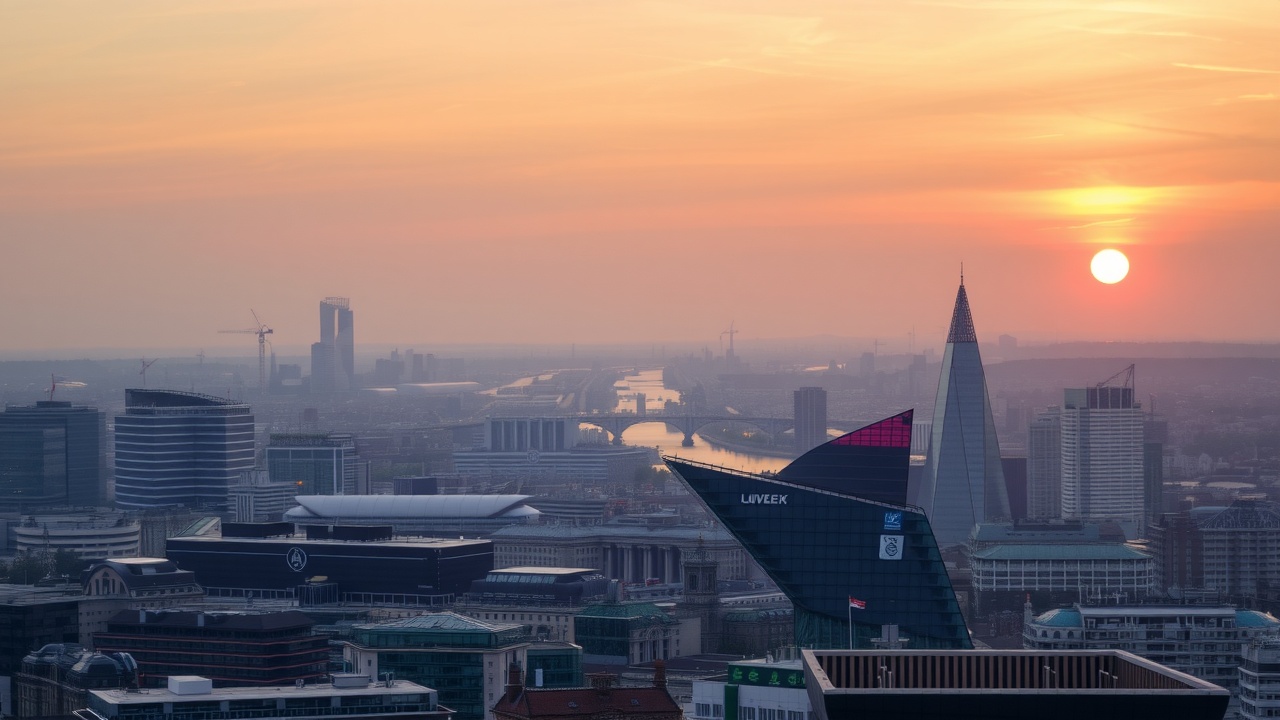
A revival in Britain. Blair, Tony.
Looking back in 2050, it will appear that solving today's issues was surprisingly simple. As the nation's debts spiral out of control in the late 2020s, the bond market will collapse, causing trauma. This will be followed by a chaotic series of coalitions as the party system breaks up. However, by the mid-2030s, a technocratic government imposed by the IMF and headed by an unexpectedly young Tony Blair will begin to turn the nation around. There will be a significant impact from two major adjustments. Fracking will allow the nation to become Europe's Saudi Arabia. This will lead to a massive influx of inward investment and make a corporation tax at Irish levels affordable. Additionally, replacing the NHS with a Dutch-German-style social insurance system will change the 12% of GDP allocated to the healthcare system. Britain will begin to flourish once more after implementing those two reforms, much like it did under Mrs. Thatcher in the 1980s.






Leave a comment on: "My forecasts for the upcoming twenty-five years"