
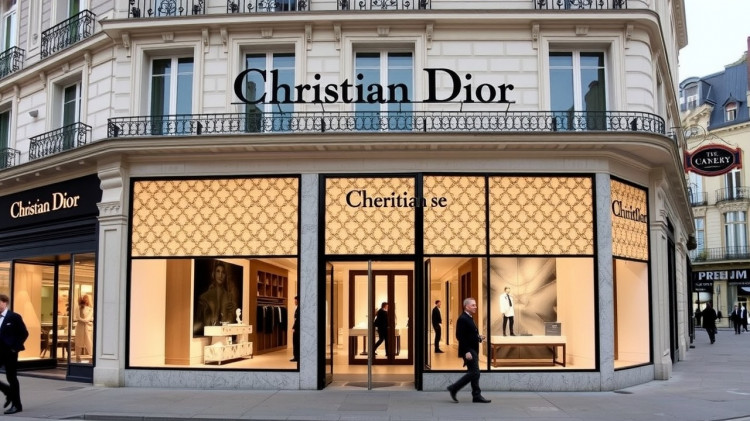
The future of LVMH is beginning to look better after two years of uncertainty
Is this the ideal moment to expand your portfolio by adding a luxury goods purveyor?
Profits in the global luxury market surged during the pandemic as consumers indulged in upscale purchases because they were unable to spend their disposable income elsewhere. Sales declined in the ensuing years as a result of the high demand this generated. Between early 2020 and late 2022, the SandP Global Luxury index, which looks at the 80 biggest publicly traded companies that produce or distribute luxury goods, increased by 65%. With dividends excluded, it has increased by just 2% since January 2023.
The largest luxury goods group in the world, LVMH (Paris: MC), was able to defy the trend until the middle of 2023, when industry headwinds finally began to have an impact on the group. In 2024, revenue decreased by 2% and net income fell by 17%. Throughout the first half of 2025, the decline persisted. During the first half of the year, revenue decreased by 4% and net income decreased by 22%. Nonetheless, there are indications that the worst of the downturn is ending, and the biggest luxury group in the world is well-positioned to benefit from the recovery.
For LVMH, things are turning around.
LVMH reported group sales of 18.3 billion for the third quarter, which was 0.6 percent higher than analysts' expectations but down 4% year over year. The US market and Asia outside of Japan saw a resurgence in growth. Despite a 13 percent decline, Japanese sales were still higher than the previous 28 percent decline. The 2% decline in European sales was more rapid than the 1% decline in the second quarter. China was among the most fascinating locations. The Louis, a ship-shaped Louis Vuitton store, cafe, and exhibition in Shanghai, was a major factor in the quarter's positive growth in mainland China, according to management. While spending by Chinese tourists improved, it was still down by double digits. Local Chinese consumption increased by mid- to high single digits.
The market is now somewhat stable, and at least for the time being, consumer spending on luxury goods has stabilized, according to LVMH's results. In a recent report on the luxury market, JPMorgan analysts came to the conclusion that although "trends remain challenging" in Asia, "healthy spending among Americans across income groups, supported by strong equity markets and wealth creation" is driving growth in North America. The wealthy American customer is expected to shoulder the burden for the rest of the world.
The US's "top-quintile" earners are anticipated to benefit the most from Donald Trump's recent tax cuts, with the richest earning 34% more after taxes, according to Berenberg research. The average federal tax saving for the top 0.1 percent will be £286,440. Additionally, the recent surge in equity and the reduction in interest rates will boost the purchasing power of the wealthiest 1 percent. The majority of US assets are owned by high-net-worth households; the richest 1% own 28% of the total.
This pattern was evident in the findings of Herms, a peer of LVMH (Paris: RMS). Although the firm's results indicated where the strongest demand is emerging, it is more focused on the top segment of the market than LVMH, which has a more diverse portfolio. With the exception of foreign exchange headwinds, sales increased by 10% in the third quarter, with US sales rising 14% and Asian sales rising 6%. Sales of its watches and bags increased by 9 and 13 percent, respectively, while sales of perfume decreased by 7 percent.
The group's largest division, LVMH's fashion and leather goods division, which accounts for about half of sales and features Christian Dior and Givenchy among its brands, had the worst first nine months of 2025. However, the company's watches and jewelry division, which includes Tiffany, saw organic growth of 2% annually.
LVMH's strength is its global and product line diversification. Additionally, the group's management structure supports the quality-first strategy for luxury retailing. The largest shareholder in LVMH is still Bernard Arnault, who acquired the company in 1989. He has placed members of his family in important managerial positions and keeps increasing his stake on vulnerabilities. LVMH has put brand investment ahead of short-term margin protection under Arnault's leadership. Additionally, a few selective deals have been investigated. Its 50 percent ownership of Fenty Beauty, which it co-owns with Grammy Award winner Rihanna, is the subject of the most recent rumors. A company with 2024 net sales of about £450 million, Fenty Beauty may be worth £1 billion to £2 billion.
Should you expand your portfolio to include some luxury items?
The market is also anticipating whether LVMH will bid on Armani. Giorgio Armanis has designated LVMH, along with EssilorLuxottica and LOral, as a preferred buyer for a minority stake in Armani, and the luxury behemoth would benefit from the deal. According to Berenberg, the company might be worth between £5 billion and £7 billion, which LVMH could easily afford. It would also increase the group's visibility in the low-cost luxury market. With the help of its current distribution networks and economies of scale, the group may also be able to increase Armanis' profitability and margins.
In the past few months, analysts have thrown their support behind LVMH. In addition to upgrading the stock to "buy," UBS stated that "we believe that the self-help measures introduced combined with strict cost management and slowing space expansion, will drive a stabilization in margins in 2025 and a return of positive momentum" in share earnings. Berenberg has also pointed to self-help initiatives and market stability as causes for hope. It might be time to add some luxury to your portfolio as headwinds turn into tailwinds.
Share price of LVMH in euros.




Leave a comment on: With the return of wealthy consumers to the market, LVMH is expected to thrive