
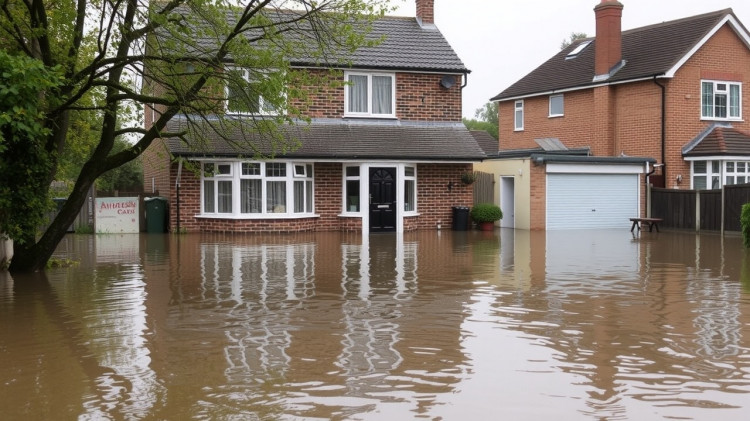
There are strategies to lessen the impact of flood hazards, which can reduce your home's value by up to one-third when the time comes to sell
The UK is once again at risk of flooding as winter draws near. However, what does living in an area that is prone to flooding mean for your property?
The Met Office has issued a weather warning with a flood threat, and more rain is expected to batter the UK this week. According to a study by the Bayes Business School, by 2050, one in six properties in England will be at risk of flooding, which could have a significant impact on home values.
With an average claim cost of 33,000, insurer Allianz paid out over 20 million pounds in home insurance claims for flooding in the UK in 2023 alone. Flooding, however, causes a significant hidden cost for homeowners by lowering property values and making the selling process more difficult, in addition to the immediate disruption.
"There are rules to follow on what you need to declare, how flood risk affects value, and ways to make a flood-prone property more appealing," stated Jack Malnick, managing director of cash house buyer Sell House Fast.
What you must disclose if your house is at risk of flooding.
In the UK, any history of flooding must be disclosed on the TA6 Property Information Form when selling a house. This form consists of:
Whether flooding has ever occurred on the property. Flooding from rivers, the coast, surface waters, or groundwater may have been the cause of this. The frequency and severity of prior flooding incidents. Any resilience features installed on the property, like raised electrics, barriers, or pumps. "You must declare it if you are aware of it, even if the property was flooded before you became the owner," Malnick stated.
Failure to do so may result in misrepresentation lawsuits. Even though it might seem like a disadvantage, buyers frequently react better to transparency," he continued.
The impact of flood risk on property value.
According to a Bayes Business School analysis, flood risk directly affects sale prices, with buyers seeking different discounts depending on the severity. It was discovered that prices can drop by 21 to 25 percent right after flooding.
If a property has a flood risk, the seller should anticipate having to deduct an average of 8% from the sale price when compared to comparable properties. The discount increases to about 14% if there is a high risk of flooding. The sale price of a very high-risk property may be up to 31% less than that of a property that is not at risk.
Depending on the home's value, these discounts on flood-prone properties vary in duration. It usually takes one to two years for higher-value homes to recover. According to Malnick, lower-value homes might be eligible for discounts for six to seven years.
Also, according to Sell House Fast, each property in medium-to-high-risk areas may lose between £10,000 and £30,000.
How to attract more buyers to a house that is prone to flooding.
According to Malnick, there are ways to reassure buyers and lessen the likely discount, even if your house is in danger.
"Be open and honest; tell potential buyers about the risks up front. Present the property's insurance quotes and availability. He stated that some buyers believe that homes at risk of flooding are hard to insure or even impossible to do so.
In order to demonstrate proactive risk management, homeowners with homes that are vulnerable to flooding should also invest in protection measures like raised plug sockets or barriers.
Another way to spot recovery trends is to see if comparable properties in your neighborhood have recovered rapidly from flooding.
Lastly, concentrate on the positives. When presented effectively, location, amenities, or distinctive features can occasionally outweigh risk.
How to make your house flood-proof.
1. Plan for flooding.
Determine which items, in the event of a flood, you would want to protect first. Keep valuables, important documents, and important possessions on higher floors or shelves in sealed bags or waterproof files. It is easier to respond swiftly in the event of flooding when you have a plan.
2. Increase the flood resistance of your house.
Think about doable improvements to your house that will reduce or eliminate flood damage. Stainless steel doors are more water-resistant than wood, and tiles are more resilient and easier to clean than carpets. Raising plug sockets in rooms on the ground floor can also help prevent water damage if you're renovating," Malnick said.
3. Keep your risk of flooding in mind.
Sign up to receive early warnings about floods from the Environment Agency. This will allow you more time to protect items before water levels rise and to adhere to your flood plan.
4. . Make the drainage on your property better.
Water can soak away from impermeable surfaces like concrete by replacing them with permeable paving, gravel, or chippings. Lawns and planting beds in gardens help absorb heavy rainfall, which lessens the likelihood of water collecting on your property, Malnick suggested.






Leave a comment on: How to sell a flood-damaged property: strategies to keep your asking price from dropping by 31%