
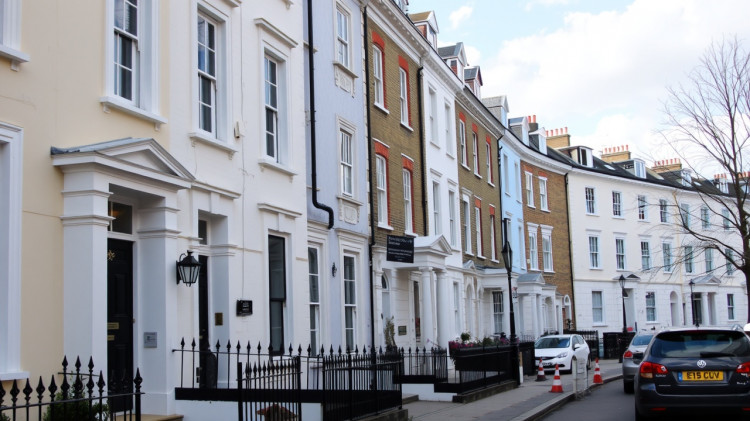
The Institute for Fiscal Studies said that council tax reforms might result in significant bill increases for households in affluent areas, such as London and the home counties
A think tank has cautioned that significant changes to English council funding could result in lower-than-average council tax rates in affluent areas paying significantly higher bills.
The government is considering changing the council tax structure in order to provide more funding to underprivileged communities. The local authority funding consultation ends on Friday, August 15.
The Institute for Fiscal Studies (IFS) claims that high council tax increases would be imposed on residents of affluent areas, such as London and the home counties, under the proposed plans.
According to the IFS, over the next three years, there will be significant "winners" and "losers" as a result of the changes, with some councils seeing large gains and others suffering significant cuts. It recommends allowing those with low council tax rates and those who lose out on funding to raise their rates above the 4 percent annual cap.
According to IFS senior research economist Kate Ogden, the changes will "sting" for councils that are seen as currently receiving an excessive amount of the total funding pot.
"The government should think about granting more flexibility to severely impacted councils that currently have low council tax rates so they can raise their council tax bills to more normal levels in order to compensate for funding losses," she continues.
The IFS contends that the proposals will change funding for some local authorities significantly because England hasn't had an efficient system for distributing funds to councils for almost 20 years.
According to the report, if the reforms were implemented in their entirety right away, one out of ten councils would see a decrease of at least 14% in their total funding, including from council tax, while another would see an increase of at least 10%.
"Looking at the overall funding picture should hopefully mean fewer unexpected tax hikes out of the blue in the coming years," says Sarah Coles, head of personal finance at Hargreaves Lansdown.
People in places where council taxes have historically been low, however, run the risk of experiencing a string of unwelcome increases as a result of funding rebalancing.
Between 2025 - 2026 and 2028 - 2029, the government plans to phase in the new regulations to give councils more time to adapt.
Which regions might be subject to higher council taxes?
The IFS predicts that inner London, especially its western regions, will suffer the most from the reforms.
Despite a 4.99 percent annual increase in council tax, Camden, Hammersmith and Fulham, Kensington & Chelsea, Wandsworth, and Westminster can anticipate that their total funding will be 1112 percent lower in real terms in 2028/29 than it is this year.
The South East councils are expected to experience the smallest real-term increases outside of London, averaging 7%.
Cherwell, Mid Suffolk, and North West Leicestershire are among the areas that will be impacted, as they have maintained low council taxes and strong out-of-business rates revenue.
Where might the reforms have the greatest impact?
On average, outer London will do far better than inner London.
In fact, if council taxes are raised by 5% annually, a number of outer London boroughs, including Enfield, Havering, and Hillingdon, stand to gain the most from the reforms. Their total funding could increase by roughly 20% in real terms over the next three years.
Outside of the capital, East Midlands councils are expected to see the largest real-term increases in overall funding over the next three years (15 percent on average in real terms), followed by Yorkshire & the Humber (12 percent).
Rural areas, which were afraid of losing out on the reforms, might do better than anticipated, according to the IFS. Over the next three years, the average change in funding for the 10% of council areas with the least population density is expected to be comparable to the national average.
The average council is expected to see an increase in real-term funding of 8% between 2025 - 2026 and 2028 - 2029.
The magnitude of the funding adjustments that some councils will have to make over the next three years illustrates how capricious funding distributions have become in the absence of a suitable funding system, according to David Phillips, an associate director at the IFS.
What other aspects of council taxation are changing?
Additionally, the government is seeking to "make life easier for working people" by consulting on council tax payment methods.
Council tax can be paid in ten equal monthly installments or in one lump sum under the current regulations, but you can choose to pay it twelve times a year.
The consultation suggests that 12 monthly installments, as opposed to 10, will be the default method of tax payment.
The government estimates that this will reduce the monthly cost for a band D household by 38 per month, but the annual cost of council tax would not go down.
When it comes to local authority funding allocations, Coles advises that if a council tax increase appears likely to occur in your area, it's a good idea to think about how it might impact you beforehand.
"You'll have time to think about areas where you can reduce your spending or ringfence any pay increases until later to cover the additional expense. You may have to make more significant and challenging choices about where and how you can afford to live if your calculations show that there is absolutely no wiggle room," she tells BFIA.





Leave a comment on: IFS: Under government plans, wealthier areas will pay a higher council tax