
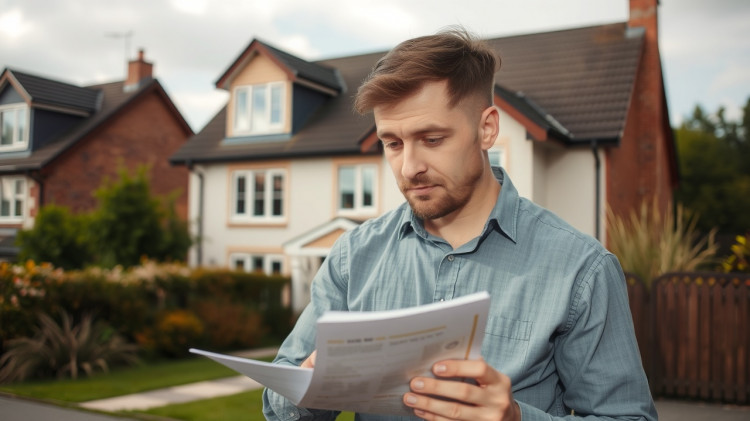
As property prices stagnate, assessors are accused of being "overly cautious," which has resulted in the devaluation of some properties by up to £1 million
As surveyors exercise caution in the face of stagnant home prices, real estate experts are warning of a spike in down valuations, which can wipe out thousands, and in some cases, more than one million pounds, from a property's value.
The mortgage valuation procedure has devolved from a "professional service into a game of Russian roulette," according to one landlord.
In light of declining home values, Adam Stiles, managing director of London-based mortgage broker Helix Financial Partners, reported that three of his properties had been devalued by more than £1 million in recent weeks.
He remarked, "Recently, we've had some terrible valuations."
One example is a freehold home in prime London that was valued at 1.4 million, less than half of its estimated 3 million value. Stiles stated, "This is after prior valuers had concurred with the borrower's estimates for their existing funding."
In another instance, a valuer went to assess two completed new constructions and assigned a value of 1 point 7 million. Two weeks later, Stiles took the deal to a different lender who sent a different valuer, who determined that the properties were worth 2.8m.
"It's just crazy that there's a 1 point 1 m difference in value," Stiles remarked. Because valuers are currently "marking their own homework," there needs to be greater accountability and a way for an unbiased appeal to be made.
Down valuations are also becoming more frequent, according to Jack Tutton, director of SJ Mortgages, a broker with offices in Fareham: "We have seen a higher number than we have experienced for a long time."
Recently, Tutton had a surveyor lower the value of a client's property by 10% compared to the amount they had paid for it just a few months prior, which was £250,000 in March and £225,000 in June.
Tutton remarked, "I am not aware of anywhere in the UK where the housing market has reduced by 10% in such a short period of time."
The value of homes has not changed.
People overstating the value of their properties can occasionally result in down valuations. However, because of the stagnant housing market, surveyors are being accused of being unduly cautious with the values they are tying their names to.
The largest monthly drop in more than two years occurred in June, when home prices dropped by 0.8 percent, according to the most recent Nationwide data. After a 0.3 percent decline in May, Halifax reported no growth for the month.
According to real estate listing website Zoopla, there is also an excess of supply, with 14% more homes on the market at this time in 2024. The rate of increase in home prices is tightly controlled by a market that is overflowing with options for discriminating purchasers.
This is especially true in luxury neighborhoods of London and the South East and South West parts of England, where, according to Zoopla, there are 1619% more homes for sale than there were a year ago.
But things might be changing. According to the most recent Halifax house price index for July, following a decline in May and a relatively flat June, house prices increased by 0.4 percent last month. Since the year began, this is the largest monthly increase.
The head of personal finance at Hargreaves Lansdown, Sarah Coles, stated: "The housing market warmed up a little in July, but buyers were turned off by the arrival of negative clouds from April following the stamp duty holiday's conclusion. In some areas, the sun is coming out for sellers, and some of them have returned due to balmier conditions.
Places that are significantly less expensive, particularly Scotland and Northern Ireland, showed especially strong growth. In Northern Ireland, home values have increased by 93% in just one year.
In England, however, less expensive areas like the North West, Yorkshire, and the Humber are expanding at a significantly faster rate than more expensive areas like London and the South East.
Significantly slower growth has been observed in regions like the South West that have experienced greater growth since the pandemic.
Is this the right time to sell a home?
Other favorable factors for sellers seeking the best time to sell their home include declining mortgage rates, which are predicted to continue to decline after the Bank of England decided to lower interest rates to 4 percent in August, and more latitude in determining how much banks can lend as a percentage of salaries.
According to Coles, there are still some dangers to be aware of, though.
Buyer enthusiasm may be hampered by the employment market's decline. Meanwhile, people might wait to make the decision until they know where they stand if worries about possible tax increases in the budget start to grow," she said.
At a time when prices are skyrocketing and mortgage rates are significantly higher than they were a few years ago, affordability is another issue to consider.
"It implies that there is no assurance that this brittle price increase will solidify into more significant growth rather than being smothered by market forces.




Leave a comment on: Millions are lost in a stagnant housing market due to property down valuations