
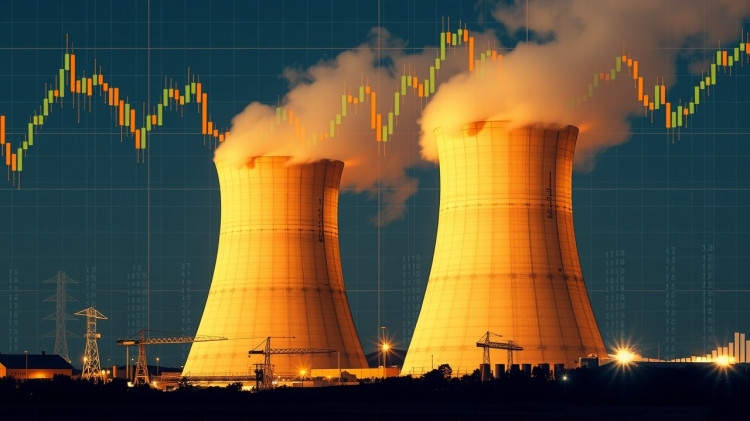
Distressed investors are selling shares in several top nuclear companies. Nick Lawson explains why this may be the time to buy.
Over the past two weeks, nuclear stocks have suffered their sharpest fall in five years. Higher real yields have hit long-duration assets particularly hard because much of their value rests on earnings far in the future. Nuclear has also been pulled lower alongside the AI-related power trade, to which investors now link it.
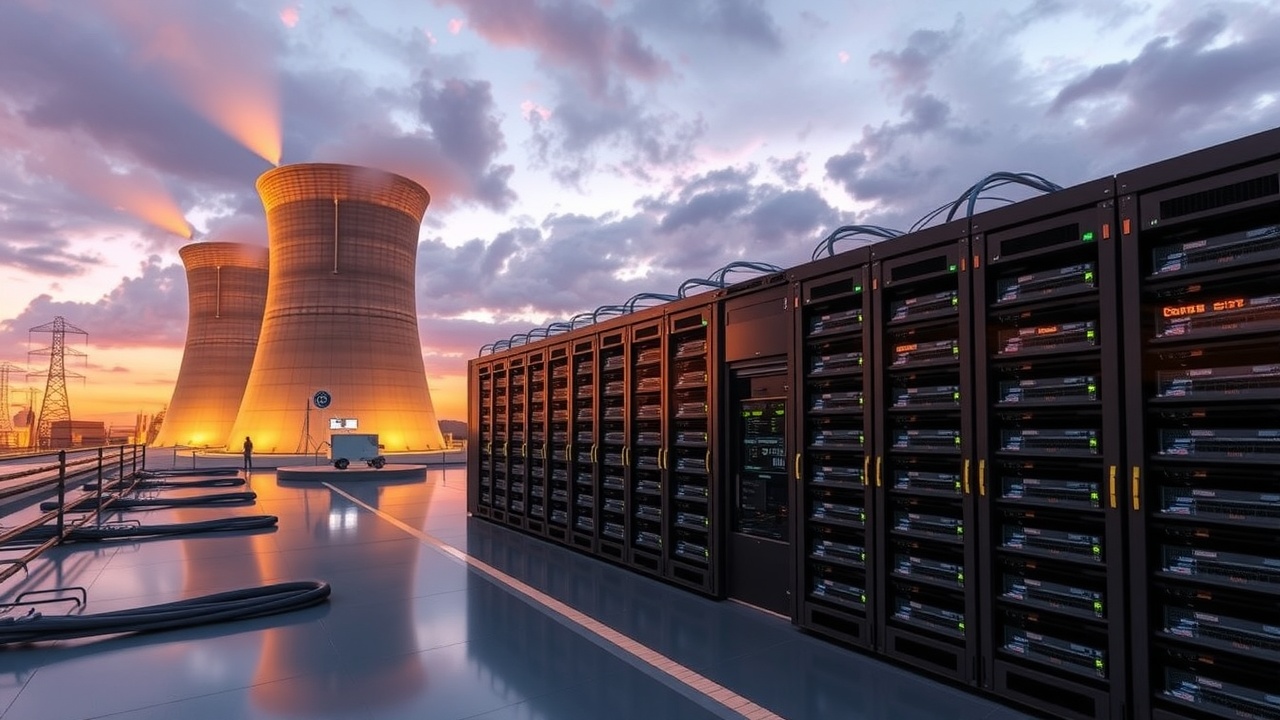
The cost of financing AI says plenty. Anthropic is paying Blackstone a 10% coupon on £60 billion in chip financing - up from 8.5% on a similar deal four months earlier and 7% for comparable public high-yield credits. Lenders are demanding more to take on AI risk, and nuclear power has benefited from the same enthusiasm. But the deal also finances 1.5 gigawatts of new chips. They need power.
A note recently circulated by Jim Reid at Deutsche Bank makes the point plainly: over 80 years, power has become roughly 50 times cheaper. In 60 years, computer chips have fallen in price by a hundred billion times. AI has dropped some 200,000 times in barely five years - the steepest cost curve ever recorded. Intelligence now stands as history's fastest-deflating good, while its input declines at the slowest rate.
In 1865, William Stanley Jevons made a point that still holds: when a resource becomes cheaper, demand rarely falls. People find new applications for it, and total consumption can surge. The same may happen with intelligence. Lower costs will not necessarily reduce electricity use; they could send it sharply higher. As intelligence becomes easier to compress, value shifts toward what remains difficult to produce - steady power and the fuel behind it. Control the electrons, and you control the toll road to superintelligence.
Electricity has another trait that panic-stricken markets tend to forget: demand barely responds to price. When bills climb, households and hospitals still need power, while a data centre training a frontier model may pay nearly any amount to stay online.
The same logic applies one step higher. Uranium makes up only a small share of a nuclear reactor's operating cost, so utilities will pay almost anything to keep their plants supplied. The events of 2006 and 2007 made that clear: after flooding at Cigar Lake removed expected supply, uranium prices climbed sevenfold in six months.
Now consider the conditions at the time. Nuclear power faced opposition from roughly half the world. Smartphones had not arrived; AI and data centres were not consuming power on the scale of a city. Demand was flat, politics were hostile, and yet one supply shock sent prices soaring. Buyers who cannot leave the market have little bargaining power. Price absorbs the pressure - and sometimes it does so violently. Inelastic markets do not move gradually. They gap.
The nuclear industry has been hit by "gamified finance"
Why, then, has the market priced nuclear stocks as if the opposite were true? The answer starts with ownership. A new kind of investor drove this rally: finance now fits on a phone and feels more like entertainment, with conviction coming from Substack, StockTwits and X instead of balance sheets.
The numbers stand out. Retail trading now makes up roughly 20% of US equity volume, while in South Korea and China it reaches 55% to 65% of daily turnover. About seven in ten retail investors are younger than 45. Among 25-year-olds, only 6% had an investment account in 2015; by 2024, that figure had risen to 37%.
US exchange-traded funds (ETFs) drew a record £1.5 trillion in net inflows during 2025. Britain saw retail equity and ETF flows reach 228 billion. Much of this money came from younger investors with less wealth and little room to absorb losses; many have also grown accustomed to borrowing. Trading apps now routinely offer margin accounts, options and leveraged ETFs.
Now the brokers are taking the ladder away. Last week, one of Europe's largest retail trading platforms demanded 110% collateral on positions. At that point, margin stops functioning as leverage; traders must put up more than the position itself is worth. Once holding a position costs more than the position, people sell under pressure rather than conviction. That is what unravelled in 2008 and 2009: leverage disappeared first, and prices followed, regardless of what lay underneath.
That leads to the nuclear companies I find most compelling. Lightbridge Corporation (Nasdaq: LTBR), ASP Isotopes (Nasdaq: ASPI), and Fermi America (Nasdaq: FRMI) belong to a group of nuclear stocks that, in some cases, trade below the cash they hold. Once that cash is removed from the market value, investors are effectively assigning the operating business a negative valuation. The technology, enrichment capacity, land, permits, employees, and years of regulatory work come free - and then some.
It's 2009 all over again
That price only makes sense under two explanations: the board plans to burn through the cash, or the seller has little interest in what's being sold. A serious investor needs to know how quickly the money will go, which obligations are already attached to it, and how much dilution may still come.
The answer is reassuring: none of these companies is burning through cash recklessly. Lightbridge spends £2 million each month, a modest amount beside its cash reserves. If several companies in the same sector fall below their cash value within a fortnight, without wasting that cash, the cause lies with their holders rather than with the businesses themselves. Those holders were forced.
That is the asymmetry: when you buy below the cash already sitting in the bank, the downside has some protection, while the upside depends on what the business ultimately proves to be worth. The market offered that setup in 2009 with housebuilders and miners, many of which later multiplied in value. Today, the same opportunity appears in companies producing the fuel, enrichment and power on which an era of cheap intelligence will rely.
Nuclear reactors, fuel, and enrichment have not changed in the past two weeks. The noise comes from margin calls and traders - momentum funds among them - rushing for the same exit. I know that sound. I heard it in March 2009, when it convinced me the equities business would be closed the next day. Instead, that day became the best buying opportunity of a generation.





Leave a comment on: The nuclear industry could be on the verge of a major rise - here are the stocks worth considering