
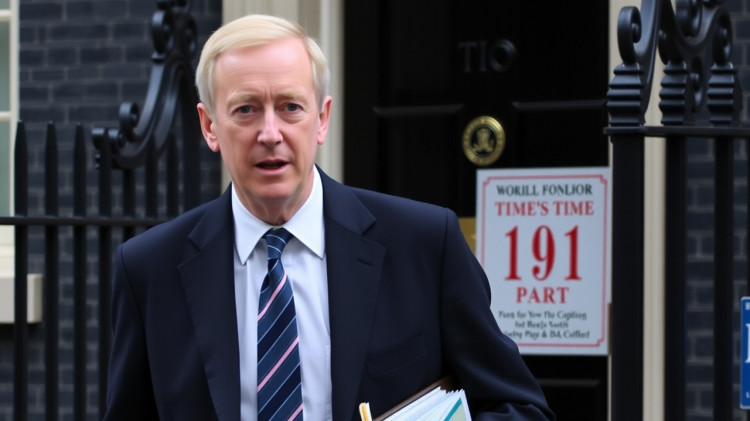
The chancellor promised a major increase in defence funding. He also pledged support for households struggling with rising energy bills.
?
Chancellor John Healey's first Autumn Budget centred on the pressure of rising living costs.
His 28 October speech and the accompanying Budget document included measures aimed at households facing higher living costs and energy bills.
The government also confirmed several business policy changes. They include targeted help for the struggling high street, along with new measures intended to support entrepreneurship and innovation.
Some of the main announcements are outlined below.
Watch full video here:
Defence spending
The government has pledged to fund the 15 billion Defence Investment Plan in full, including the 4.7 billion that previously had no funding.
Defence spending will account for 2.7% of Gross Domestic Product (GDP) in 2027/28.
The chancellor also pledged more than 10 billion in extra economic and military support for Ukraine.
The government will partner with Rolls-Royce on a 10-year programme worth 2.5 billion to develop gas turbine technology for civil aviation and aerospace defence.
Taxes on businesses
Banks will face a higher surcharge on profits, rising from 3% to 6% for 15 months from January 2027.
From April 2027, high street shops in England will begin paying business rates once their rateable value reaches 18,000, up from the current threshold of 12,000.
From that same date, vape shops and adult gaming centres in England will lose their business rates relief. The government says the change will help "clean up" high streets and direct support toward shops, pubs, cafes, and similar businesses.
From next April, the tax on higher-stakes gambling machines will rise from 20% to 25%. These machines let gamblers place larger bets.
The government says it plans to shut a loophole that lets foreign companies provide services to some UK businesses without accounting for UK VAT.
Taxes on savers and landlords
From April 2027, income from property and savings held outside tax-wrappered accounts will face tax rates that are 2% higher.
That will take the basic rate to 24%, the higher rate to 44% and the additional rate to 49%.
Budget documents state that 84% of income tax payers will see no change. The additional revenue is expected to come from the top 10% of households.
Energy bill and cost of living support
From January 2027, up to 20 million households in England will receive a 100 Household Energy Payment through a council tax rebate. It will apply to homes in council tax bands A to D.
An additional 100 million will go to councils in England, helping households hit hardest by rising energy bills, including some in council tax bands above A to D.
The government had already announced a VAT cut on electricity bills, due to end on 31 March 2027. That reduction will now continue until 1 July 2027, cutting 50 from the average energy bill.
From April 2027, more than 10,000 energy-intensive businesses could see their bills fall by up to 25% under the British Industrial Competitiveness Scheme (BICS).
Healey also confirmed that the gas standing charge will be scrapped. The government hopes to abolish it by the end of next year.
From the same date, the National Living Wage will rise by 3.9% to 13.21 an hour, adding 910 to workers' annual wages.
The 5p freeze on fuel duty will now run until 1 July 2027. The government will also remove the Gas Shipper Obligation - a planned levy on gas bills intended to fund hydrogen projects - from energy bills and cover its cost, subject to its commitment to the obligation.
Tariffs on more than 100 everyday food and drink items will fall. The government says that could cut annual grocery bills by up to 21 per household.
Encouraging investment and entrepreneurship
The government will provide an additional 20.4 billion in funding to the National Wealth Fund and British Business Bank, with the aim of increasing investment and supporting business growth across the UK. Of that total, 15.4 billion will go to the National Wealth Fund.
From April 2027, people earning trading or miscellaneous income will see the trading allowance rise from 1,000 to 3,000.
Healey said the government will also introduce a young entrepreneurs allowance, covering one year of living costs for young business founders.
Starting next April, founders will have access to a new Capital Gains Tax Founders Relief scheme. It will apply a reduced 10% CGT rate to as much as 10 million in lifetime gains.
The government has released few details so far. Budget documents do say that venture capital schemes will be improved, giving founders "greater certainty" when raising capital.
Housing
The government plans to spend 4.7 billion on the Your First Home scheme, which is intended to help 70,000 first-time buyers purchase a home.
Another 1.5 billion will fund the construction of social and affordable housing.
Over the next two years, a further 432 million will go toward ending rough sleeping - one of Burnham's main priorities since becoming premier.
The government has also announced a new ISA for first-time buyers. From today, the charge for withdrawing money from a Lifetime ISA will fall from 25% to 20%.
Support for low-income pensioners
From April 2027, some pensioners will pay less income tax under a new pension tax allowance. Anyone with total income above the 12,570 personal allowance but below the full new state pension of 13,037 will not pay income tax.
Income between 13,037 and 13,319 means they will pay some income tax while still receiving part of the allowance. Both amounts will be lower than they would have been before the change.
"Total income" means money from the state pension, private pensions, work, savings, property, dividends, or any combination of these sources.
Cash ISA changes reversed
Healey abandoned Rachel Reeves's proposal to cut the annual cash ISA allowance for people under 65 from 20,000 to 12,000, a change that had been due to begin in April 2027.
He said he would instead work with the sector on a new starter ISA aimed at rewarding first-time investors.






Leave a comment on: John Healey's first Autumn Budget: what did it include?