

Frontier markets are changing quickly and may give investors some protection from risks tied to AI. These are the investments worth considering now.
Frontier markets contain roughly one-quarter of the world's population, yet they produce just 5% of global GDP. More than half of the planet's eight billion people live in emerging economies; developed countries account for about 12%.
The US and North America together hold only about 4.7% of the world's population, yet US-listed companies make up roughly 73% of the MSCI World index. Across the globe, the World Federation of Exchanges tracks about 58,200 listed companies. Still, seven major technology stocks - Apple, Microsoft, Alphabet, Amazon, Nvidia, Meta and Tesla - represent around 22% of global equity benchmarks.
Those numbers show how far the US economy and financial system reach. They also point to alternatives for investors: many frontier markets are growing at mid- to high single-digit rates as their economies open up. Most investors overlook them. They shouldn't.
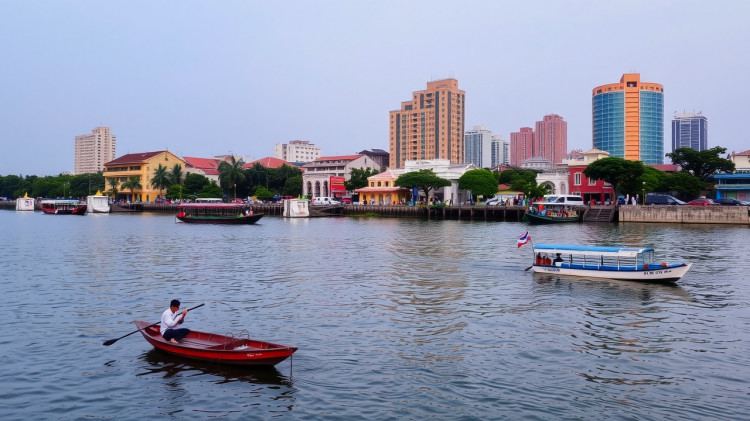
Vietnam has become one of the clearest recent economic success stories. Over the past five years, its economy has surged as the ChinaUS trade war brought manufacturers seeking low-cost labour and strong infrastructure investment. GDP growth reached 9% in the first nine months of the year. The government plans to spend £1.5 trillion on infrastructure by the end of the decade to keep that momentum going. Vietnam could not enter emerging-market indices until it completed major trade-settlement reforms and opened its markets to foreign investors. Then, on 21 September 2026, it officially joined the emerging-market group: 27 Vietnamese stocks entered the FTSE Global All Cap index, with full integration to take place over 12 months.
Vietnam's economic growth and graduation point to a major shift likely to shape the global economy over the next decade. With Western populations aging, emerging and frontier markets are expected to generate about 65% of global economic growth by 2035, according to S&P Global. Sub-Saharan Africa's frontier markets should account for a significant share, largely because their populations are relatively young.
What is a frontier market?
The International Finance Corporation - the World Bank Group's private-sector arm - coined "frontier markets" in the early 1990s as a shorthand for the next generation of emerging markets. The definition still depends on which bank or NGO conducts the research. Generally, though, these markets have some access to international finance, but that access remains limited; their GDP per capita is roughly one-third of the median for emerging markets. They are not all low-income countries. S&P Global, the rating agency, classifies both Barbados and Bahrain as frontier markets, even though each has an estimated GDP per capita of about £30,000 - roughly 15% below Spain and Japan.
By the end of 2025, the number of frontier markets had reached 56, compared with 39 in 2012. Some countries joined the group after issuing debt or taking steps to open their capital markets. Four - Bulgaria, Costa Rica, Panama, and Romania - have moved into the emerging-market category since 2012 after reaching high-income status. Yet, as the World Bank points out, only Vietnam has made the narrower transition from frontier market to developing market in the classifications used by equity-index providers.
About a third of frontier markets lie in Africa, where investors have long searched for promising but underdeveloped opportunities. Results have often disappointed, though: the region depends heavily on volatile commodities, receives too little investment from within, and has pursued growth that cannot last. One man's vision may now signal a change.
One person raises Africa's prospects as a frontier market
Aliko Dangote leads Dangote Group as its president and chief executive officer
Africa contains about 30% of the world's mineral reserves, along with 8% of its natural gas and 12% of its oil. It also has 40% of the world's gold and the largest known reserves of cobalt, platinum, and uranium - resources tied closely to the global shift toward new energy systems. Then there is the continent's 60% share of the world's uncultivated arable land.
Yet African countries have rarely controlled these assets themselves. Investment arrived to open mines, but much of the money soon left again, returning to shareholders in London and New York. Nigeria shows how this works. According to the US Energy Information Administration (EIA), Nigeria ranked among Africa's leading crude-oil producers during the 2000s, pumping two million barrels a day. Its refineries could not process enough of that oil into fuel, though. Nigeria therefore sold crude abroad and bought refined fuel back at market prices, surrendering wealth while leaving consumers exposed to swings in global oil markets.
Aliko Dangote, Africa's richest person, has altered Nigeria's oil industry with a refinery capable of processing 700,000 barrels a day. The £20 billion facility keeps more crude at home while allowing Nigeria to sell refined products abroad; its jet-fuel exports helped ease a global crisis after the Strait of Hormuz closed. Now the continent's largest refinery is listing shares on exchanges in Nigeria and Botswana, aiming to raise £1.6 billion. Investor demand has already outpaced the offer by three or four times.
Dangote wants to repeat that model in Lamu, a coastal town in southeastern Kenya, where work on a £16 billion refinery started in September. Tanzanian billionaire Mohammed Dewji has said he plans to put £100 million into the project. Investment is coming from elsewhere, too. In August, Canada's Zimar Group agreed with Niger to build a £1.9 billion refinery and petrochemical complex. France's TotalEnergies SE and its partners have announced plans to invest £10 billion in Angola's oil sector over the next five years. China committed £33.5 billion to the region during the first half of 2026 through its Belt and Road Initiative.
Fertiliser presents the same problem. Africa may hold 60% of the world's uncultivated arable land, but that land cannot produce crops without enough fertiliser. The African Development Bank (AfDB) estimates that 80% of the fertiliser used across the continent comes from abroad. Even after £15 billion was invested in recent years to increase production, supplies still fall short. Governments have committed to tripling domestic fertiliser production and distribution by 2034.
Supply chains shifting away from China are one reason domestic investment is rising, helping expand the middle class in these countries. Rami Sidani, head of Frontier Investments at Schroders, says many companies "are benefiting from this expansion in the middle class, from this wealth effect that's trickling down and fuelling this domestic-consumption story."
Financial inclusion sits at the heart of this shift. Across many frontier markets, most people have traditionally had no access to banks, but fintech is changing that quickly. Sidani points to GCash in the Philippines: after recently floating on the stock exchange at a £7 billion valuation, the company has become the country's main banking app. About 70% of Filipinos now have an e-wallet, he says, compared with roughly 40% who hold bank deposits.
GCash in the Philippines
Africa shows the shift even more clearly. Sidani says opening a rural branch once took 1824 months; now people can access their money from bed, wherever they are in the country.
Ahmed Awny, who heads investments and manages portfolios for the Templeton Frontier Market Strategy, cites Safaricom and Vodafone as an early example. In 2007, they launched M-Pesa, a mobile financial-services and money-transfer platform that used text messages to move money. Nearly 20 years on, it has reshaped financial services across Africa, while similar services have appeared worldwide, including dLocal in Latin America, GCash in the Philippines, M-Pesa in Kenya, MoMo in Vietnam, Kaspi in Kazakhstan, and Airtel across Africa. Awny says people in frontier markets adopted the technology as quickly as those in emerging and developed economies - possibly faster - because younger generations, driven by greater aspirations, tend to adapt and learn quickly.
How frontier markets are moving ahead of developed peers
Consumers in frontier markets are adopting AI faster than their counterparts in developed and emerging markets. That shift helps explain why telecoms has become one of Africa's most interesting sectors, according to Cavan Osborne, a portfolio manager at Old Mutual in South Africa. The change is substantial: five years ago, people sent messages and ran online searches with only a small amount of data behind each request. AI search and other AI tools now demand far more data for every query.
A roadside mobile money kiosk for Airtel Africa Plc in Lusaka, Zambia
According to the Ericsson Mobility Report, Sub-Saharan Africa should record the world's fastest growth in 5G subscriptions, climbing from about 30 million in 2025 to 370 million by 2031. Across African networks, phones generate most web traffic because they cost less and fixed-line desktop access remains limited. Nigeria leads the continent with more than 100 million mobile users. There, monthly mobile-data use jumped from roughly 518,000 terabytes in early 2023 to over 1.23 million terabytes by November 2025 - about 140% growth in under three years.
Osborne points to Airtel Money (LSE: AMC) as a clear success. It was the largest London IPO since 2021. The fintech was spun off from FTSE 100 company Airtel Africa (LSE: AAF), one of Africa's larger telecoms operators; South Africa's MTN, Vodafone, Orange and Dubai Etisalat are among its peers. Osborne says Airtel Money is expanding by roughly 30% a year, with most of that increase coming from "fees on payments, driven by new users as people switch to smartphones". The mobile money operation requires little capital and, even while growing at about 25%, distributes roughly 80%-90% of its earnings as dividends.
Osborne points to Africa's banking sector as another opportunity. Many African banks, he says, remain simple businesses: they collect deposits and place the money in government treasuries, where returns can reach 10%, 15%, or 20%. Technology has lowered operating costs, while most lenders do not need large branch networks, so profitability remains high. Their risk is relatively contained too, since the currency is hedged and defaults are generally uncommon. Those conditions have made banking one of Africa's strongest-performing sectors.
Awny says these built-in structural hedges help contain risk. Vietnamese exporters offer a clear example: the Vietnamese dong has gradually weakened, which benefits companies paying costs in dong while earning revenue in US dollars. Bank of Georgia, a Lion Finance subsidiary (LSE: BGEO), has a similar advantage; like comparable banks in Africa, it can adjust loan prices when political or economic conditions become uncertain.
Other markets are growing up too
Africa may be undergoing the sharpest economic change, but other regions deserve attention from investors. Awny highlights Central Asia, including Georgia, which is "now offering Eastern European governance, but at frontier valuations," and Kazakhstan, where fintech platform Kaspi (Nasdaq: KSPI) is based. Kaspi has 13 million active users in Kazakhstan, whose total population is around 18 million-19 million. The UAE also stands out. Although it is technically an emerging market, Sidani says the country is being "disregarded by the big global funds" while giving investors access to "multiple themes on the liberalisation and transformation of the economy," including data centres and AI infrastructure.
Logo of Kaspi.kz JSC (NASDAQ: KSPI), a Kazakhstan-based fintech and e-commerce company
Ten to 20 years ago, investing in frontier markets meant doing serious legwork. Investors needed local contacts, language skills, and the patience to search out promising companies themselves. That has changed. Awny says many of these businesses now have managers whose quality matches their counterparts in New York or London. Their CEOs and teams have also "cracked the manual on how to bring the equity story up to the level of the emerging markets." "Take a company meeting in Ho Chi Minh City or Hanoi, Vietnam, and you'll hear spoken English and see detailed PDF presentations at the same level you'd expect from Alibaba, a company in India, or one in a developed market," says Awny. "The same applies to banks in Kenya, as well as businesses in Peru, Colombia, Morocco, and Oman."
Operating in economies that are less efficient and less financialised creates extra friction. Awny says that this often leaves companies with stronger balance sheets and better returns. "Credit is not that easy; credit is costly," he explains. Most businesses therefore depend on cash generated internally, and their returns on equity and capital employed can run 300 or 400 basis points above those of a typical emerging-market company.
Frontier markets offer much of their potential precisely because they remain inefficient and less thoroughly reported than developed and emerging markets. That same gap brings added danger. Trading volumes are usually far lower, so their stocks can be much harder to buy or sell without affecting prices. Information about listed companies is easier to find than it once was, but the average investor still faces weak transparency - and then there are the trading rules. Hargreaves Lansdown and Interactive Investor, two of the UK's largest trading platforms, provide no direct share trading in frontier markets and cover only two or three emerging markets. Several of the countries themselves also restrict investment from overseas.
How to invest in frontier markets
Investors seeking direct exposure can find a small group of previously mentioned companies in London, including Lion Finance and Airtel. Dangote Oil Refinery is working toward a secondary London listing. Dangote Cement - the billionaire's first business - has appointed Goldman Sachs and UBS to place roughly 10% of its shares there through a secondary listing. London Stock Exchange data records 110 African companies with a combined market value of £200 billion, although that figure includes South African firms such as Old Mutual and Investec. These companies provide exposure to frontier markets, but they also bring additional risk. The National Investment Fund of the Republic of Uzbekistan (UzNIF) listed in London this year as well.
Closed-ended funds suit frontier-market investing because managers can hold illiquid assets without having to sell them quickly when investors request their money back. Jean-Baptiste Andrieux, an analyst at Kepler Trust Intelligence & Expert Investor, points to BlackRock Frontiers (LSE: BRFI). The trust invests in frontier and smaller emerging markets, leaving out the biggest markets by capitalisation: Taiwan, South Korea, China, India, Brazil, Mexico and South Africa. Managers Sam Vecht and Emily Fletcher study economic cycles in each country before directing the portfolio toward the stocks they consider most attractive.
Andrieux recommends pairing frontier markets with smaller emerging economies, since standard emerging-market indices and funds often give them little attention. One possible choice is Redwheel Next Generation Emerging Markets, managed by James Johnstone and Victor Erch. Other options include the Templeton Frontier Markets Fund, run by Ahmed Awny and Bassel Khatoun, and Schroder International Selection Fund Frontier Markets Equity, managed by Rami Sidani.
Valuations say little about how well these companies are managed or how strong their balance sheets are. At the end of September, the MSCI World index traded on 22.7 times trailing 12-month earnings, with a price-to-book ratio of 4.1 and a 1.5% yield. Templon Frontier's portfolio was far cheaper: its price-to-book ratio stood at 2.1, while its trailing 12-month P/E was 10.2. Schroder Frontiers traded at 9.9 times earnings. Morningstar reported that Redwheel had the lowest valuation of the group, at just 8.3 times historic earnings.




Leave a comment on: Where frontier markets may offer value