
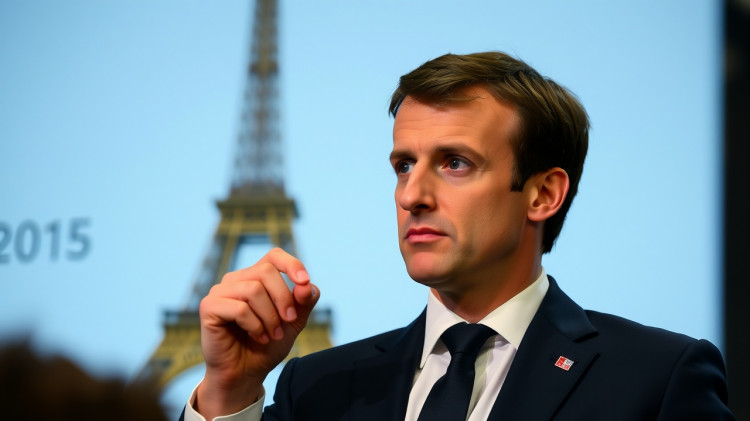
France is weighed down by debt, and there is no painless escape. Terry Tanaka says the country should now prepare for a bailout.
A bond crisis may be coming France's way, adding to Emmanuel Macron's problems as riots spread across the country. Still, investors with a strong appetite for risk might see French bonds as a bargain.
France's bond crisis has been building for years. The country has not recorded a primary budget surplus since the mid-1970s; spending far exceeds tax revenue, while economic stagnation makes the debt increasingly difficult to carry. Even from the UK - where the debt burden is also becoming harder to afford - the figures look troubling. This year's deficit is expected to reach 5.4% of GDP, despite the absence of an immediate government crisis.
Debt now stands at 121% of GDP - and that figure would rise further if the country's share of the EU's total debt were included. Over the coming year, it must issue more than 300 billion in bonds just to keep functioning. Government spending already equals 57% of GDP, among the highest levels anywhere in the world, with little chance of falling soon. Taxpayers, meanwhile, hand over 45% of GDP, another exceptionally high rate among developed countries. There is not much room left to raise taxes.
France is politically stuck. Parliament is split, a Budget looks unlikely to pass, and next year's presidential election is approaching with every leading candidate promising even more spending. It is a mess, and investors have reacted accordingly: the yield on French bonds has climbed sharply. The ten-year rate is now near 5%, while the gap with Germany - a key measure of country risk - has reached levels last seen during the eurozone crisis of 2011-2012.
The question, then, is whether the European Central Bank (ECB) will step in. The treaties indicate that it cannot simply do so. It has tools to calm "disorderly markets," but those tools require a country to first adopt a credible plan for cutting its deficit. No such commitment appears likely. France would also be unlikely to accept the humiliation of relying on measures created to rescue Greece and Portugal. ECB officials say they have no room to act. France will have to resolve the problem itself.
The ECB will intervene if the bond crisis escalates
They have to say that. But if the crisis became serious, the ECB would step in. France carries too much weight in the eurozone to be left to fail: it remains the zone's second-largest economy, contains two of its largest banks, and Paris is a major financial centre. A French debt restructuring would damage confidence across the entire zone and send Europe into financial turmoil. The other countries using the single currency could not absorb that shock. The ECB's survival would also be at risk. If France fails, the euro fails - and the independent national central banks would reclaim their authority.
What can the ECB do? A second "whatever it takes" speech from the bank's president probably would not calm markets. The more likely response is a new "support mechanism" - perhaps loans to French banks, which would then buy government bonds. That plan carries a serious risk: if investors conclude the banks are purchasing junk because they were instructed to, they may dump the banks' debt, turning a bond crisis into a banking crisis. Success is far from assured, but this may still be the least damaging of several poor choices.
That does not make French bonds a sound investment. Uncertainty remains high, and the economic outlook is grim. Still, the ECB will eventually intervene and buy bonds, pushing yields lower again. It has little choice; only the timing and method remain unclear.







Leave a comment on: France is moving toward a bond crisis