
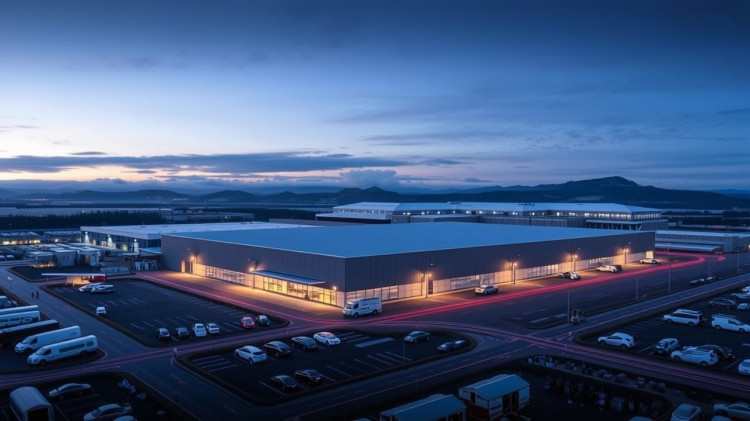
Norwegian arms manufacturer Kongsberg stands to benefit significantly from higher public spending on defence
Norwegian arms maker Kongsberg Gruppen (Oslo: KOG) stands to gain from a sharp rise in defence spending. At the Nato summit in Ankara in July 2026, European allies and Canada reported putting more than £139 billion into core defence needs during the previous year. They also announced £50 billion in new procurement and agreed to expand manufacturing capacity. For Ukraine, the allies pledged £70 billion in military equipment, training and support for 2026, with at least the same amount promised for 2027.
At the close of the 2025 financial year, Kongsberg reported an order backlog of NKr157 billion (12.4 billion). Its chief executive officer said he had never witnessed demand this strong during his ten years in the role.
Kongsberg's focus on growth
In February 2026, Kongsberg separated its maritime division into an independently listed company, Kongsberg Maritime. The move left the company focused on its three faster-growing divisions: Defence Systems, which generates 47% of revenue, Missiles & Aerostructures at 30%, and Discovery at 23%.
In June 2026, Kongsberg completed its acquisition of Zone 5 Technologies, a California-based company known as the market leader in affordable munitions designed for mass production. Its products include long-range strike and interceptor missiles. Zone 5 also expands Kongsberg's existing US business, having secured US contracts, including one from the US Air Force for the AGM-188 FAMM (Family of Affordable Mass Missiles).
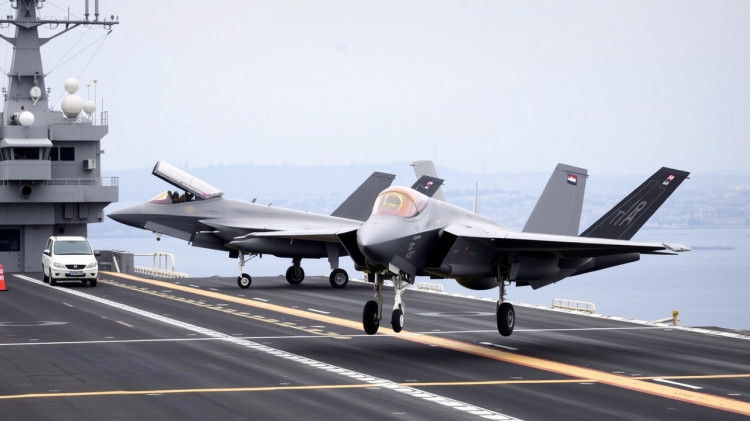
In September, Kongsberg bought California-based Sonatech, which specializes in underwater acoustics. Its technology will go into Kongsberg's autonomous underwater vehicles. Two months earlier, Kongsberg had secured a £100 million US Air Force contract for stealthy air-to-surface Joint Strike Missiles (JSMs). The F35-A fighter can carry the missiles internally, with deliveries planned through 2030. Australia, Canada, Germany, Japan and Norway have also selected the JSM.
Kongsberg's results for the three months ending June 2026 were its first reported without the maritime division. Revenue climbed 31% from the same period in 2025 to NKr10.4 billion, while earnings before interest and tax (Ebit) rose 48.9% to NKr1.67bn. That pushed the Ebit margin up to 16.1%. Second-quarter orders equaled 164% of quarterly revenue, lifting the order backlog to NKr157 billion.
New growth drivers for Kongsberg
During the second quarter, demand remained strong in Defence Systems, particularly for air-defence and counter-drone equipment. Kongsberg and Raytheon agreed to begin delivering the NASAMS system to Kuwait. Missiles & Aerostructures secured JSM contracts worth a total of NKr10.9 billion from Canada, Germany and the US. Discovery added further business, including a contract to monitor and protect critical subsea infrastructure.
Kongsberg's order backlog is large and still growing, prompting greater investment in new and expanded production facilities. Acquisitions, product development, and added capacity also drove a NKr3.7 billion cash outflow in the second quarter.
New factories in Australia and the US will supplement Norway's existing missile plant, while Norway also expands subsea-technology production. The Australian and US facilities are due to begin operating in late 2027 and reach full-rate production in 2028. They will therefore contribute to the 2029 revenue target of NKr100 billion - 2.3 times projected 2026 revenue - with revenue rising to NKr150 billion in 2033.
Kongsberg's earnings are on the rise
At the recent share price of NKr312.7, Kongsberg Gruppen is valued at NKr275 billion. Analysts set the one-year price target at NKr396.4, while the forward dividend yield stands at 0.7%.
Kongsberg Gruppen (Oslo: KOG)
Its balance sheet remains strong. Cash and equivalents totaled NKr4.9 billion at the end of the second quarter of this year, against NKr2.1 billion in loans and lease liabilities.
Analysts expect revenue to reach NKr64.2 billion in 2027, up 49% from 2026. Earnings per share are forecast at NKr11.2, a 52% rise over the same period. Revenue is projected to grow by more than three times by 2033, driven by the Zone 5 and Sonatech US acquisitions and new missile factories in Australia and the US.
In January 2026, a NKr16b contract was signed with Poland to supply counter-drone (C-UAS) batteries. The systems will form a layered anti-drone barrier under Poland's East Shield initiative, designed to protect the country against Russia. Other European nations may follow Poland's lead, bringing additional C-UAS contracts.
At the recent share price of NKr312.7, Kongsberg trades at 27.9 times its projected 2027 earnings. If revenue reaches the 2029 target of NKr100 billion and earnings per share increase in line with revenue, the 2029 p/e would fall to 18.3.
Kongsberg is expanding, with orders worth 3.6 times its annual revenue already on the books. The company has a strong presence in the important US defence market, sells substantially in Asia, and is helping Europe strengthen its defence capabilities against the threat of Russian aggression.
By 2033, the company aims to more than triple its turnover. To get there, it is putting money into acquisitions and new production facilities. Directors own substantial stakes: the chief executive officer holds 250,000 shares, while two executive vice-presidents hold 230,000 between them.






Leave a comment on: Kongsberg - the Norwegian company positioned to gain as governments raise defence budgets