
Despite the strain on public finances, experts caution that the next prime minister of the United Kingdom must prioritize increasing defense spending
Although the UK will increase its defense spending to 80 billion by 2029 thanks to the Defence Investment Plan (DIP), that amount is still expected to fall short of NATO's target of 5 percent GDP.
Despite this, it is situated in the global context of growing defense spending.
Tom Bailey, head of research at ETF issuer HANetf, told BFIA, "Global military expenditure hit a record £2.9 trillion in 2025, the 11th consecutive year of growth," citing data from the Stockholm International Peace Research Institute.
Europe was largely responsible for this increase; in 2025, military spending increased by 25% throughout the continent. However, UK defense spending decreased by 2% over the course of the year.
Watch the entire video here: "The UK's increase appears to be relatively modest even over the longer term. Although UK defense spending has increased by 32% over the last ten years, Bailey noted that increases in Germany, Poland, Spain, Japan, and Italy have been far more pronounced. "Britain must boost defense spending if it hopes to maintain its position as a major worldwide military force."
The DIP has come under fire as a result of this requirement. Al Carns, the minister of armed forces, and former defense secretary John Healey both resigned on June 11. Healey claimed the bill "falls well short of what is required for defense and the country at this dangerous time," while Carns later claimed the bill was not adequately funded and the government was planning to spend money on antiquated systems.
John Healey, UK defence secretary, ahead of the annual AUKMIN summit in London, UK, on Wednesday, June 10, 2026.
Because of what he perceived to be flaws in the Defence Investment Plan, former UK Defence Secretary John Healey resigned.
Andy Burnham, who is widely anticipated to become the next prime minister of the United Kingdom, won't be able to solve the defense spending deficit with a magic wand.
Neil Wilson, UK investor strategist at investment bank Saxo, stated, "It's not just a simple question of increasing spending because of fiscal constraints and sluggish economic growth." "Debt markets will penalize excessive borrowing. Starmer explicitly excluded war bonds as additional debt." Germany's decision to abandon a new warship program highlighted the issue that governments with less financial constraints face."
What's included in the Defense Investment Plan?
The Ministry of Defence (MoD) had been pushing for an additional 28 billion in defense spending over the next four years, but the Treasury would only allow 10 billion. As a result, the DIP, which was originally scheduled for the end of last year, was postponed.
In its current form, the DIP permits an additional £15 billion in defense spending over the next four years, totaling 298 billion.
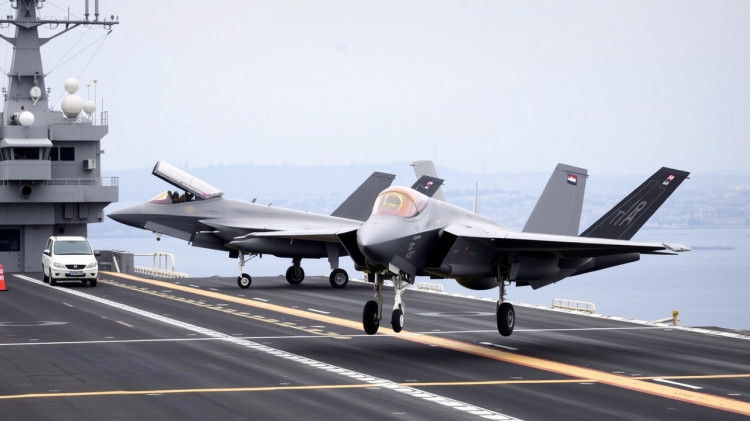
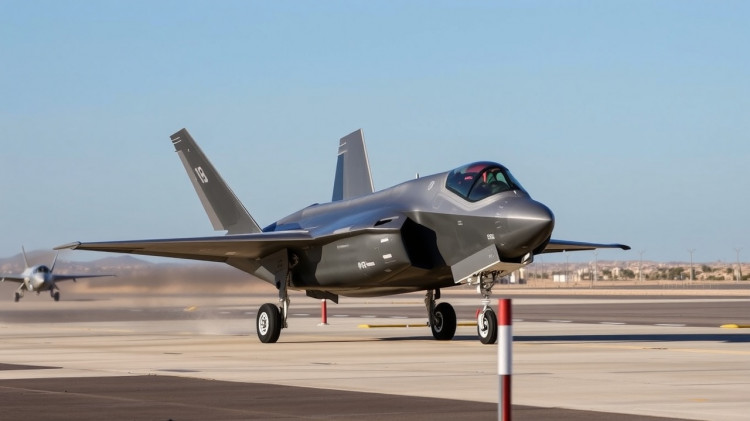
The bill calls for spending an additional £20 billion over the next four years on the nation's nuclear deterrent, including the acquisition of F-35A stealth fighter jets that can carry nuclear warheads.
Additionally, it includes a £5 billion investment over the next four years in autonomous systems and drones.
"That might seem insignificant in comparison to the approximately £55 billion for the United States' multi-year Drone Dominance program," Bailey stated. However, when compared to each nation's prior yearly defense spending, the UK's figure does not appear insignificantroughly 7.5 percent of 2025 UK defense spending, while the US figure is about 5.8 percent. Both are also quite similar as a percentage of GDP."
Additionally, 2.5 billion is set aside for cyber and electromagnetic defenses, and 3.2 billion is allotted for space capabilities.
The Sentinel Unmanned Longreach70 small UAS (Uncrewed Air System) from BAE Systems is on display. It is used for target acquisition, surveillance, intelligence, and reconnaissance.
During the Security Equipment International (DSEI) in London in September 2025, a BAE Systems and Sentinel Unmanned Longreach70 small UAS (Uncrewed Air System) was on display.
Which businesses might profit from increased defense spending in the UK?
It makes sense that UK defense spending has a tendency to be highly internationalized with a bias toward domestic businesses.
According to HANetfs Bailey, "about 45% of MoD procurement spending has gone to UK-headquartered firms since 2019." Increased UK spending can help foreign-listed businesses with significant exposure to UK defense as well as UK-listed names."
Given the US's erratic foreign policy thus far this year, there is a noticeable effort to move away from an excessive dependence on US companies.
Among the businesses that might stand to gain are BAE Systems (LON:BA). is noteworthy because it played a key part in the design of the Tempest jet, which the UK, Italy, and Japan jointly manufactured. Its stock increased by almost 10% between June 29 and July 2.
Wilson identifies Chemring (LON:CHG) in addition to BAE Systems as a possible recipient of the MoD's further technological advancement.
"We see Chemring, a specialist in sensors, electronic warfare and counter-drone technology, coming out of this rather well," he remarked.
"LON:RR; Rolls-Royce. is boosted by factors related to nuclear power and Tempest engines, whereas QinetiQ (LON:QQ). is worth keeping an eye on in the areas of autonomous warfare, robotics, and artificial intelligence," he added.
Additionally, he highlights some intriguing prospects further down the market capitalization ladder, such as Filtronic (LON:FTC), a supplier to SpaceX; Concurrent (LON:CNC), an expert in embedded computing with major defense contracts; and MS International (LON:MSI), which produces navy guns among other things.
Why haven't UK defence stocks increased as a result of the defence bill?
Overall, these stocks haven't recovered from the DIP.
On the contrary, if anything. BAE Systems has only increased by 2.4% in the 12 months ending July 8th, despite its initial surge following the announcement of the DIPs. Over the same time period, Rolls-Royce has increased by a healthy 45%, but the majority of these gains occurred before the DIPs were released; the stock dropped by 1.1% between the DIPs and July 8.
As of July 8, Chemrings' share price was down 2.1 percent year over year, while Qinetiq's was down 5.3 percent.
The primary reason the DIP hasn't significantly increased these stocks is that it wasn't very impressive. The markets priced in the much larger increase in UK defense spending that they had anticipated.
According to Saxos Wilson, "investors have been disappointed lately, but shares in various defense contractors rose last year on expectations for more spending."
How to buy defence stocks in the UK.
There aren't many pure-play ways to invest in UK defense besides purchasing the shares directly.
An exchange-traded fund (ETF) that provides some exposure is one option.
The HANetf Future of European Defence Screened UCITS ETF (LON:NAVY) and the WisdomTree Europe Defence UCITS ETF (LON:WDEP) are two clear examples. Both of these are focused on European defense firms; as of July 8, NAVY and WDEP had about 25% of their assets invested in the UK, while a global defense ETF such as iShares Global Aerospace and Defence UCITS ETF had less than 12% (as of July 7).
There are fewer open-ended funds and defense-focused investment trusts.
Through investments in companies like Rolls-Royce, Serco (LON:SRP), and BAE Systems, JPMorgan Claverhouse (LON:JCH) also provides some exposure to the UK defense market; however, as of May 31, these three stocks only account for 7.7% of the portfolio.
Seraphim Space (LON:SSIT) is home to private businesses that are connected to the space technology theme, even though it has only a passing connection to defense. All of these have a lot of overlap with defense. For instance, the MoD and the US Department of Defense have contracts with Space.






Leave a comment on: Which stocks might profit if the UK increases its defense spending?