
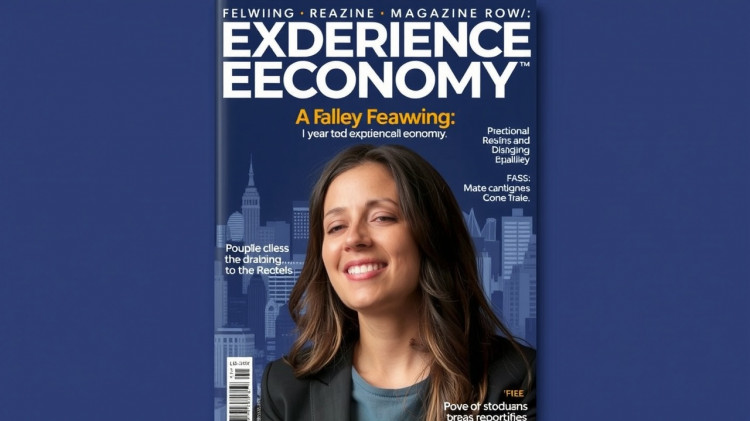
As people tire of spending so much time on their smartphones, demand is rising for real-world experiences. Harry Waight explains how to turn that shift into a business opportunity.
The so-called "experience economy" offers a welcome break from lives increasingly shaped by screens. It centers on carefully designed, in-person encounters that restore a sense of community and a direct physical connection with the world - things missing from many people's daily routines.
People spend more of their lives online, and the figures are still striking. Ofcom reports that UK adults were online for 4.5 hours a day in 2025. Among 18-to-24-year-olds, that rose to six hours and 20 minutes, largely on smartphones. Much of this time is spent apart from colleagues or other people in person: more than 40% of UK workers worked from home for at least part of the week.
More troubling still, much of what we read online may not have been written by a person at all. Ahrefs recently found that almost 75% of new websites contained significant amounts of AI-generated content. Machines now deliver the entertainment - and produce it, too.
The experiential economy offers several investment paths. One is Live Nation Entertainment (NYSE: LYV), the world's largest live-entertainment company, whose business spans concert promotion, venues, and ticketing. That puts it between consumers and the experiences they increasingly value. The stock has faced persistent scrutiny over its competitive practices; earlier this year, a federal jury found that Live Nation operated a monopoly, and the remedy remains unclear.
The experience economy is safe from AI
Exclusive, multi-year contracts with venues and artists make this business unusually difficult for AI to disintermediate. Demand for these experiences became clear when Ticketmaster's system collapsed under 3.5 billion ticket enquiries for Taylor Swift's Eras Tour.
Airbnb (Nasdaq: ABNB) offers another way to invest in the experience-driven economy. It runs the world's largest platform for booking alternative accommodation, with millions of homes worldwide - a pool of listings the company has spent almost 20 years assembling. The rooms and houses themselves are not scarce. Airbnb makes money by helping people pursue the increasingly prized experience of traveling globally, collecting a healthy commission along the way.
TKO Group (NYSE: TKO) offers another way to tap into consumers' strong appetite for live entertainment. The company is divided roughly between the UFC, the world's leading mixed-martial-arts business, and WWE, the dominant force in professional wrestling. Though different, the two operate in closely related markets where each holds a near-monopoly.
TKO Group is different from Airbnb and Live Nation because it owns what it sells rather than connecting buyers with someone else's product. Live sports also have a natural defense against AI-driven commoditisation: each event is unique and happens only once, in real time. Even viewers watching remotely need to be in front of a screen as the action unfolds. With no algorithmic replacement for that experience, demand is relatively insensitive to price.






Leave a comment on: How to profit from the "experience economy"