
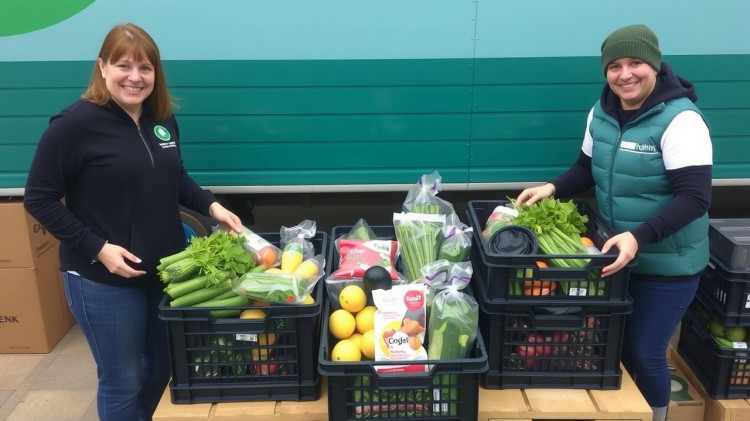
BFIA spent the day at a Trussell food bank, seeing directly how its team helps people who are struggling to afford essentials.
When we arrive at Southwark Foodbank in London, volunteers are filling paper bags with fresh vegetables and arranging leaflets that point people toward available support. The foodbank is run by Pecan, a hard-working charity based in Peckham, and we have come during one of the four sessions held each week. The kettle is on, ready to offer visitors tea or coffee. Parcels usually contain non-perishable food, but a delivery from The Felix Project, a food redistribution charity, means clients can also take home fresh produce today, including potatoes, apples and spring onions.
Southwark Foodbank is part of Trussell, the anti-poverty charity's UK-wide network of 1,400 food banks. We're visiting to see the support it provides to local households, as part of BFIA's Christmas charity appeal for Trussell.
According to Trussell's *Hunger in the UK* report, more than 14.1 million people in the UK - including 3.8 million children - went hungry in the past year because they lacked the money to buy food. During that same period, 6.5 million people needed charitable food provision, including 4.6 million adults and 1.9 million children. They relied on places such as food banks, soup kitchens, food pantries or social supermarkets.
Unemployment and the struggle to find work affect many households, but having a job does not always prevent hardship, the Southwark Foodbank team says. People on minimum-wage or zero-hour contracts can still find it hard to cover basic costs. The problem appears widespread: three in ten (30%) people referred to food banks in the Trussell community live in working households.
Trussell x BFIA: at trussell.org.uk Donate here to make a difference this Christmas.
Southwark Foodbank offers more than food. Pecan and Trussell also work to address the problems that lead people to seek help from a food bank. At some sessions, advisers from Thames Reach and Citizens Advice are available to help clients check their benefits, manage money and debt, and find safe, suitable housing.
"People need these services where they already come for help," says Kevin Baddeley, a generalist advice caseworker at Citizens Advice who attends two food bank sessions each week. Many of the people he meets have never encountered Citizens Advice. Without his presence - and the staff pointing him out - he would have little chance to tell them what support is available. "It's only because I'm there, and the people at the session are pointing out that I'm there to speak to, that I can make them aware of the services we offer," he says. That personal contact matters, especially for people at risk of digital exclusion who need help accessing support. His funding, though, is due to end in August 2026.
"Whenever people get the right support, it really does make a difference," says Genevieve Osei-Kuffuor, manager of Southwark Foodbank. She has seen some clients stop using the food bank altogether, while others now come "a lot less" after speaking with an adviser there.
Emily Monaghan-Coombs, Pecan's foodbank projects development manager, stands beside food parcels in the Southwark Foodbank warehouse.
"Food banks are doing more and more," says Monaghan-Coombs.
The staff and volunteers put a great deal of thought into their work, and their care for the people they support comes through clearly. Alongside its regular food bank sessions, Pecan runs several other community projects. Funding remains a serious concern, affecting both the food bank and services such as The Pantry, a social supermarket where a 5 shop provides fresh fruit, vegetables, and other groceries worth 15 or more. Pecan has also seen funding fall from trusts and foundations, as well as from individual donors.
"We're under serious pressure as funding streams dry up," says Shahid Mughal, head of food services and finance. "The situation is extremely difficult. Funding is falling while demand keeps rising."
"Food banks are taking on more responsibility because they're covering gaps in community and local services," says Emily Monaghan-Coombs, Pecan's food bank projects development manager. That extra support requires additional resources, she says, but it can also help people referred to the food bank improve their circumstances.
"Food is only one part of it," Shahid says. "People also need the services around it. If funding for a CAB Citizens Advice adviser runs out next year, that will have real consequences." There are worries, too, about finding enough money for the community support officer and the staff who run the food bank sessions.
Food parcels provide a lifeline to struggling households
Southwark Foodbank depends on generous local donations, and organising them takes considerable co-ordination.
The team collects supplies from 18 collection points across the borough. "You need a logistics network to do that," Shahid explains.
At the warehouse, volunteers assemble food parcels for about 120 households every week. Drivers bring in donations, while other team members sort everything into zones at the packing station. The team is deeply grateful for the support. Each parcel contains three days' worth of food, following Trussell guidelines.
They accept long-lasting food such as pasta, rice, beans, canned meat, and fish, along with everyday essentials like nappies, shampoo, and period products. Supplies can run short, so they sometimes ask donors for particular items and post shopping lists beside supermarket donation points.
Trussell x BFIA Trussell x BFIA: visit trussell.org.uk to donate and help make a difference this Christmas.
A warm welcome at every food bank session
For Trussell and Southwark Foodbank, every visitor should be met with warmth.
"Food banks are a lifeline for people facing hardship, but they offer far more than emergency food," says Lynda Battarbee, Trussell's director of operations. "They give people hope, dignity and a warm welcome."
Walking into a food bank can be stressful, but staff and volunteers usually meet people with compassion and understanding.
Sometimes, a cup of tea and a genuine conversation are enough to make someone feel heard for the first time. That connection can lead to practical help, including housing assistance, mental health care, or social security.
"These connections may make it less likely that people will need the food bank again."
Benjamin has volunteered here for a year. He offers anyone who needs help a hot drink - tea, coffee, or hot chocolate.
Meanwhile, Sara has spent 10 years volunteering at food banks, five of them at Southwark. Lily is attending her first session. Together, they hand out surplus donations that do not fit the standard food parcels but are greatly appreciated. They also discreetly point people toward essentials such as period products, available in a basket for anyone who needs them.
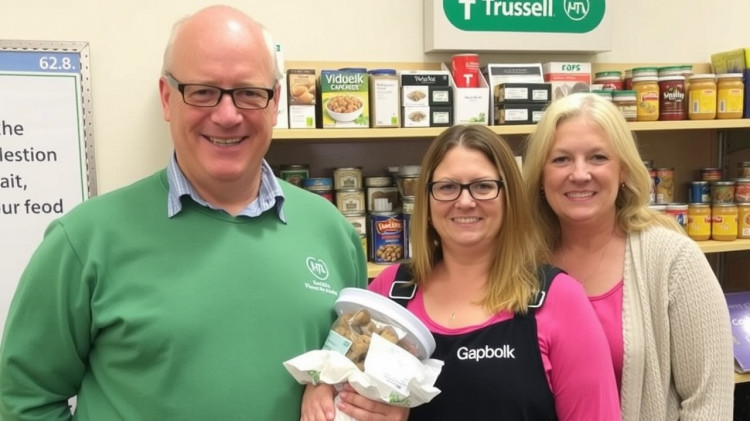
BFIA journalists with Southwark Foodbank volunteers and staff.
BFIA visited Southwark Foodbank to see its community work firsthand.
The session is busier than I expected, I learn later. I think back to my conversation with David Wilson, 46, who had turned to his local food bank in Norfolk in April 2022.
"People are having a hard time everywhere. This isn't confined to one part of society," he said.
I saw that myself. Pensioners, families and young people all needed support.
David lives with a degenerative bone condition alongside other health problems. As he points out, financial hardship can affect you even when you have a job.
BFIA recognises the support Trussell provides through food banks, as well as its campaign to end hunger for good. That is why we are raising money for Trussell this Christmas.
"No one in the UK should have to rely on a food bank. Yet last year, food banks in our community handed out 2.9 million emergency parcels to people in hardship - 51% more than five years earlier," says Ayaz Manji, head of policy at Trussell.
We want everyone to afford basic necessities, including food and heating, without having to rely on a food bank. Our social security system is not meeting that standard.
If you can, please support our Christmas charity appeal by donating through this link. Thank you for your kindness.
Daniel Hilton headshot Daniel Hilton Junior writer At BFIA, we regularly cover the economy, working through each month's figures on inflation, unemployment, energy prices, and GDP growth.
Numbers on a page can hide the people behind them. Inflation is not just a headline; it may mean a parent cannot afford to pack a child's lunch, or a pensioner has to choose between heating the house and paying another bill.
That's why BFIA is proud to partner with Trussell on our Christmas appeal. The charity supports people bearing the brunt of the UK's economic troubles.
Trussell and the food banks serving its communities do more than hand out a few days' worth of food. They are working to reduce growing reliance on food banks by addressing the causes behind it.
Staff and volunteers told BFIA that the central issue is income, not a lack of food. Many people simply do not know which support they can claim, leaving them trapped in food insecurity.
However, as charities confront shrinking budgets, the efforts that tackle the root causes of the problem will face cuts.
Your support can help Trussell do more than provide food for families this Christmas. It can help people move beyond food insecurity and regain their footing.
Trussell x BFIA: at trussell.org.uk Donate here to make a difference this Christmas.
View Deal






Leave a comment on: We visited a food bank supporting households under financial strain