
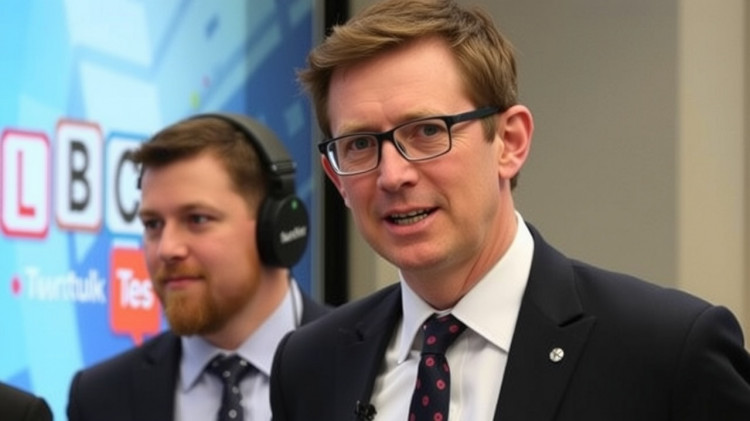
The domestic market in the UK is shrinking as foreign institutions take advantage of deals while regular Brits lose out
When Andy Burnham takes over at number ten, he will have many significant responsibilities. Attempting to repair the UK's seemingly broken stock market will be one of them.
Investors may find opportunities to purchase UK stocks due to their ongoing undervaluation, but it appears that foreign institutions are profiting from this rather than the nation's own do-it-yourself investors.
A foreign private equity firm has made an opportunistic takeover bid for EasyJet (LON:EZJ), the most recent British company to be targeted. It's not going to be the last.
According to data from stockbroker Peel Hunt, since the beginning of 2023, takeover offers for British businesses have totaled 165 billion dollars. Eleven initial public offerings (IPOs) totaling £6 billion have occurred during that time. In other words, the UK market's value has drastically decreased.
Watch the entire video here. According to a report by Charles Hall, head of research at Peel Hunt, "to say that the UK has a problem in retaining its companies and listing new ones would be a massive understatement in our view."
Richard Stone, the CEO of the Association of Investment Companies (AIC), a trade association that represents investment trusts in the UK, stated that "bolder interventions are required to save our stock market because the situation on the London market is now so serious."
Is there anything Burnham can do to encourage British investors to purchase their own stock?
Why do Brits not invest?
The UK's lack of an investment culture is a contributing factor. Savvy the Squirrel, the Starmer government's mascot, led a retail investment campaign in an effort to address this.
The disruption in Downing Street seems to be making Brits even more wary, and it doesn't seem to have worked. According to research from the investment platform IG, political uncertainty has caused nearly one in four British investors (23%) to alter their investment allocation.
According to Chris Beauchamp, chief market analyst at IG, "many retail investors are actively reassessing where they want their money invested, rather than simply expressing concern about the outlook."
There are several sources of uncertainty that UK investors must deal with. In addition to the ongoing political unrest at home, there is the threat of ongoing inflation and the ongoing geopolitical tension in the Middle East.
Beauchamp stated, "That doesn't necessarily mean investors are abandoning risk altogether." "Many people are still searching for long-term growth prospects, but more political and economic stability in the coming months will be necessary to boost confidence in UK markets."
What could Burnham do to preserve the stock market in the United Kingdom?
Leaders in the industry have urged Burnham to change the tax structure surrounding UK stocks in order to entice domestic investors to purchase the nation's shares.
The AIC's Stone stated that "abolishing stamp duty altogether would give the biggest financial return to the UK economy by encouraging more investors to buy UK equities and drive economic growth." She also advocated for changes to the regulations pertaining to venture capital trusts (VCTs) and investment trusts.
He emphasized that investment trusts currently face "onerous double taxation" because investors pay stamp duty when they purchase shares of the trusts themselves, while investment trusts pay stamp duty when they purchase shares that are listed in the UK.
Stone stated, "It's critical to support businesses at an earlier stage of their growth journey by reversing the decision to reduce tax relief on VCTs." "Funding for VCTs, which give expanding companies the money they need to scale up and get ready to list on the stock market, is predicted to drastically decrease as a result of the tax relief cut from 30% to 20%.
Stone went on, "We decrease the likelihood of seeing successful IPOs on our domestic market if we don't support our homegrown companies." Additionally, domestic companies will continue to relocate abroad, depriving the UK of wealth and employment opportunities."





Leave a comment on: Can the UK stock market be saved by Andy Burnham?