
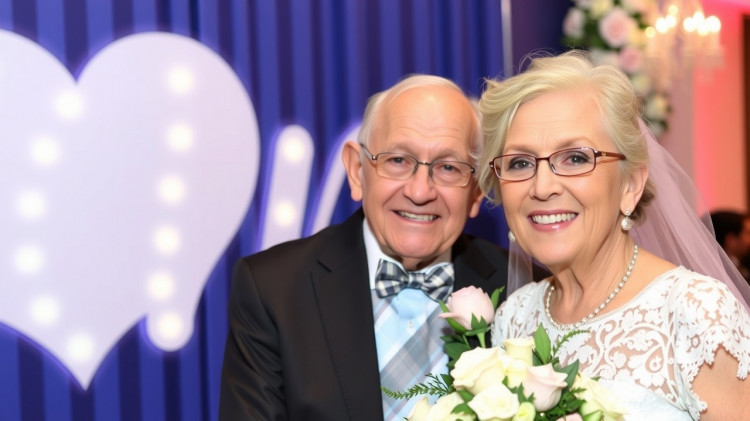
Pensions will be subject to inheritance tax (IHT) starting in April, so some families will need to make careful plans to prevent unwanted disinheritance
The Office for National Statistics (ONS) reports that marriage rates among adults over 50 have increased dramatically in recent years. According to recent data, the percentage of men in the 50+ age group who said "I do" has increased by 33% over the previous ten years; the percentage is even higher for women in that age group, at 47%.
These numbers are even higher for those in their 60s, where over the ten years leading up to 2022, there has been a 33 percent increase in men and a 56 percent increase in women who have married at age 60 or older.
Whether they are a person's first, second, or third marriage, later-life marriages frequently result in children on at least one side. The ONS defines blended families as those in which at least one child has a parental relationship with both members of the couple and another child is a stepchild. Estimates vary, but according to ONS data, between 10% and 33% of UK families are blended.
When it comes to gift-giving or holiday planning, blended families can present challenges. However, what occurs when the stakes are greater?
Watch the entire video here: If you're divorced or widowed and you've found love again, the last thing you might want is to start contemplating the end. However, upcoming changes to inheritance tax (IHT) regulations may require more families to do just that.
According to the 2024 Budget, defined contribution (DC) pensions will be regarded as an estate for IHT purposes starting in April 2027. The number of estates liable for IHT is predicted to double as a result of the change, reaching about 8%.
It serves as a reminder to those who have children from a prior marriage of the value of preparation. One common piece of advice is to start thinking about what you want to happen when you pass away. Discussions are typically easier and emotions are more stable when everyone is well and getting along. Those discussions may become more challenging once conditions change.
What misconceptions and myths exist regarding estate planning?
Many people still believe that only the extremely wealthy need estate planning. However, more families are now subject to inheritance tax due to rising home prices and the nil-rate band (NRB) being frozen at 325,000 since 2009.
Other common misconceptions include the idea that unmarried couples have the same legal protections as married couples, that a spouse inherits everything in the event of an intestate (without a will) death, and that pension benefits automatically pass to family members.
The importance of clearly expressing your wishes is highlighted when you consider the challenges of blended families, varying financial needs, and pension changes.
In terms of estate planning, how do trusts fit in?
Control over the transfer of assets is frequently achieved through the use of trusts.
The settlor, who supplies the assets, the trustee, who oversees them, and the beneficiaries, who eventually profit from them, are the three main participants in any trust.
Cash, real estate, investments, and land are examples of assets that can be put into trust.
There are numerous trust structures available in the United Kingdom.
Lifetime trusts, which include personal injury trusts, vulnerable persons trusts, and bare trusts, go into effect right away.
Will trusts are established by a will and only become operative upon death. Pilot trusts and discretionary will trusts are two examples that can hold assets like life insurance payouts or pension death benefits.
Often referred to as life interest trusts, interest in possession trusts enable a surviving spouse to profit from an asset while they are still alive without actually owning it. For instance, the underlying capital may eventually pass to your children or other beneficiaries, but they may have the right to live in a property or receive investment income.
Trustees in discretionary trusts have extensive control over the distribution of assets. Assets may fall outside the settlor's estate for IHT purposes if they survive for seven years following the transfer, though periodic trust charges (usually every ten years) might still be applicable.
Whom to designate as a beneficiary.
Investment platform Aberdeen Adviser's head of technical engagement, Andrew Zanelli, cautions about a possible "nomination minefield" once pensions are subject to IHT.
Whether pension assets should go to a surviving spouse or directly to children from a prior relationship may be a crucial question for blended families.
The appeal of entrusting everything to a husband or wife is evident. The interspousal exemption applies to pension assets that pass directly to a surviving spouse or civil partner and are exempt from IHT upon first death.
The NRB and an additional residential nil rate band (RNRB), which is currently 175,000, are both covered by this exemption. This implies that a husband and wife may transfer up to £1 million without taking IHT into account.
What comes next presents a challenge.
When the first spouse passes away, it is hoped that everything will be directed to the first spouse's children or other designated beneficiaries, for example. But things can alter.
As an illustration, Zanelli says: "The primary concern here is the possibility that the children of the first to pass away will not inherit. Let's say the husband passes away first. By designating his wife, he is essentially giving her future authority over his pension fund. She could remove his own children from her list of nominees at any time in favor of other people. Remarrying someone else or having a falling out with his kids could be the reason for this."
Giving assets to kids directly creates a different issue. Any amount above available allowances may attract IHT immediately, plus the surviving spouse may have no access to those funds if they need them.
According to Zanelli, you can find peace of mind if you're trying to care for your surviving spouse but also want to make a commitment for your kids. This is because your spouse will be taken care of for the rest of their life, even if they don't own the asset, and your kids will eventually inherit any remaining capital.
A discretionary will trust, life interest trust, or spousal bypass trust are a few examples of these types of trust arrangements.
Bypass trusts: what are they?
Spousal bypass trusts have historically been used to strike a balance between providing support for a surviving spouse and safeguarding assets for children from past relationships.
It's debatable if they will continue to be popular after April.
According to Dan Blandford, a chartered financial planner at The Private Office (TPO), there could be two main strategies.
The first is that individuals may completely abandon bypass trusts in favor of leaving assets directly to a spouse, taking advantage of the IHT exemption and putting their faith in them to transfer wealth to the intended beneficiaries in the future.
Families hoping to avoid an immediate IHT charge might find this appealing, but it mainly depends on the surviving spouse fulfilling those wishes in the end.
The second scenario he predicts is more likely to occur in wealthy families with sizable pensions that are anticipated to sustain multiple generations.
Some may decide to pay the tax only once and transfer assets into a discretionary trust structure rather than letting pension wealth pass down through successive estates and possibly be subject to IHT several times.
According to Blandford, "I envision that as the second reason it will be used; do people accept a one-time IHT charge in exchange for avoiding repeated charges as wealth passes from one generation to the next."
However, he thinks that spousal bypass trusts will continue to play a significant role for people who are more driven by control than by tax savings.
These trusts help shield beneficiaries from risks like divorce or financial difficulties and enable people who are concerned about inheritance tax to decide when assets or income are distributed.
In addition, he anticipates that more people will withdraw their pension funds over the course of their lives, which will lower the amount of the pension fund that could be subject to IHT.
The significance of going over a will.
Pension-related estate planning issues are not the only ones.
The director of financial planning at Smart Financial, Tamsin Caine, uses the family home as an example of a life interest trust. While the deceased spouse's share eventually passes to their children, the surviving spouse may be entitled to live in the property for the rest of their lives.
In order to do this, the property must typically be owned by tenants in common. If not, ownership automatically transfers to the surviving spouse without the need for a will.
Regular reviews and meticulous drafting are crucial, according to Caine.
It's crucial to review and update wills to ensure that they still reflect all of your desires and are in compliance with the law."
She also advises against using pensions as a primary tool for IHT planning.
"The purpose of pensions is to supply income during retirement. Pensions should be the last thing you touch if you're thinking about passing down the generations, in my opinion, even though we know people have used them to plan for the next generation," she says.
In each of these situations, legal counsel is strongly advised, ideally in conjunction with financial counsel if at all possible.
Paul Gotch works as a senior partner for Private Client Solicitors. According to him, a pension will by definition be held in trust, subject to scheme regulations and specific policy. In reality, the only thing that anyone can do is alter their nomination form or expression of wish, which specifies to the trustee who will inherit it upon their passing. Although the trustee should follow those recommendations, they are not legally enforceable.
Consider how you're dividing things. Are you splitting things 50/50? Do you have additional children with your new spouse? Does the spouse receive the pension and any children receive other assets?
"You must strike a balance between your legal options and what is reasonable from a financial standpoint. "Are you leaving your spouse enough money to cover the cost of the property, their standard of living, and other expenses" asks Gotch.
Similarly, if assets pass to the surviving spouse, there's a chance that, upon their passing, they will amend the will and nomination to only include their own children, disinheriting the first."
Additionally, consider the cost of care. When a relationship is going well and there is a lot of trust, it's common for the surviving spouse to act morally when things change.
Gotch wonders what would happen if they didn't have a falling out with your kids but required costly care for several years. They intended to transfer the remaining assets as their spouse had intended, but by the time they pass away, these may have been considerably diminished.
In the end, no trust structure can completely remove every risk. Intentions can be misinterpreted, relationships can change, and family circumstances can change. However, for blended families dealing with a more complicated IHT environment, taking the time to establish clear plans may help avoid disagreements and uncertainty in the future.







Leave a comment on: How can you stay out of an IHT "minefield" if you get married again?