
London is diverging: venture capital is beating a path to King's Cross while bond investors are keeping Westminster under strict control
Excited talk of "Manchesterism" is overtaking London as political pundits in the UK become fixated on the largest by-election in history. However, the country's center of gravity will return to London regardless of the outcome of this bizarre British election; Manchesterism will follow in the footsteps of Levelling Up and all other attempts at post-war regional policy. Only London is significant in terms of the administrative class.
And from the standpoint of an investor, there are two very different Londons. One is in Westminster, making headlines every day: a chancellor whose every announcement makes gilt yields twitch, a prime minister who has over 90 of his own MPs calling for his resignation, and a government operating on fumes.
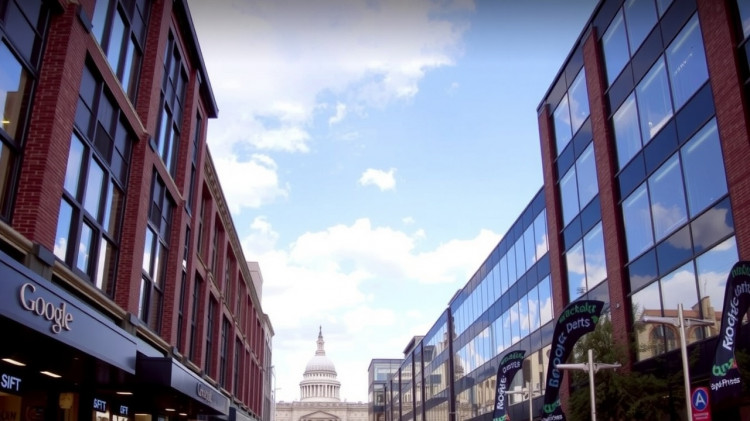
Few people mention the other London. The atmosphere is completely different at King's Cross, five stops and one line change north of SW1. This is the place to look if you're an investor trying to predict where British prosperity will come from over the next 20 years. Venture capital is paving the way for King's Cross while bond investors keep Westminster on a necessary tight leash.
The information is astounding. In April 2026, London's office leasing for AI firms increased by about ten times over the previous year. Over the past year, Databricks pre-leased 136,000 square feet in Fitzrovia, Anthropic took 158,000 square feet at Regent's Place, quadrupling its UK headcount from 200 to 800, and OpenAI signed a lease for 88,500 square feet at Regent Quarter, its first permanent London office. Microsoft acquired 100,000 square feet in Soho.
In the first quarter of 2026, start-ups in the UK raised £7.8 billion, a 60 percent annual increase, with 74 percent of that amount coming from artificial intelligence. Outpacing France, Germany, and the Netherlands put together, the UK accounted for 41% of all venture capital in Europe. Currently, London has more AI companies with 50 or more workers than San Francisco.
The AI flywheel is spinning in London.
According to economist Enrico Moretti, this is the development of a cluster rather than a blip. Infrastructure develops around skilled workers, capital draws more skilled workers, and skilled workers attract capital. Regardless of the political climate, clusters become self-reinforcing once they are established. With 20,000 AI engineers, London has more than twice as many as any other European city. The AI flywheel in London is rotating. Westminster may be restrained by global capital, but it is funding Anthropic's hiring of engineers in Regent's Place.
The Seattle technology cluster was founded primarily because Bill Gates wanted to return home in 1975, according to former hedge-fund manager Eric Renander, who goes by Erik@YWR online. More recently, in 2014, Demis Hassabis did the same for London, requiring DeepMind to stay in London indefinitely as a condition of Google's acquisition. As evidenced by the documentary The Thinking Game and the biography The Infinity Machine, his intense sense of place has turned London's AI flywheel, and the UK is quietly beginning to reap the rewards.
The path to mastery, as defined by American author Robert Greene, perfectly aligns with Hassabis's personal journey. Early fascination with chess was Hassabis's innate tendency; by the time he was four years old, he was a prodigy. Afterwards, he worked as an apprentice in several related fields. He oversaw the creation of the popular simulation game Theme Park at the age of 17, graduated from Cambridge with a double first in computer science, and started Elixir Studios. While most aspirational technologists would have stopped at "successful games entrepreneur," Hassabis went on to pursue a PhD in cognitive neuroscience, which is a classic mastery move that takes a detour and delves deeper into the issue rather than following the straight line.
According to Greene, masters eventually create work that transforms their field. Additionally, DeepMind's AlphaFold project in 2020 resolved the protein-folding prediction problem in biology at a scale that was previously thought to be unattainable. Hassabis and John Jumper, his colleague, received the 2024 Nobel Prize in Chemistry for this. A computer scientist received chemistry's highest honor for resolving one of biology's most pressing issues, marking a turning point in lateral thinking.
Keir Starmer, whose constituency ironically includes King's Cross, is living on borrowed time in Westminster. The PM-in-waiting, Andy Burnham, made a number of U-turns during the first week of the unofficial leadership campaign, including renouncing prior borrowing obligations and admitting that he is also in love with bond markets.
But for Burnham, Europe and the question of whether or not Britain should rejoin the EU are the Ming vase issue. Rewinding four decades was his primary strategy for navigating this sensitive issue in a constituency that was overwhelmingly pro-Brexit. His critique of Thatcherism is evocative of Japanese imperial soldiers discovered on isolated Pacific islands ten years after Tokyo's capitulation, oblivious to the fact that their war was over and that the world had moved on.
King's Cross is experiencing growth and dynamism today, primarily as a result of one man starting the flywheel of self-sustaining success through his mastery of lateral thinking and risk-taking. London has also emerged as a global hub for risk capital. A short tube ride away is a linear-thinking, backward-looking Westminster that is becoming more and more controlled by its capital providers. However, in the decades to come, Hassabis' control over his territory in N1 will have a greater influence on the development and prosperity of London and, consequently, the UK than anything that comes from SW1, much less Manchester.





Leave a comment on: Global risk capital is drawn to London's King's Cross