
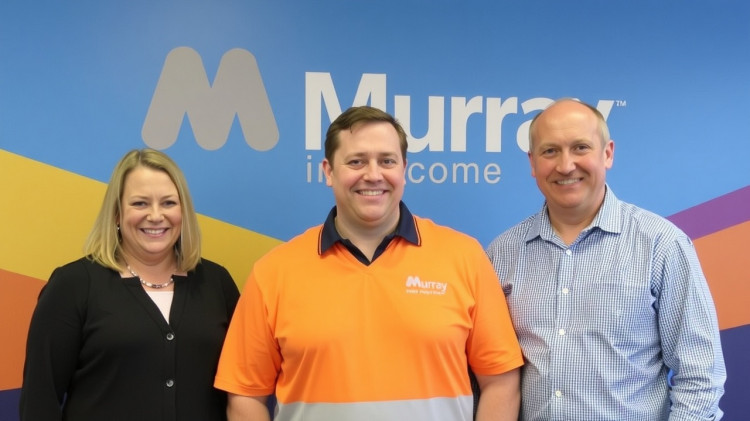
The team behind the successful Artemis Income Fund has been hired by the underperforming Murray Income Trust to help it improve
Can they be successful?
Murray Income Trust (LSE: MUT) declared at the end of the previous year that it had chosen to replace Aberdeen as its investment manager with the group responsible for the best-performing Artemis Income Fund. The need for the change was urgent.
Over the five years ending November 19, 2025, the shares produced a total return of just 26.9%, placing Murray Income firmly at the bottom of the UK equity income investment trusts sector rankings. The FTSE All-Share index gained 70.9% during that time. Over the previous ten years, the Artemis Income Fund, which is run by Andy Marsh, Nick Shenton, and Adrian Frost, has outperformed the UK equity-income fund industry by about 1.70 percentage points annually.
Artemis's success has been largely attributed to the growth of this fund, which currently has assets of about £5.3 billion. The boutique's assets under management increased from just 28.5 billion at the end of 2024 to about 41 billion at the end of the first quarter.
Murray Income is now Artemis's second trust mandate. In 2025, Artemis UK Future Leaders replaced the Invesco Perpetual UK Smaller Companies Investment Trust, which it also acquired.
The new portfolio for Murray Income.
At the start of March, the Artemis team formally assumed control of the Murray Income portfolio. All of the trust's assets were quickly reorganized to reflect the portfolio of Artemis Income.
AstraZeneca, National Grid, Unilever, RELX, and TotalEnergies were Murray's top five holdings at the end of 2025, making up 21.6% of the portfolio. Tesco, GSK, Lloyds Bank, NatWest, and Aviva have now taken their place, accounting for a comparable 23.6 percent of the total.
The emphasis on cash flow rather than yield is the main distinction between the new Artemis strategy and the previous Aberdeen approach. To determine how much money a business makes and whether its dividend is sustainable, the team looks at free cash flow. They focus on businesses that they think have the greatest potential for long-term growth, free cash flow generation, and overall shareholder yield (they prefer businesses that can repurchase stock).
The different approach can be seen by comparing the old and new portfolios. According to Morningstar data, the new portfolio is trading at a free cash flow yield that is roughly 50% higher than the old portfolio.
When compared to the Aberdeen portfolio, the top five holdings in the Artemis portfolio yield an average of about 1.7 percentage points more. Overall, the new holdings are more affordable, produce more revenue, and provide a higher yield for shareholders. This should support the trust in maintaining its 52-year dividend growth record, which has earned it the Association of Investment Companies' (AIC) "Dividend Hero" designation.
It appears that Murray Income has a bright future.
Although they are new to Murray, Marsh, Shenton, and Frost have experience with income investing. Based on their performance at Artemis Income, the trust has a bright future ahead of it.
Investors who have already backed their current open-ended fund might want to think about the vehicle that will yield the highest returns. According to recent AIC research, 77% of investment trusts have outperformed open-ended funds managed by the same manager over a ten-year period, with average excess returns of 1.3 percentage points annually.
By using leverage to increase returns, the new managers are already taking advantage of a significant distinction between investment trusts and open-end funds. By the end of March, the trust's borrowings were between 8 and 10 percent of its target leverage.
Murray Income now provides affordable exposure to a sector-leading strategy at a 7 percent discount to net asset value (NAV) and yielding 4.3 percent (compared to its open-ended peer's 3.5 percent).







Leave a comment on: Artemis is Murray Income Trust's new beginning