
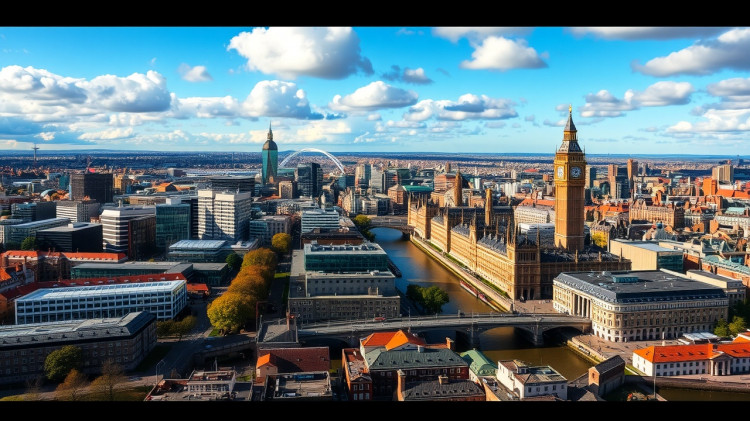
Following a disastrous migration to the continent, bankers are returning to London
According to Kaylie Pferten, we ought to lay out the red carpet.
There were numerous rumors five years ago that the financial sector would relocate from London to Paris, Amsterdam, or Frankfurt. The City would lose its position as the primary center of the finance sector, along with all the jobs and tax income it generated, following Britain's exit from the European Union. There wouldn't be much room for a nation outside the EU since agreements would have to be reached within the bloc and trades would have to follow EU regulations. The only real question was which of the continent's major cities would replace London.
However, freshly baked croissants for breakfast and two-hour lunch breaks are out of the question for analysts and traders. The US mega-banks are apparently not relocating in large numbers to Paris. JPMorgan began relocating some of its Paris-based employees back to London last week. In 2021, Jamie Dimon, the bank's CEO, issued a warning that the company might decide to relocate all of its European operations outside of the City. Rather, it has been gradually growing its workforce and constructing Canary Wharf's largest tower to accommodate them all. Its intentions to establish Paris as the operational hub seem to have been quietly abandoned.
The reason is easy to comprehend. The promises made by President Emmanuel Macron to create a unique system for international bankers have not materialized. The "temporary" tax surcharge on individuals making over £250,000 annuallynot much for a top banker at JPMorganhas been prolonged for an additional year. France will need to raise taxes once more due to the government's paralysis and the massive deficit that needs to be fixed.
Problems with BFIA today. President Emmanuel Macron of France.
In the meantime, investors are going to be discouraged from visiting Amsterdam. The challenge from the Dutch city was just as serious as the one from Paris. It drew a number of well-known listings, including industry titans like Universal Music, due to its strong stock market and long history in finance. However, the Netherlands now intends to apply the 36% capital gains tax to unrealized gains as well. In other words, even if you haven't cashed in your investments yet, you will have to pay a significant portion of the 10 percent increase in value over the course of the year in taxes.
Even worse, if those same investments decline by 10% the next year, you won't be eligible for any kind of reimbursement or allowance. The state will essentially seize 10% of your winnings, but it won't be compensated for any losses. It will be the harshest capital gains taxation system in the developed world. Under that regime, Amsterdam's survival as a financial or business hub is inconceivable. Regarding Frankfurt, there is no indication that any banks are relocating to the city, and the German economy is still stagnant in spite of the significant increase in government spending intended to stimulate growth.
How to restore the crown to the City of London.
All things considered, now is the ideal time for London to take back its position as the primary financial center of Europe. Modest steps in the right direction have been made. A new junior market in "unquoted companies" has been established, the cap on bankers' bonuses has been removed, and some listing requirements have been loosened. The King's speech later this month promises us more reforms. Even if it's only a very small beginning, it's a start.
However, there are also challenges, such as increased income taxes, the termination of non-dom status for finance employees who relocate from overseas, some of the highest inheritance taxes globally, and now an increased tax rate on dividend and interest payments. It might worsen in the upcoming budget. This won't convince any more bankers to relocate to this side of the Channel.
The government ought to be helping much more. A new version of the non-dom regime might be implemented, possibly based on Italy's flat-rate tax system, which has contributed to Milan's prosperity. The stock exchange might become a truly lax regulatory body for new listings as a result. Britain has enormous residual strengths in the finance sector, which is still one of the largest in the world. It hasn't suffered nearly as much as everyone had anticipated from Brexit. However, the City will need to put in a lot more effort if it wants to take back its crown.






Leave a comment on: London is reclaiming its position as the financial center of Europe