
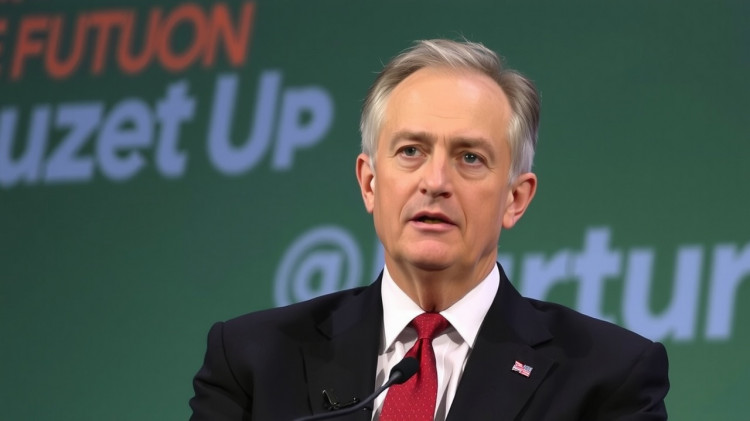
As the cost of the state pension rises, former prime minister Tony Blair's think tank has called for a change
The current state pension should be abandoned and replaced by a new flexible fund starting in 2030, according to a think tank headed by former UK prime minister Tony Blair.
The introduction of a "Lifespan Fund" at the end of the decade has been suggested by the Tony Blair Institute for Global Change. The triple lock, which was used to raise the UK state pension at significant expense to the government, would be eliminated under the proposed reform.
According to the Office for Budget Responsibility (OBR), the number of people over state pension age is expected to increase from 12.6 million in 2026 to over 18 million by 2070, increasing the state pension's current cost of 5 percent of GDP to 7.7 percent by that time.
BFIA's current problems. .
What reforms to state pensions is the Tony Blair Institute for Global Change suggesting?
According to the ideas put forth by the think tanks, people would accumulate credit through employment and other pursuits. They would be able to use it while they are employed, for instance, if they needed money because they were unemployed for up to six months or had to take on caregiving duties.
Only those taking time off to "boost their future earnings potential or to engage in another socially useful activity" would be allowed to do this, according to the report.
After going back to work, people could increase their contribution rate to make sure their final entitlement was sufficient to support themselves.
A system where people could decide when to retire and receive a customized amount based on their age and life expectancy would replace the state pension age, according to the report.
However, a person would only be able to access funds if they had accumulated enough credit to guarantee that their pot would last at least ten years.
According to the think tank, this would allow people with lower incomes and shorter life expectancies to access their fund's income earlier.
The proposals also proposed raising payments in accordance with average earnings and eliminating the triple lock.
According to calculations made by the Tony Blair Institute for Global Change, the Lifespan Fund would considerably lessen the financial burden on the public coffers.
According to their estimates, the new fund would cost 5.31 percent of GDP by 2073/74, as opposed to 7.65 percent if the state pension system remained in place.
The New Lifespan Fund would be a significant regression.
Steve Webb, a partner at the pension firm LCP and a former minister of pensions, has expressed disapproval of the plans.
He stated: "We recently established a new state pension system that provides a solid foundation for retirement planning and is comparatively straightforward and standardized.
"Replacing it with something incredibly intrusive and complicated, which would take decades to fully implement, would be a major step backward. The "
The idea of tying state pension payments to individual health records and life expectancy is "deeply troubling," according to Webb, who served as pensions minister when the triple lock was implemented in 2011.
He stated, "It is very difficult to make a precise leap from health records to life expectancy, leaving aside issues of confidentiality and data quality."
"The report claims that they would not want to give higher pensions to people who had worse health due to lifestyle choices like smoking, but it is difficult to understand how they would ignore the negative effects of smoking on a person's general health. A "
Webbs' remarks were echoed by Tom Selby, director of public policy at investment platform AJ Bell, who stated that a change to the state pension "could create even more uncertainty as well as complexity."
He stated that "the most radical ideas, like setting incomes based on personalized life expectancy and health data, will surely never get off the ground."
Selby, however, stated that the report might serve as "a decent guide to future policy thinking" and that the triple lock should be eliminated.
Allowing people to receive state pension income at a younger age "isn't completely inconceivable," but he said that increasing payments in accordance with earnings "feels a reasonable compromise."
In a different piece, we examine alternatives to the triple lock.







Leave a comment on: The "Lifespan Fund" is a new pension plan proposed by Tony Blair's think tank