
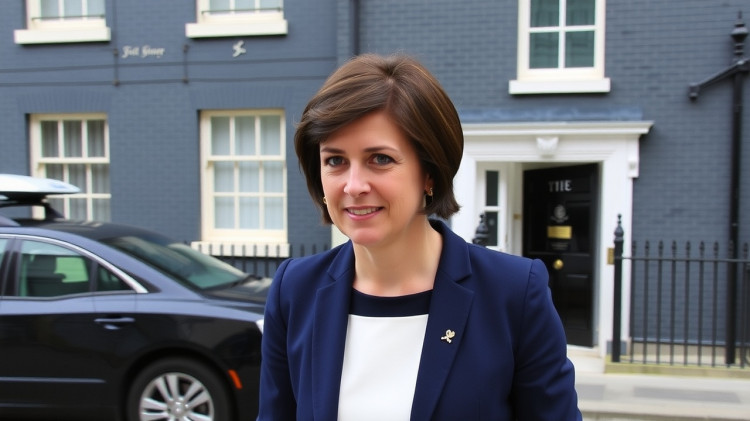
In the Autumn Budget on Tuesday morning, Chancellor Rachel Reeves seemed to lay the foundation for higher taxes and broke her manifesto promise not to raise income tax
Refusing to reiterate her manifesto promise not to raise income tax, National Insurance, or VAT, Rachel Reeves has provided her strongest hint to date that income tax increases may be in the works in the Budget.
"If we are to build the future of Britain together, we will all have to contribute to that effort," the chancellor stated in a speech on Tuesday, November 4, seemingly laying the groundwork for tax increases in the Autumn Budget. Everybody has a part to play. The "
She went on to say that "austerity, reckless borrowing, and made-up numbers" were "the problem, not the solution" despite the UK's dire economic outlook.
Reeves has a challenging budget; estimates from the think tank Institute for Fiscal Studies (IFS) indicate that in order to preserve current fiscal policy and preserve the £10 billion in fiscal headroom she had in March, she must close a £22 billion gap in the public coffers.
It appears that tax increases will be required to close the gap since the chancellor has rejected significant spending cuts and increased borrowing (which would violate her own self-imposed fiscal rules).
The chancellor declined to provide a direct response when asked if the manifesto commitment to not increase VAT, National Insurance, or income tax was still in effect. Rather, she stated: "We are going through that process, and I will lay out the specific policy choices on November 26. That is the right thing to do. A "
According to a think tank connected to Labour, not raising income tax runs the risk of doing more harm than good.
For a while now, analysts and economists have predicted that taxes would increase in the budget, and the likelihood seems to be growing every day.
The chancellor has now been urged to "take decisive steps in her Budget in order and aim to double her level of headroom, while focusing on reducing prices, poverty and protecting payslips" by a powerful think tank with strong ties to Labour.
According to the Resolution Foundation, which was headed by Pensions Minister Torsten Bell until 2024, in order to accomplish this, tax increases totaling about £26 billion are probably required because a reversal of welfare reform and a reduction in productivity growth projections are anticipated to cost the government billions.
According to the think tank, avoiding the three major taxes (VAT, income tax, and national insurance) "risks doing more harm than good" due to the size of the necessary financial infusion.
It excluded raising the VAT because doing so would put pressure on inflation, which has remained stubbornly high in 2025. Rather, a 2p increase in income tax and a 2p decrease in employee National Insurance have been proposed by the think tank.
According to the analysis, such a policy, which would target individuals who pay income tax but do not have National Insurance, would raise about 6 billion annually. This covers independent contractors, retirees, and landlords.
In addition to this policy, the think tank stated that "sensible reforms" like taxing partnership income, increasing dividend taxes, and closing capital gains tax loopholes could raise the remaining funds. These reforms would also boost growth by lowering the VAT threshold and changing the Vehicle Excise Duty.
The Resolution Foundation's research director, James Smith, stated: "The chancellor should look to make sensible tax reforms to capital gains, dividends, and car taxes. While maintaining worker wages, shifting two percent of employee National Insurance to income tax would generate six billion dollars annually.
"When taken as a whole, this will contribute to the delivery of a clear budget focused on prices, paystubs, and poverty alleviation, which will refocus attention from black holes to accelerating growth. The "
Although such a policy would theoretically avoid affecting working people, Sarah Coles, head of personal finance at Hargreaves Lansdown, cautioned that it would still affect a number of other forms of income that are currently subject to income tax but not National Insurance.
Pension income, earned income from individuals over the state pension age, interest from savings accounts other than cash ISAs, and income from landlords and independent contractors are all included in this. For instance, a person with a total pension income of £35,000 now pays £4,486 in income tax at a rate of 20%. They would have to pay an additional £449 annually if it increased to 22%. A "
How to defend yourself against future increases in income taxes.
Given the possibility of income tax increases, it might be wise to start researching strategies to prevent such increases and retain a larger portion of your income.
Reducing your total taxable income as much as you can is one of the best ways to do this, as it will make any increases in the income tax rate much less of an impact on you.
There are several ways to accomplish this.
Greater contributions to pensions.
Increasing your pension contributions through your employer's pension plan or by contributing more to your Self-Invested Personal Pension (SIPP) is one way.
Increasing your pension contributions allows you to lower your monthly income that is subject to income tax because your taxable income is determined after your pension contributions.
According to Coles at Hargreaves Lansdown, "it won't put more money in your pocket today, but it will help you build a more resilient retirement." "It would also increase the rate of tax relief, so you get more out of every penny you put into your pension, assuming that tax relief stays at your highest marginal rate. The "
You might be able to lower your taxable income enough to stay below a tax threshold, which would lower your highest tax rate, depending on how much you make.
Put ISAs to use.
Coles continues, "you can consider using cash and stocks and shares ISAs alongside your pension" if your goal is to have a retirement income that might surpass future tax thresholds.
Any money you save in an ISA can be withdrawn tax-free, giving you greater financial flexibility in retirement and lowering your income taxes.
For instance, you can increase your retirement income by withdrawing funds from your ISA savings without incurring additional income tax if you have a sizable ISA balance.
As of right now, the annual maximum amount you can contribute to an ISA is 20,000, and you have complete control over how much of that allowance you use for each kind of ISA.
But throughout the year, there have been rumors that the amount of money you can save in cash from your ISA could be cut in half to 10,000.
Gifts and transfers to spouses.
In the meantime, you can transfer income-producing assets into the name of a partner who pays a lower tax rate if you are married or in a civil partnership.
This implies that both of you are able to utilize your tax benefits. Additionally, you can use all of the tax-efficient vehicles available to you, such as your pensions and ISAs, as well as any eligible children's Junior SIPPs and Junior ISAs, according to Coles.
Postpone getting paid.
If you anticipate paying a lower tax rate later on, you might be able to defer your income.
Coles stated, "Employees can also take steps, but business owners can manage their dividend payments."
For instance, instead of using an account that pays interest on a monthly basis, savers could use fixed-term savings accounts that pay interest annually.
"This usually makes sense right before retirement," Coles remarked. From a tax standpoint, it is best to move this money as soon as possible if it is currently sitting in accounts paying interest. A "
Check Out More Rachel Reeves.







Leave a comment on: How to protect your finances as Reeves warns of "necessary choices" and refuses to rule out income tax increases