

According to Terry Tanaka, Asian markets make up the bulk of the emerging markets index, and many of the biggest firms are extremely sophisticated
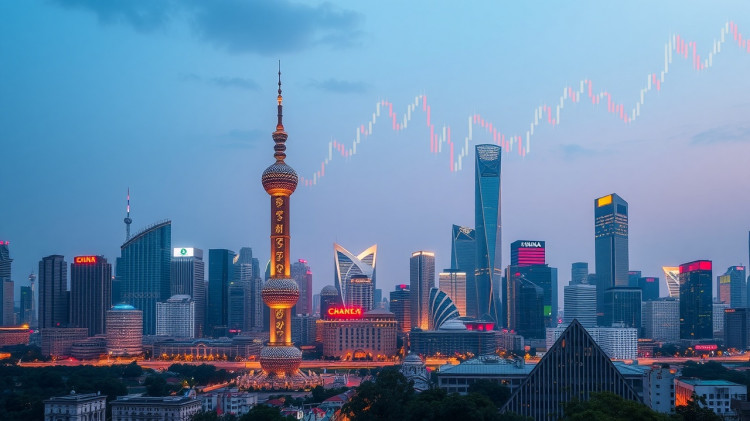
Although the term "emerging markets" is still commonly used to describe Asian markets (apart from Japan), it is inaccurate. Currently, China, South Korea, and Taiwan make up over 60% of the MSCI Emerging Markets and over 75% of the MSCI Asia ex Japan index. By any measure, the economies of Taiwan and South Korea are high-tech. China is more complex, but it has made significant advancements in many fields.
Asia is therefore a region that is difficult to ignore. Taiwan Semiconductor Manufacturing (TSMC), China's Tencent, and Korea's Samsung Electronics and SK Hynix are four of the top 30 companies in the world. Importantly, these "fantastic four" are not only large corporations but also strategically positioned. According to Emily Whiting of JP Morgan, "the AI build-out is positive for Asia, with 38 percent of data-center capital expenditure going to Asian businesses."
TSMC is "one of the best businesses in the entire world" in particular. Modern chips are designed by Nvidia and other companies, but they are manufactured by TSMC. The market is expanding rapidly, and chips are being replaced every few years, almost like consumables. Because of this, TSMC's forward price/earnings ratio, which is in the high teens, almost seems like a deal.
BFIA problems nowadays. In the meantime, the memory chip market is dominated by Samsung and SK Hynix, with Samsung trading at a single-digit forward multiple. Although only in the mid-teens, SK Hynix's expertise in ultrafast, high-bandwidth memory commands a higher rating.
Tencent, on the other hand, is primarily a domestic company that specializes in gaming, social media, entertainment, and the internet in Chinaa consumption play. According to Whiting, "Asia only accounts for 9% of the global stockmarket valuation despite having 60% of the world's population and 48% of its GDP." "The banking, financial, and consumer sectors are benefiting from robust demographic trends, with over one billion people entering the consumer class. The "
More prospects in Asian markets.
This guarantees that managers can find plenty to purchase outside of the heavyweights, even though almost all Asian specialist trusts have exposure to the "fantastic four" of more than thirty percent. Schroders' Abbas Barkhorder advises searching Southeast Asia for value instead of China or Korea. He claims that over-investment has caused China's return on equity to be "heading in the wrong direction since 2012."
India offers some opportunities but "remains expensive" in Asian markets. "Low banking penetration and private sector banks taking market share from state-owned ones" makes the banking industry appealing. Because of "low levels of insurance cover and a significant need for cover, given high out-of-pocket expenditure on healthcare," insurance also has room to grow.
With Baillie Gifford's growth-oriented Pacific Horizon (LSE: PHI) and Schroder Oriental Income (LSE: SOI) leading the way, the majority of Asia's regional trusts have recently performed exceptionally well. The region has been negatively impacted by the market setback by roughly 10%. This offers the chance to make long-term investments and restores both absolute and relative value.





Leave a comment on: Investing in Asian markets is no longer just "emerging"