
Will you see an increase in gas prices and energy bills as the Middle East's conflict drives up oil prices?
As the price of oil continues to soar amid the long-feared conflict in the Middle East, it is anticipated that energy and petrol prices will rise along with a spike in inflation.
Wider hostilities broke out throughout the region as a result of combined US-Israeli airstrikes on Iran on February 28 and the assassination of Ayatollah Ali Khamenei, the country's supreme leader.
The Middle East provides a large portion of the world's oil, and the conflict there poses a threat to the world's supply. In the short term, this has led to a spike in oil prices.
Try six BFIA free issues right now.
Gain unmatched financial knowledge, analysis, and professional advice that will benefit you.
Start your trial: Even if the conflict is taking place halfway around the world, higher oil prices can quickly have an impact on your finances.
John Husselbee, head of multi-asset at fund manager Liontrust, stated that "energy prices are the main channel through which geopolitical events can feed into inflation and impact growth and central bank policy."
Why have oil prices increased since the start of the conflict, and what might this mean for interest rates, inflation, and gas prices in the UK?
The impact of the Middle East conflict on oil prices.
On Monday, March 2, futures prices for Brent Crude oil began trading at £78.37 per barrel, up 8.1 percent from their close on Friday, February 27. Throughout the day, they reached a high of £80.26.
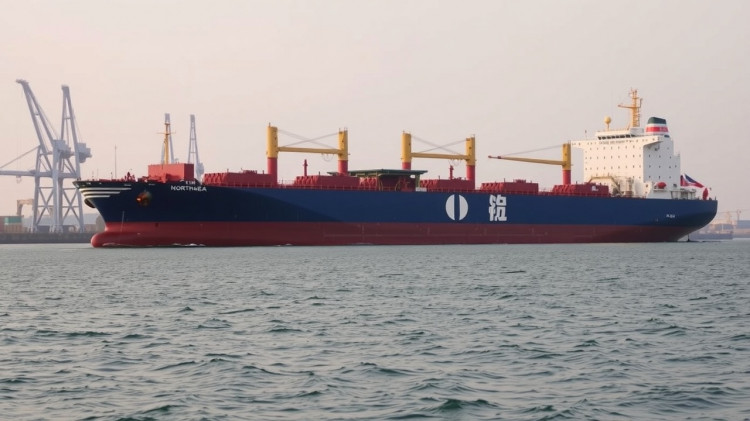
The potential closure of the Strait of Hormuz, a narrow sea lane between the Persian Gulf and the Gulf of Oman through which about one-fifth of the world's oil passes, is one of the specific risks the conflict poses to the global economy in addition to increased global instability.
It seems that this has already effectively occurred. According to reports, the Iran Revolutionary Guards claimed to have attacked three tankers from the US and the UK on Sunday and said that shipping is prohibited across the strait.
According to John Wyn Evans, head of market analysis at wealth management firm Rathbones, "the Strait of Hormuz and the consequences of any disruption to global energy flows are pretty much everything from a global perspective." "Analysts point out that the impact would rapidly worsen if the closure were prolonged, but oil prices already reflect a sizable risk premium, with current levels implying an expectation of a limited but significant disruption to shipping. The "
What impact does the price of oil have on the cost of gasoline?
Since oil is a major component of gasoline and diesel, one of the most obvious effects of rising oil prices is how much you pay at the pump.
However, if you live and drive in the UK, the impact is not as significant as you might imagine. This is because taxes account for more than half of the cost of a liter of gasoline. About two-fifths of what you pay at the pump is made up of fuel duty, and another 17% is made up of VAT.
Pump prices aren't as sensitive to changes in oil prices as they are in other nations, which is an unexpected advantage of our high gasoline taxes.
Only 2629% of the cost of a litre of petrol in the UK is related to the price of the oil itself. This implies that, in theory, a 10% increase in the price of oil globally could result in a 3% increase in the price of gasoline (though this isn't always the case in practice).
On Friday, October, a BP forecourt in Dover, UK, has a roadside display of fuel prices and EV charging. 17th of 2025.
Although the percentage of fuel prices covered by taxes lessens the impact, rising oil prices could drive up petrol prices in the UK.
Could rising oil prices lead to more inflation?
Higher oil prices have an effect on more than just the pump. If oil prices continue to rise, any business or process that uses energy as an input may become more costly, which increases the likelihood of higher inflation.
According to Edward Allenby, senior economist at the consulting firm Oxford Economics, "higher oil prices exert upward pressure on the input costs for firms producing non-oil goods and services, and so some of this will also be passed on to consumers in the form of higher prices." Furthermore, over the weekend, gas prices in Europe also increased significantly, which may have a greater effect on headline inflation than the rise in oil prices. The "
How long oil prices remain high and how that affects inflation will be greatly influenced by the length of the conflict and any disruptions in supply.
Husselbee stated, "It is crucial to keep in mind that at this point we are dealing with markets repricing uncertainty rather than an economic shock and its consequences."
Is your energy bill going to go up due to rising oil prices?
The length of the conflict may also affect the next Ofgem energy price cap.
According to Allenby, "Ofgem has already published their price cap for Q2, so any upward pressure would only come through from July." "The amount of the pass-through of higher gas prices to consumer prices is limited because wholesale prices now account for less than half of Ofgem's total price cap. The "
The duration of the gas price spike will also affect the Q3 price cap, according to Allenby: "A brief, transient spike will have a far smaller impact than an increase of the same magnitude that persists throughout the observation window." A "
What long-term effects might higher oil prices have?
There may be additional long-term effects on your finances if the dispute doesn't get resolved right away.
For instance, if the inflationary effect mentioned above persists, it will influence the Bank of England's interest rate decisions.
According to Chris Beauchamp, chief market analyst at investing platform IG, "a major headache for both policymakers and consumers, potentially disrupting the plan for more UK rate cuts" would result from a persistent increase in inflation.
Global economic activity may slow down in the event of an especially severe oil supply crisis. "In the risk scenario of a global oil shock, the effects would include an increase in inflation and a decrease in various activity measures, notably industrial production where energy prices are an important input," stated Lombard Odier's chief economist and CIO Switzerland, Samy Chaar.
How to shield your money from rising oil costs.
There are some things you can do to safeguard your portfolio from potential oil-related inflation and the broader effects of the conflict, but there isn't much you can do to guard against the possibility of paying more for gas at the pump (apart from possibly purchasing an electric vehicle).
If you haven't already, adding gold to your portfolio could be a good place to start because it's frequently seen as a hedge against inflation. Because of its reputation as a safe haven, the price of gold increased to almost all-time highs after the conflict began.
Although Liontrusts Husselbee emphasizes the value of a diversified multi-asset portfolio with distinct exposure across sectors, regions, and asset classes, he also warns against making snap decisions about your investing strategy based solely on headlines.




Leave a comment on: What does it mean for you when oil prices rise?