

It might not be a good idea to cash in your pension early due to rising taxes and high living expenses
Millions of people still struggle with the cost of living, and many older workers may want to cash in their pension early in order to free up some extra cash.
Although inflation has decreased from a 41-year high of 11.1 percent in 2022, interest rates are at 4 percent, making borrowing more costly, and people's real-term income is still being eroded.
According to Helen Morrissey, head of retirement analysis at financial services company Hargreaves Lansdown, pensions falling into inheritance tax estates starting in April 2027 and health conditions that make working full-time difficult could cause others to take early withdrawals from their savings.
"A lot more people will now consider ways to avoid paying taxes for their families. Morrissey added, "You might also need to access your pension early due to illness."
However, there are risks for those who are considering withdrawing funds from their pension funds early.
In recent years, retirement expenses have skyrocketed, and many people already have a pension shortfall. This problem may worsen if you withdraw from your pot early.
We examine the advantages and disadvantages of taking early pension withdrawals, given that the cost of a comfortable retirement is currently 43,900 for a single-person household and 60,600 for a two-person household.
When is my pension due?
You don't have to wait until the current state pension age of 66 to access your private pension if you have one, but you should carefully consider your options before making any final decisions.
As of right now, you can begin taking out your private pension at age 55, but in 2028, that age will rise to 57. You can now take out up to 25% of your pension fund in one lump sum or in installments without paying taxes.
Under the 25 percent rule, you can only take out a maximum of 268,275 in tax-free cash. However, be careful not to exceed this 25% threshold.
"Any withdrawals over the tax-free amount are subject to income tax, which may push you into a higher tax band and result in an unexpected bill," stated Adam Cole, retirement specialist at wealth management company Quilter. The "
You have a variety of choices regarding the remaining seventy-five percent of your pension fund.
Annuity.
You could purchase an annuity with the money you saved for your pension. Depending on the kind of annuity you buy, this will give you a consistent, guaranteed income for the remainder of your life or for a predetermined number of years.
Annuities were an unappealing option for a long time, but in recent years, their popularity has increased. According to the Standard Life Annuity Rates Tracker, the average annuity rate increased by 9.68 percent year over year to 7.65 percent in September 2025.
The Financial Conduct Authority (FCA) reports that 88,430 annuities were sold in 2024 - 2025, a 7.8% increase from the previous year. From 2022 - 2023 to 2023 - 2024, they increased by 39%.
However, purchasing an annuity is an irreversible decision, so you should think about getting financial advice and do your homework before deciding.
For instance, unless you choose a dual-life annuity, not all annuities can be transferred to your partner in the event of your death. Dual-life annuity rates are frequently less expensive than single-life annuity rates.
To get a competitive price, it's also crucial to shop around.
Drawdown on a pension.
With a pension drawdown, you leave some money invested with the expectation that it will increase and withdraw a regular income straight from the fund. You have more options with this method than with purchasing an annuity.
The disadvantage is that it provides less certainty because you have no idea which way the markets will go, so the value of your pension fund may fluctuate between rising and falling.
When taking a drawdown, you also need to think about how much money you want to withdraw and how often. To lower the chance of running out of pot too soon, you will need to evaluate your own longevity.
An annuity and drawdown combination.
Using a portion of your pension fund to purchase an annuity and keeping the rest in drawdown is one way to combine the two strategies. Some retirees may find this to be a good balance.
Let it stay invested.
Another option is to hold onto your money until you're ready to take a dip and not release it at all.
It may make sense to use other funds first if you are still employed after the age of 55 or have enough savings hidden away to cover the beginning of your retirement.
Pension pots are currently not included in your taxable estate for inheritance tax purposes; however, this will change starting in April 2027 as a result of adjustments made in the Autumn Budget.
Pension pots have historically been a tax-efficient way to transfer wealth after death thanks to this IHT benefit, but given the changes, we might see a shift in pension behavior.
Retirement regret should be avoided.
Early access to your pot could result in financial difficulties later in retirement.
According to research by retirement expert Just Group, about 10% of retirees 55 and older who take money out of their pension before quitting full-time work regret doing so.
According to its survey of over 1,000 respondents, 28% had taken out a lump sum or an income drawdown from their pension between the age of 55 and the end of their full-time employment. Nearly half claimed to have gotten no financial counsel or direction.
According to the FCAs' most recent retirement income market data, the number of people who accessed their pension plan for the first time rose by 8.6% in 2024 - 2025 compared to the previous year.
It may be worthwhile to consult a financial advisor before taking such a step.
Nonetheless, the FCA data indicates that fewer people are seeking advice. According to the industry watchdog, only 30.6 percent of people who accessed their plan for the first time in 2024 - 2025 took advice, compared to 30.9 percent the previous year.
Remember that any early withdrawals from a pension lose their tax-free wrapper status.
"If you are putting it somewhere like your bank account, you may be paying tax on any interest that you get on the cash," stated Robert Cochran, retirement specialist at Scottish Widows.
As a general rule, you should take it if you plan to spend it and think about using it to pay off your mortgage or other loans. The "
Can I receive my pension early?
It becomes a little more difficult and is nearly always not advised to cash in your pension before you turn 55.
According to PensionBee, "there are only a few instances where savers can release their pension before the age of 55, such as extreme ill health or terminal illness." "If none of these conditions are met, HMRC may consider the early pension release to be unauthorized and charge 55% tax on the amount taken out. If these requirements are not satisfied, no respectable pension provider will authorize an early withdrawal. The "
Put another way, even though it might be tempting to consider your pension fund as a means of increasing your income during the cost-of-living crisis, the truth is that you would most likely lose out.
Most pension providers won't assist you in getting your pension released early due to the high HMRC fees. Rather, you would have to use a third party, who might charge you as much as thirty percent.
According to PensionBee, there is an added risk because the majority of companies that set up early pension releases are not FCA authorized, so your money isn't safe.
To put it another way, it is nearly always a bad idea to try to cash in your pension before you turn 55. In addition to putting you at serious risk, it will force you to give up a sizable portion of your hard-earned money in exchange for a tiny portion right now.
Pension scams should be avoided.
According to PensionBee, "many pension scams claim to help savers access their pension before the age of 55 by exploiting loopholes in the system."
"Savers should never trust a third party to withdraw their pension on their behalf unless they meet some of the aforementioned requirements or have been specifically told by a provider that they are eligible for early pension release. A "
Learn More about the International Monetary Fund of the Bank of England.




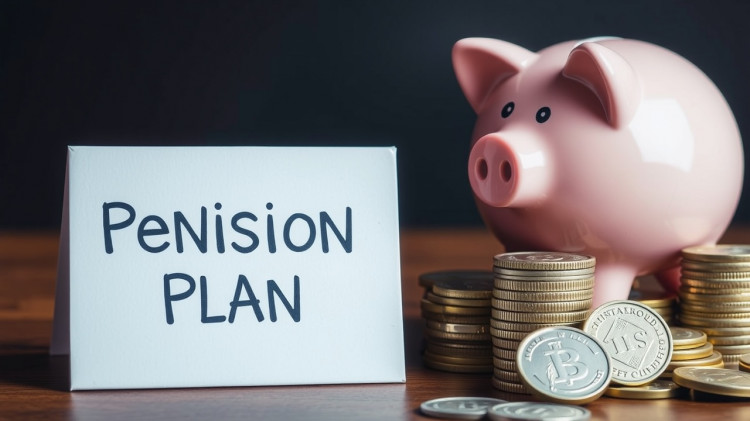


Leave a comment on: Is it possible to cash in my pension early?