
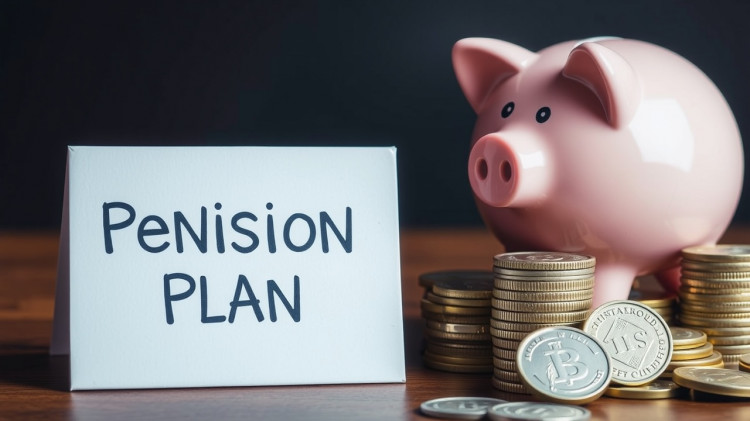
Many people are speculating that the upcoming Autumn Budget may reduce the 25 percent tax-free cash savers can withdraw from their pension schemes
However, what is it and how does it operate?
There is increasing speculation that chancellor Rachel Reeves may alter the autumn budget's 25% pension tax-free cash.
Pension savers have rushed to withdraw their tax-free funds in case the chancellor lowers the 25 percent incentive as a result of the rumours, but HMRC is cautioning that the withdrawal cannot be undone if you later change your mind.
Forvis Mazars' head of private clients, Nick Nesbitt, remarks: "We're seeing a real uptick in clients accessing their pension tax-free cash.
As a result of budget rumors, Royal London, a pension provider, reports that more clients are inquiring about taking tax-free cash.
Recently, two pension expertsStephen Lowe, director of Just Group, and Tom McPhail, host of the Pensions Monkey podcastspoke on X about their intention to take their tax-free cash (TFC) early. "I'm seriously considering bringing forward my TFC withdrawal ahead of the Budget," McPhail said, to which Lowe responded, "Ditto."
Last year, savers were also terrified that Reeves would eliminate the well-liked pension benefit in the 2024 Budget, which sparked a rush to take out tax-free money.
Based on FCA data acquired by wealth management firm Evelyn Partners, tax-free withdrawals increased by 61 percent to 18 billion in 2024 - 2025 from 11 billion the previous year.
Ultimately, there was no mention of tax-free money. On November 26, this year's budget will be announced, and there are already a lot of rumors circulating about possible tax increases. Raising the capital gains tax, enacting new property taxes, reforming the inheritance tax, and modifying pensions are a few examples of this.
It's crucial to note, though, that the majority of experts believe it is unlikely that Reeves will reduce tax-free cash in the Autumn Budget because it is a well-liked and understood pension benefit. According to a Whitehall official, the reform was "unlikely," despite the Telegraph's report that the Treasury was considering it.
I'll explain what "25 percent tax-free cash" means and discuss what HMRC has said regarding pension savers who want to cancel a tax-free cash withdrawal. When can you take it, is this applicable to all pensions, and what happens to the remaining 75%?
We go over all the information you require regarding the 25% pension tax-free cash, including the benefits and drawbacks of taking it at different times. The tax-free lump sum you could receive increases with the length of time you leave it.
The pre-Budget tax-free cash warning from HMRC.
Pension plans have received warnings from HMRC that they cannot undo the removal of tax-free funds.
The most recent newsletter from the tax department, which was released on September 25, affirmed that individuals must not cancel tax-free cash withdrawals or risk incurring a tax penalty.
It stated that even if the payment is returned or cancellation rights are used, "once lump sums are paid, the associated tax consequences (including the use of the individuals lump sum allowance and lump sum death benefit allowance) cannot be undone."
For instance, if a saver had a 200,000 pension pot and was concerned that the budget would cut the 25% tax-free cash benefit offered on most pensions, they might decide to take out 50,000 tax-free at the beginning of November.
The saver might be tempted to use their provider's cancellation window or cooling-off period if Reeves didn't make any changes to tax-free cash at that point. Theoretically, this means that the 50,000 tax-free withdrawal is unwound, the funds are returned to the pension pot for tax-free growth, and the saver can withdraw their tax-free funds at a later time.
The transaction, however, cannot be undone in this manner, according to HMRC.
AJ Bell's head of public policy, Rachel Vahey, says: "Once you request that a pension provider pay you your tax-free money, you cannot withdraw your request. This decision cannot be changed. Before submitting the request, it is crucial that you are certain that you wish to withdraw your tax-free money.
The head of retirement analysis at Hargreaves Lansdown, Helen Morrissey, continues: "HMRC has made its position on cancellation rights clear. Therefore, if the budget doesn't change, you probably won't be able to request tax-free money and then cancel the instruction.
The 25 percent tax-free cash rule: what is it?
One-fourth of your pension pot is tax-free, as the name implies. This implies that you are exempt from paying taxes on this part of your pension. The acronym PCLS stands for "pension commencement lump sum," which is its full name.
Pension savers who have nest eggs worth more than £1 million should be aware that they can only withdraw a certain amount tax-free.
With the lifetime allowance now eliminated, the limit is set at 268,275, which is a quarter of the previous 1,073,100 lifetime allowance. All of your pension funds are subject to this cap.
Due to the popularity of pension tax-free cash, there was a lot of worry that the chancellor would reduce the 25 percent threshold to, say, 20 percent or, worse, eliminate it in the previous year's budget. And this year, there are concerns that Reeves might specifically target it in her budget for November 26.
In anticipation of last year's budget, investment platforms and pension providers reported a steep rise in the number of clients withdrawing their tax-free funds in case the regulations were altered.
Is it true for all pensions?
25% of your personal pensions, including self-invested personal pensions (Sipps), as well as your workplace pensions, are available to you tax-free.
On the other hand, the state pension is exempt. Your entire state pension is subject to taxes.
How will the remaining 75% of my pension be handled?
When you begin taking withdrawals, income tax will be applied to the remaining 75% of your pension. This implies that your tax bill is calculated after adding the amount you withdraw to any additional income you received during that tax year, such as a state pension, part-time employment, or buy-to-let income.
Depending on your tax bracket, you will pay 20%, 40%, or 45% on your pension withdrawal. You are not required to pay any taxes if your total income for the tax year is less than the 12,570 personal allowance.
I intend to take out an annuity.
Can I still receive a tax-free 25%? Yes, you can purchase an annuity with the remaining funds after taking 25% of your pension as tax-free cash.
How soon can I get my tax-free money?
Starting at age 55, you are able to withdraw funds from your pension pot or pots whenever you choose; starting in April 2028, this will increase to age 57.
This also applies to your tax-free money. Since you are now 55 years old, you are able to withdraw the 25% tax-free money whenever you want. In certain circumstances, such as when you're in a certain program with a protected age or are in poor health, you may be able to access the funds sooner.
Must I withdraw all of the tax-free money at once?
No, you can usually start with a smaller slice. Imagine having a pension fund of £100,000. You could take a smaller sum, such as £10,000, but you are entitled to £25,000 tax-free.
Actually, you may be able to lower your tax liability and save money by taking your tax-free money over a number of years.
How can I get my money back without paying taxes?
Depending on your pension provider, you may be able to complete a form, call, or do this online.
The majority either withdraw their tax-free money all at once or in multiple lump sums over time.
Additionally, you can choose to take out portions of your pension, of which 25% are tax-free and 75% are subject to taxes. This type of pension lump sum is called an uncrystallized funds pension (UFPLS).
Be aware that you will only be able to contribute £10,000 to your pension in the future if you take taxable benefits from it and make a UFPLS withdrawal. The article's section on "Can I still pay into a pension once I've taken my tax-free cash" has more information on this topic.
Will I be able to repay my pension if I withdraw tax-free money?
As previously mentioned, there is no way to reverse the withdrawal and take advantage of your 25% tax-free money later.
You should also be aware of recycling regulations that may result in a 55 percent tax charge. Vahey remarks: "The government devised a set of rules to stop recycling these payments in order to prevent people from taking their tax-free money and then immediately putting it back into their pension to gain more tax relief.
In general, this means that contributions made by individuals who have taken their PCLS cannot be much higher than they would have been either before or after they took the lump sum. Furthermore, the individual must not have purposefully taken out the funds in order to recycle their PCLS.
When I withdraw my tax-free pension funds, does it matter?
At age 55, you may choose to take the money to supplement your income if you're retiring or moving to part-time work, or to help you get by until you get your state pension.
Additionally, it could be a helpful cash infusion for a vacation, home renovations, or even a new car purchase.
According to Carina Chambers, pensions technical expert at digital wealth manager Moneyfarm, "You can access a substantial sum of money right away if you take advantage of the 25 percent tax-free allowance at age 55. Before you retire, this can be especially alluring as a way to help pay for significant costs like debt repayment, home improvements, well-earned vacations, or supporting your family.
By serving as a financial safety net prior to the early years of retirement, when you might be more active and ready to enjoy life, having this lump sum on hand can offer a certain amount of security and peace of mind.
It's crucial to consider the fact that taking out the 25% will decrease the size of your pension fund and, consequently, the potential growth benefits, which will result in lower income in your later retirement years.
According to Chambers, "waiting a few years before using your 25 percent tax-free allowance could result in a larger amount to take tax-free in the future, plus a larger income in retirement, which may be needed for unforeseen medical expenses or care in later life, or if you live longer than expected."
Assume you have a pension pot of £400,000 and a £100,000 tax-free allowance. Your pension fund could increase to 510,512 if you leave the full £400,000 invested for an additional five years and the markets do well, with an average annual return of 5%, according to Moneyfarm's calculations. Your tax-free allowance would rise to 127,628 as a result.
"You should think very carefully before taking money out of your pension, especially if you don't have any specific plans on how you are going to spend it right now," says Clare Moffat, a pensions and tax expert at Royal London, while speaking to BFIA. By remaining in your pension, it remains invested and may yield greater returns in the future.
She also notes that in order to access their tax-free money, recipients of defined benefit pensions, such as those in the public sector, typically have to quit their jobs.
When I take out my tax-free money, where should I put it?
Consider carefully where you should put the tax-free money if you aren't going to spend it right away.
Taxes are one of the most significant factors. Your money in a pension is shielded from income tax, dividend tax, and capital gains tax. However, if you place your tax-free funds in a savings account, income tax will be due. Its gains, profits, and dividends will all be subject to taxes if you place it in an investment account.
"Your tax-free lump sum may lose value after inflation if you put it in a cash account," Morrissey observes. It will cause a continuous tax problem if you move it from a tax-efficient environment to one where you will have to pay taxes.
Using your ISA allowance is among your best options. Everybody is given a 20,000 ISA allowance, which they can use however they see fit for both cash and stock and share ISAs. Gains from investments or interest on savings are tax-free.
If you anticipate needing to access your funds quickly, review the ISA's withdrawal policies for stocks and shares. Or you could choose an easy-access cash ISA, but keep in mind that cash investments may do better than cash savings.
After I withdraw my tax-free money, can I still make contributions to a pension?
Following the withdrawal of your tax-free funds, you can continue to make contributions to your pension. Since the annual allowance is set at £60,000, you can make contributions up to that amount each tax year, or as much as your annual income, whichever is less.
The annual allowance will be lost, though, and the "money purchase annual allowance" will be activated if you withdraw taxable income from your pension. As a result, your maximum contribution will drop from £60,000 to just £10,000.







Leave a comment on: When is it appropriate to take advantage of the 25% pension tax-free cash?