
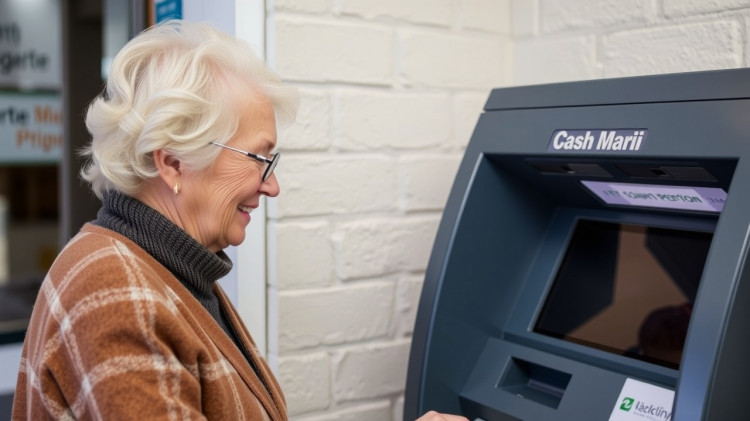
If British retirees in 2026 adhere to an outdated guideline regarding "safe" limits, they may be taking excessive withdrawals from their pension funds and run the risk of running out of money
If you intend to retire in 2026, you are undoubtedly figuring out how much you can safely take out of your pension annually to prevent running out of funds. However, new research suggests that the previous drawdown amount guidelines might no longer be applicable.
The majority of people have defined contribution plans for at least a portion of their pensions. Retirees must choose how much to take out of these individually invested pots in order to maintain their standard of living without going bankrupt.
For many years, the general consensus was that you should take out 4% annually, increased annually to reflect inflation, if you wanted to ensure the longevity of your invested pension. We call this the 4 percent rule. However, Morningstar, an investment research firm, recently found that it is too high for 2026.
The highest safe starting withdrawal rate, according to Morningstars' 2025 retirement income research, is 3.9%. This is for retirees who want a steady income that rises in line with inflation to pay for their annual expenses.
According to Morningstar, a 3.9% withdrawal rate offers a 90% chance of having money left over at the conclusion of an assumed 30-year retirement period.
To determine the initial safe withdrawal rate for new retirees, the computation is based on inflation assumptions and forward-looking asset-class returns. It does not include the state pension or other sources of income.
A portfolio with an equity weighting of between thirty and fifty percent is assumed. According to the reports, analysts noted that increasing stocks reduces rather than increases the initial safe withdrawal percentage due to the increased volatility linked to higher equity weightings.
In actuality, the 3.9 percent so-called safe withdrawal rate for 2026 is marginally higher than the initial safe withdrawal percentage for 2025, which Morningstar calculated was 3.7 percent.
For a new retiree with a 30-year time horizon and a 90% chance of success, the base case estimates for beginning safe withdrawal rates were 3.3 percent in 2021, 3.8 percent in 2022, and 4 percent in 2023.
The report stated, "These numbers represent our best estimate of the starting safe withdrawal rate for a person currently embarking on retirement; they aren't meant to imply that people who are already retired should shift their spending up or down from year to year."
Is the 4 percent pension rule dead? Why the 6 percent rule could replace it.
It's arguable that new retirees shouldn't have to accept such a low withdrawal rate of 3.9 percent or even 4 percent.
Those who are willing to tolerate some fluctuations in their spending rather than needing a fixed, consistent amount can start with a withdrawal rate of nearly 6 percent, the Morningstar research found.
According to Morningstar, "the appropriate degree of flexibility in a retiree's spending system will depend on the individual's tolerance for spending changes, including the extent to which fixed expenses are covered by nonportfolio income sources."
Keep in mind that the 4 percent rule permits money to remain from a pension. But changes to inheritance tax rules are looming most unused pension funds will be part of the estate for inheritance tax purposes from April 2027 so leaving pension money to loved ones in your will is no longer so attractive.
The new motto is "pensions are for spending," and starting in April 2027, they will be subject to inheritance tax. In exclusive calculations, we show how much more you can take from your pension to wind it down completely by age 90 asking is this now the era of the 6 percent rule?
How much do I need for a comfortable retirement?
Your desired lifestyle in later life will determine how much you actually need in pounds and pence for retirement.
Everyone has different financial priorities and these can vary by age.
But recent data from Pensions UK, formerly the Pensions and Lifetime Savings Association (PLSA), shows the cost of a comfortable retirement where you get to enjoy some extra luxuries has jumped again, from 43,100 to 43,900 a year for a single person household and from 59,000 to 60,600 a year for a two-person household.
The cost of a comfortable retirement allows for spending on extra luxuries such as regular beauty treatments, theatre trips and two weeks of holiday in Europe a year.
Investment platform Interactive Investor highlights that these figures are after paying tax, so you technically need to earn more to meet these standards.
For this level of retirement, Pensions UK calculated someone living alone would need a pension pot of around 540,000 to 800,000, if using it to buy an annuity for a guaranteed income. It would be between £300,000 and £460,000 for two people to share bills.
A pension pot of about 31,700 (previously 31,300) for a single person and 43,900 (up from 43,100) for two people living together would be needed for a more modest, moderate level of retirement.
Although this is less than 14,400, a basic retirement would still require a pension of 13,400 annually.
For a couple, this has fallen to 21,600 from 22,400.






Leave a comment on: The new 4 percent rule - how much should retirees really draw from their pension in 2026?