
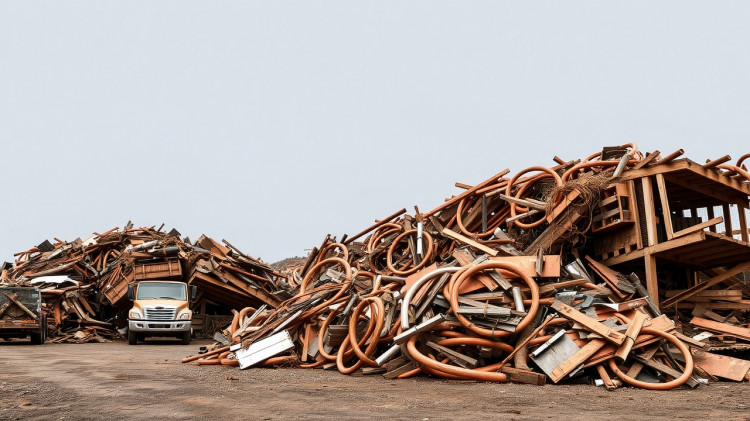
Terry Tanaka claims that despite growing demand due to the electrification of the economy, miners are not investing in new copper supply
BHP's decision to leave Anglo American so abruptly raises serious concerns, but you can't blame them for trying again. It is commonly known that there is an impending shortage of copper, the metal at the center of both the much better Anglo-Teck Resources merger that investors prefer and a potential BHP-Anglo deal. However, BHP and its competitors are still hesitant to invest significant funds to address that.
It's an easy copper bull case. The world is using more electricity because it is meeting new demands (like emerging markets), replacing fossil fuels (like electric cars), and supporting new technologies (like data centers, which account for a small but rapidly increasing portion of consumption).
According to the International Energy Agency, electricity will account for more than 50% of final energy demand by 2050, up from its current share of 21%. This suggests a large amount of copper for wires and other parts, such as generators, transmission cables, cars, appliances, buildings, networks, and so forth.
Can the supply of copper meet the increasing demand?
The supply of copper isn't keeping up with this. Analysts at Wood Mackenzie predict that total demand will increase by about 24% to nearly 43 million tonnes per year (mtpa) by 2035. Eight mtpa of newly mined supply and 3.5 mtpa of additional scrap supply will be needed to meet it. Although ore grades have been declining over time (i.e., more rock must be mined to produce the same amount of metal, increasing costs), there is no shortage of copper reserves to mine worldwide. Nevertheless, there hasn't been much funding for significant new mines. According to Wood Mackenzie, meeting demand will now require an investment of more than £210 billion. This represents a significant increase over the £76 billion invested over the previous six years, with roughly half of that coming from Chinese miners, which adds even more complexity. Copper supply security could turn into a geopolitical necessity.
With prices hitting record highs, there may already be signs of market tightness. Due to supply disruptions at mines in Chile, the Democratic Republic of the Congo, and Indonesia as well as steady demand growth, there will likely be a mined supply deficit by next year. There are, however, additional variables at work. Metal was hoarded in the US due to the threat of tariffs on imports of refined copper, which reduced stocks elsewhere in the world. The fundamental crunch is still to come, if demand projections are accurate.
There is some room for substitution. Although aluminum is less durable and has a lower conductivity, it is useful in some power applications. For data transmission, fiber-optic cable has taken the place of copper. More speculatively, carbon nanotubes might eventually present an additional option. For the foreseeable future, copper will still be essential. One of the most appealing concepts in natural resources is a basket of some of the most pure-play copper miners, such as Anglo-Teck, Freeport McMoRan, First Quantum Minerals, Antofagasta, and Southern Cooper.
Three-month futures for LME copper.







Leave a comment on: Why a copper shortage is imminent