
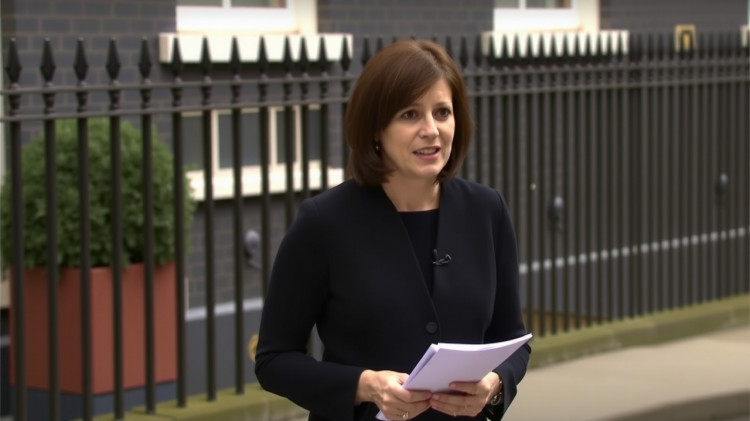
In her second Autumn Budget, Chancellor Rachel Reeves is expected to unveil a number of new initiatives, and given the state of the economy, tax increases are all but guaranteed
This is what analysts anticipate and what we currently know.
The Autumn Budget, which outlines the government's tax and spending priorities for the upcoming year, is typically the biggest fiscal event of the year.
On November 26, following Prime Minister's Questions, Chancellor Rachel Reeves will present her second budget at approximately lunchtime.
To put it mildly, the economic environment surrounding this budget is gloomy. Economic growth has proven to be more elusive than Labour, who were elected on a platform of boosting the economy.
In the three months leading up to September, the UK economy grew by a pitiful 0.1 percent, unemployment increased to 5 percentthe highest level since 2021and inflation reached 3.6 percent in October.
In the midst of this, Reeves faces pressure to increase funding for public services while the government is experiencing a large deficit.
According to estimates from the powerful think tank Institute for Fiscal Studies (IFS), in order to maintain the 10 billion fiscal headroom she had in March and to adhere to her own fiscal regulations, the chancellor will need to close a 22 billion gap in public finances at the Budget.
The chancellor's regulations prevent her from borrowing more money to cover ongoing government expenditures, so either cutting spending or raising taxes will be required to make up the shortfall in the budget.
As a sign of how unpopular spending cuts are within the parliamentary party, attempts to cut welfare spending were thwarted in June when a rebellion of Labour backbenchers embarrassed the prime minister by voting down the policy.
Therefore, it appears likely that the chancellor will rely more on taxes to generate the required funds.
We examine what has already been revealed and what may be revealed on Wednesday, with the budget less than a week away.
Which budget announcements are official?
There are a few policies that have been formally announced as part of the budget.
Prescriptions will remain under 10 The chancellor declared on November 21 that the NHS prescription charge freeze in England will last until 2026, which means that the price of a single prescription will remain at 9.90. The policy will save patients about £12 million next year, according to the Treasury.
What could the budget announce?
Rumors about several policies have surfaced.
Although none of the policies listed below have received official confirmation, they may be included in the budget.
Leaks now indicate that the chancellor will freeze income tax thresholds once more in order to raise more money, a move known as fiscal drag, rather than increasing income tax or national insurance. The previous Conservative government had already frozen thresholds until the 2027 - 2028 tax year, but Reeves is reportedly going to extend this. Property tax increases The Telegraph reports that the chancellor is thinking of imposing a new tax on approximately 2.4 million high-value properties in council tax bands F, G, and H. It is anticipated that this will be presented as a mansion tax. Reduced cash ISA allowance: Since February, there have been rumors that the chancellor will lower the amount of your total 20,000 ISA allowance that you can save in cash. These rumors have persisted throughout 2025. The justification is that British people would use that money to invest in stocks and shares. Reeves may lower the cash ISA limit to 12,000, according to recent leaks, but there were earlier rumors that it might be lowered as low as 4,000. According to reports, there will be a new tax on electric vehicles that will function similarly to fuel duty on gasoline and diesel vehicles. The Telegraph reports that EV drivers may be charged 3p per mile as a result of the levy. Salary sacrifice According to reports, the budget is intended to target pension contributions made through salary sacrifice. According to the Times, the chancellor is anticipated to set a cap of £2,000 per year on the amount you can save in your pension through the program before receiving national insurance payments.
What more announcements could be made?
Although they are less certain than those mentioned above, the following policies appear likely to be announced.
Crackdown on private dentistry On November 18, Reeves requested that the UK competition watchdog look into the cost of private dental care in light of rising costs. She expressed her desire for "urgent action taken to help reduce prices." The budget might include some steps to address this. Raising dividend tax The Treasury is reportedly thinking of raising dividend tax to bring it closer to the basic rate of income tax, which is 20 percent, from its current level of 8.75 percent. The government is reportedly thinking about doing away with the two-child benefit cap. According to the policy, parents are only eligible to receive tax credits or Universal Credit for their first two children. The parliamentary Labour party is strongly in favor of reversing the cap because, according to IFS estimates, doing so would immediately lift 630,000 children out of absolute poverty. Reducing energy bill VAT There are rumors that Reeves will reduce energy bill VAT from 5% to 0%. According to energy consultancy Cornwall Insight, if this were put into practice, the average household could save about 80 dollars annually. Income tax increases Over the past few weeks, it appeared that the Treasury was hinting at an increase in income tax in the budget. The option to raise income taxes is still open on budget day, but they are now distancing themselves from it.
What will definitely not be disclosed?
Despite all the rumors and leaks, the government has stated that certain policies will not be put into effect.
Cut to overall ISA limit The chancellor stated back in March that the 20,000 cash ISA limit will remain unaltered, despite the likelihood that the amount of money you can save in an ISA will be reduced. Eliminating the triple lock on state pensions The government has affirmed its commitment to the triple lock, which ensures that the state pension will increase in accordance with the highest rate of inflation, average earnings growth, or 2.5 percent. The government has consistently stated that the policy will remain in place, despite concerns about its long-term viability.






Leave a comment on: Autumn Budget 2025: What we know so far