

Former pensions minister Steve Webb has proposed raising the state pension age by one year every ten years and "for the foreseeable future" in order to make the payments more affordable
A former pensions minister has informed the government that the state pension age should increase by one year every ten years and that British citizens should only anticipate receiving benefits for a finite period of time, such as two decades. If approved, the proposal would be the largest change in the history of state pensions.
The proposed reforms are the brainchild of Steve Webb, who served as David Cameron's coalition government's pensions minister from 2010 to 2015 and is currently a partner at pension consultancy LCP. They represent a radical departure from the current system of guaranteed payments for life from state pension age.
Although there is no assurance that the proposal will be carried out, Webb stated: "We have already had interest in the ideas from within the government." The government is currently reviewing the state pension age to determine whether it needs to increase further and more quickly than anticipated in order to remain affordable. A "
According to LCP's analysis, "the length of retirements these days is a historical anomaly, especially for men," Webb stated. British citizens who retire now can receive the state pension starting at age 66, and in certain situations, they can live retired for up to one-third of their lives. Webb continued, "Locking in retirements of this length is simply unsustainable."
He attributed "retirements have got longer and longer" and are now at levels that cannot be sustained by the taxes of the working age population to the "total failure" of governments in the 20th century to modify pension ages to reflect "massive" increases in life expectancy.
"To get things back into balance, while giving people fair notice, we therefore advocate for a progressive increase in state pension ages, increasing by one year every ten years for the foreseeable future," Webb stated.
"In our opinion, the system should aim for a predetermined number of yearsfor instance, 20 yearsas the anticipated duration of receiving a state pension, and this shouldn't, at least not for the time being, increase as life expectancy rises. The "
However, Webb proposed a new guaranteed period of five years as part of his proposals, meaning that even those with shorter life expectancies would receive something back for the first time.
"Once they begin receiving a pension, individuals who have contributed to the system throughout their lives will be assured that they or their heirs will receive a minimum payout. Every time state pension ages are raised, this would be a practical way to address concerns about unfairness, according to Webb.
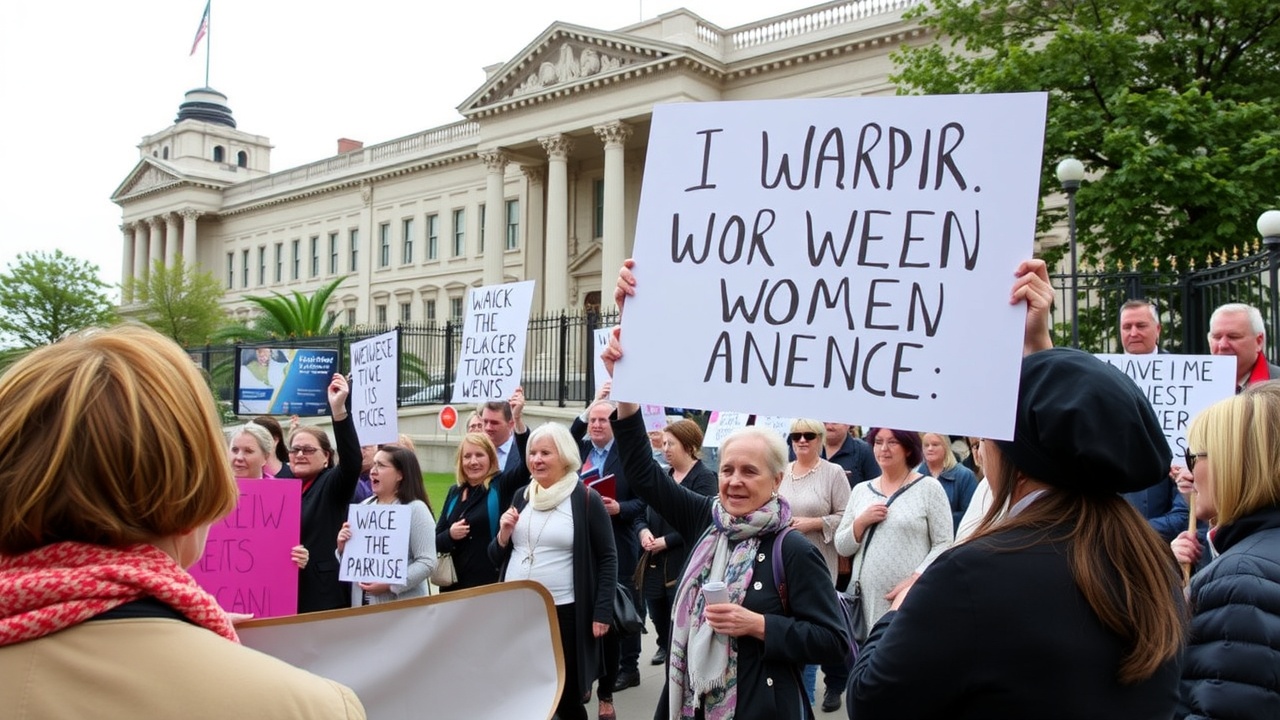
Although women's retirements are still longer than men's because women live longer on average, Webb acknowledged that women's length of retirement has decreased as a result of the recent six-year increase in the pension age, from 60 to 66. This issue is still being debated by women born in the 1950s, known as the Waspi group.
What is the cost of a state pension?
The issue of the state pension's excessive cost, which rises annually under the triple lock and is exacerbated by an aging population, has not been addressed by successive governments.
According to government statistics, pensioners received an estimated 166 billion of Department for Work and Pensions (DWP) benefit spending in 2024 - 2025, or roughly 58% of all benefit spending in Great Britain. State pensions made up 138 billion, or 83% of the total.
The percentage of adult life that people spend in retirement after reaching state pension age is a crucial metric that the government uses to evaluate the sustainability of the state pension.
According to the LCP report, this percentage has been increasing, primarily because state pension ages did not change during the 20th century, despite a 17-year increase in life expectancy for young adults during that period.
In order to allow people to anticipate spending up to one-third of their adult lives in retirement, the government initially intended to set state pension ages. However, according to LCP's analysis, this would not be sustainable.
Rather, LCP has argued that setting state pension ages so that people could, on average, anticipate receiving a pension for a set period of time, like twenty years, would be the best way to put the state pension funding on a firmer footing.
According to Webb, "this means that working lives will gradually lengthen, making the system more affordable, but retirements will stay the same length as life expectancies improve."
The government's review of the state pension age will look at a number of factors, including whether or not it should automatically rise in tandem with an increase in life expectancy.
Launched in August and ending in October, the consultation will now examine how the state pension age can manage "the long-term sustainability of the state pension" as well as the "merits" of implementing automatic adjustments to strengthen government finances.






Leave a comment on: Proposed are drastic changes to guaranteed payouts and the state pension age