

Ashmore Group's head of research, Gustavo Medeiros, examines developments in significant emerging economies like China and India and assesses the outlook for emerging markets
James Mackreides: This year has seen a resurgence for emerging markets (EMs) following over ten years of underwhelming performance. More than 20% has been added to the benchmark MSCI EM index in US dollars. What has triggered the outbursts?
Gustavo Medeiros: In my opinion, there are three main forces at play here. First, at the beginning of the year, our valuations were at an all-time low. The second is that, thanks to robust industries like semiconductors and artificial intelligence as well as robust growth in a number of nations, earnings per share have begun to rise during the past 18 months or so.
In the MSCI EM Index, earnings per share are now anticipated to increase from £80 to roughly £96 this year. Over the last four quarters, profit growth has outpaced that of the MSCI World index. The declining value of the US dollar is the third source of support.
James Mackreides: EMs are riskier assets, so that usually bodes well for them. High US interest rates and a strong dollar increase the allure of safer US assets. Have foreign investors lost faith in the United States?
Gustavo Medeiros: The United States has the world's deepest capital markets and the world's reserve currency. Therefore, the performance of the largest market, both in absolute and relative terms, will be the primary factor in determining global asset allocations. Investors were unnerved by high valuations and the tariffs on "liberation day," which served as a reminder to diversify their holdings outside of the US. Another factor supporting sentiment has been the structural improvements in developing economies, particularly decreased inflation and a move to pro-market policies after the pandemic. For example, for a while now, EM sovereign debt has seen more upgrades than downgrades.
Liberation Day, on the other hand, at least reduced the uncertainty, despite the fact that EMs have historically been relatively reliant on trade, with high export shares relative to GDP. It was determined that tariffs would not be lower than 10 percent, but they also were not likely to be higher than 30 percent. Although a pre-existing Trump-originated deal in Mexico and a strategic partnership with the US in Vietnam reduce risk, Mexico and Vietnam appear to be the most vulnerable countries on paper, with exports to the US amounting to 25% of GDP in each case. Their stock markets, along with those of Southeast Asia, the next most vulnerable economies, have risen 40 percent this year.
James Mackreides: Should we examine the structural changes in EMs, which have been a recurrent theme for the past ten to fifteen years? Previously, everyone thought of EMs as commodity exporters that were heavily focused on global growth, but today, there is much more to the story.
Yes, there are many different supportive factors, according to Gustavo Medeiros. Two significant Asian economies that have benefited from structural reform are India and Indonesia. EM growth is also being aided by AI, Taiwanese chip manufacturing, and Chinese technology. Politics has blocked the investment opportunity in Latin America, despite the fact that there are many excellent undervalued businesses that have embraced digitalization and have sizable target markets. A change toward a more free-market approach is anticipated as a result of several upcoming elections, which is encouraging for earnings and interest from international investors.
Due to Europe's efforts to become more self-sufficient, there should be a significant increase in capital expenditures on infrastructure, energy, and defense coming from Europe, which will benefit peripheral Europe and central Asia. Following President Javier Milei's strict squeeze on Argentina, Ghana, Nigeria, and Egypt have begun a round of fiscal consolidation, which is good news for some of the smaller, more exotic markets.
James Mackreides: I recall being surprised during the pandemic that emerging market central banks were more accurate than their developed counterparts in containing inflation through interest rate hikes. In general, economic management in EMs has significantly improved.
Gustavo Medeiros: Over the last five years, economic policy in EMs has improved and become much more logical. They avoided quantitative easing and quickly raised rates to offset the global inflation boost. They also consolidated their deficits more quickly and were generally restrained when it came to fiscal stimuli. Evidently, they took prudence this time around after learning from the debt crisis of the 1980s and 1990s. As a result, they are in a strong position for long-term growth.
James Mackreides: Now let's focus on a few of the large markets and economies, beginning with China. Two major negative factors have been the trend toward authoritarianism and the concern that it might become another Japan. In what way would you evaluate the situation?
Gustavo Medeiros: The fact that China has a different political system is just something that needs to be considered. The crucial factor is how much room is given to the private sector to thrive. And in this case, the news has gotten better in the last 12 months. Recently, our optimism has increased. Policymakers are much more inclined to encourage enterprise now than they were last fall. The real estate industry, which has been a significant activity drag, was first supported with measures. The central bank then accelerated a trend of buybacks that companies had initiated by allowing them to borrow cheaply to repurchase their cheap stocks. For us, that was a crucial turning point.
Additionally, the state is promoting technological advancements, as evidenced by the quick adoption of DeepSeek's large language model in both the public and private sectors. China already leads in fields like robotics, electric cars, and advanced biotechnology, and the government wants to use AI's potential to advance these fields even further. In summary, the government appears eager to support the private sector as a whole, whereas previously it favored specific industries.
Moreover, this is crucial. Lack of innovation, not unfavorable demographics or other factors, is the primary cause of nations becoming trapped in the middle-income trap. Beijing is aware of this, which is why the leadership is constantly working to increase the productivity of their economy and position themselves at the forefront of technological advancement across a wide range of industries. Beijing is also well aware that certain industries are oversupplied and that sharp margins are being caused by intense competition. After driving the surge in capital expenditure, the banks could now take action to assist industry leaders in acquiring less productive competitors and possibly limiting lending to struggling mediocrities. The businesses with the lowest productivity should be progressively phased out. Fears of the economy becoming zombie-like, as in Japan, are intended to be allayed by these actions.
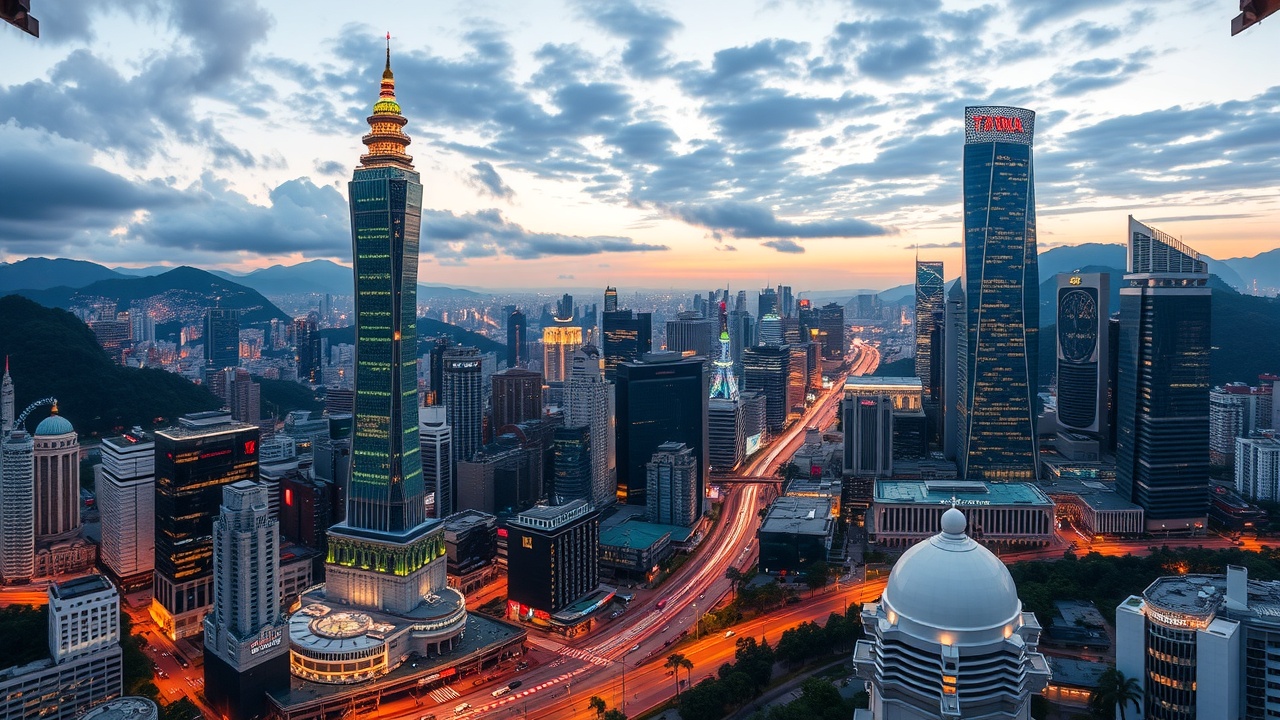
James Mackreides: Quite positive. In the MSCI EM index, Taiwan continues to have the second-largest weighting. Isn't that the AI story, and it's because of the chip giant TSMC?
Gustavo Medeiros: Its ability to economically produce advanced chips using state-of-the-art machinery has given it the strongest hold on the industry. The company has a deep "moat"a long-lasting competitive advantagebecause it would take years and a significant amount of money for another business to imitate them. Even though Google might be threatened in the search market and Apple might have trouble if another company developed a device with more AI integration than Apple's lineup, I don't think TSMC's lead will be challenged anytime soon.
James Mackreides: You mentioned that India is the most exciting structural-growth story in EMs. Let's take a look at that.
Gustavo Medeiros: There are now some wrinkles in the case of India, and no exciting structural story proceeds in a straight line. One obstacle has been the sharp increase in valuations about 18 months ago. And after soaring during Prime Minister Narendra Modi's first term as infrastructure spending spurred private sector investment, the rate of growth in capital expenditure has slowed.
The banking industry is currently a bright spot. Reasonable valuations are made, and private banks have successfully embraced fintech and produced robust growth. Short-term interest rates have been lowered, and inflation is under control. Thus, there is good news for banks' net-interest margins as the interest-rate curve steepens. Even though the economy is largely protected from international trade due to the sizeable consumer sector, President Donald Trump's tariffs are currently another obstacle.
Though the demographics, the dynamic private sector (the service sector will be able to exploit AI), and the recent gradual evolution of a manufacturing sector all point to a positive long-term outlook. Apple, for instance, has stated that by 2030, all iPhones sold in the US will be produced in India.
James Mackreides: In conclusion, you have characterized Indonesia as a story of structural reform that is trading at crisis-level prices.
Gustavo Medeiros: President Prabowo took over the presidency a year ago. Although he shares his predecessor Jokowi's focus on market reform, two policies seem to have alarmed investors. Free school lunches were one of them. This makes sense, but in a small-government, low-tax economy, it consumed a significant portion of the budget.
In order to collect dividends from state-owned businesses and more efficiently distribute the funds to the economy, he then combined them into a sovereign wealth fund. Again, this makes sense, but the recent scandal involving Malaysia's 1MDB sovereign wealth fund made investors uneasy. The protests in Jakarta's streets caused seasoned finance minister Sri Mulyani to resign just as investors were beginning to process the uncertainty. She was regarded as one of the safest hands in EMs, so her departure was a further setback to confidence, even though her successor is probably going to maintain her policies.
Nevertheless, the long-term structural-growth narrative is still strong, and the general pro-market trend is unaltered. Indonesia's abundance of metals will be essential to the world's energy transition, but its population is also a drawback.






Leave a comment on: BFIA is told by Gustavo Medeiros of Ashmore Group to "ride the recovery in emerging markets"