
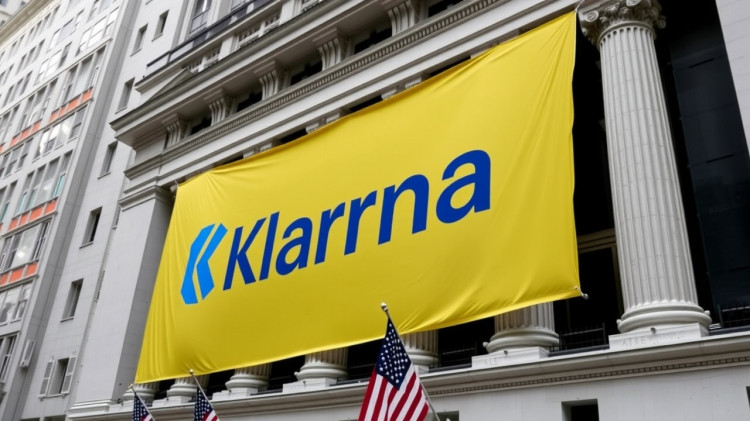
After the BNPL company made its New York debut, Klarna's shares started off quickly, but later on, the momentum slowed
Are Klarna shares a good investment?
After Wednesday's (10 September) initial public offering (IPO), shares of Klarna, a Swedish buy now, pay later platform, ended the first day of trading 15% higher than their offering price.
Use TradingView to keep track of all markets. Klarna shares were first listed on the New York Stock Exchange with the ticker KLAR. About 30% higher than its IPO price of £40, the shares began trading at £52 and reached a peak of £57.20 in the first session. However, the shares had fallen back to £45.82 by the end of the session.
According to AJ Bell's investment director Russ Mould, "Momentum waned as the day went on." This could just be early investors taking advantage of some gains or day traders entering and exiting the market fast, determining that the shares' lack of momentum shortly after the market opened didn't justify staying.
As per Yahoo Finance, Klarna's market capitalization was £17.3 billion at the closing price. The valuation is significantly lower than the £45.6 billion it attained during a fundraising round in 2021 and lower than that of US-based rival Affirm (NASDAQ:AFRM), which is valued at £27.6 billion.
"Klarna has done its homework before the IPO," Morningstar Equity Research equity analyst Niklas Kammer stated. "It will greatly expand its reach as a payment method this year and in the years to come thanks to the numerous agreements it recently signed with payment services providers.
Klarna made about £222 million from the IPO, while Sequoia, a significant backer, has made £2.65 billion overall from its £500 million investment in Klarna since 2010, according to CNBC.
The second day following the company's initial public offering (IPO), Klarna shares opened 0.7 percent lower than the closing price of the first session.
The Klarnas New York IPO's history.
Because of the market disruption caused by Donald Trump's tariffs, Klarna delayed its initial public offering (IPO) in April.
However, Wednesday's IPO's success supports the idea that the market is getting better for potential debutants.
According to Mould, "other fintechs might be persuaded to enter public markets by a robust aftermarket." There's a risk that a good deal will lead to a few more, and then a wave of bad deals will follow.
However, it is just another instance of European businesses choosing to list in the US rather than their home markets.
The choice to list in the US was made because the US offers the company's biggest growth potential, according to CEO and co-founder Sebastian Siemiatkowski, who made this statement in an interview with the Associated Press prior to the IPO.
It is the world's largest credit card market and the world's largest consumer market, according to Siemiatkowski. "From our point of view, it's a huge opportunity.
Should you purchase shares of Klarna?
Mould emphasized how unusual the share price trajectory of Klarnas was after the IPO.
According to him, "popular IPOs tend to creep higher over a few weeks and then pull back as short-term traders exit and longer-term investors subsequently build positions, driving the shares back up." It is evident that some investors don't think the current price makes it worthwhile to own. It remains to be seen if that is a straightforward valuation decision or if there are issues with the business model and its future.
But other analysts are more hopeful. "We think investors should take a close look at the new addition to the New York Stock Exchange and consider purchasing shares if they can," according to Kammers' Morningstar analysis.
"For Klarna, it's all about growth," Kammer stated. "The business is ready for a significant change, even though its platform is currently barely making a profit and barely breaking even. We expect profitability to increase as its platform grows and its underwriting models are enhanced with additional information about consumer behavior.
Kammer anticipates that when Klarnas reverses earlier headcount reductions, its operating costs will rise in the future. Siemiatkowski has since retracted his earlier claim that artificial intelligence (AI) could successfully replace thousands of employees.
Kammer stated that although Klarna functions as a platform, its success depends on hiring employees who interact with customers. These investments are essential to maximizing Klarna's potential for expansion.
Kammer stated, "We anticipate that Klarna will attain a 30 percent operating profit margin by 2034, with earnings per share rising by 30 percent annually beginning from 2025."
Investigate More.







 performance?)
Leave a comment on: How was the Swedish fintech's initial public offering (IPO) performance?