
A self-assessment tax return might be required if you work for yourself, rent out a property, or receive income from investments or savings
We go over the deadlines that you should be aware of.
Over 12 million individuals are required to submit a self-assessment tax return each year.
This covers independent contractors, buy-to-let property owners, investors who must pay income or profit taxes, and people who are repaying Child Benefit.
The deadline for filing your online tax return for 2023 - 2024 and paying your tax liability was January 31, 2025. According to HMRC, 1 million taxpayers are thought to have missed the deadline this year.
Tax returns are not necessary for everyone, but if you failed to file your return by the deadline and HMRC was expecting one, you will be subject to fines and interest on any taxes that you haven't paid.
File your tax return as soon as you can after organizing your documents.
Additionally, filing your taxes early rather than right before the deadline can be a smart move. We examine the due dates for filing your taxes for the 2024 - 2025 tax year.
When is the due date for self-assessment tax returns?
Depending on how you choose to file your self-assessment tax return, there are various deadlines.
If you file your taxes on paper, you must have the paperwork to the tax collector by midnight on October 31.
The deadline is midnight on January 31st, and the great majority of people file their taxes online.
The deadline for filing your 2024 - 2025 tax return is October 31, 2025, if you file on paper, or January 31, 2026, if you file online.
If you file your return online or on paper, the January deadline is not only when you must file your return but also when you must pay any unpaid income taxes.
Additionally, you must make your first payment by January 31 if you pay on account. The account's second payment is due on July 31.
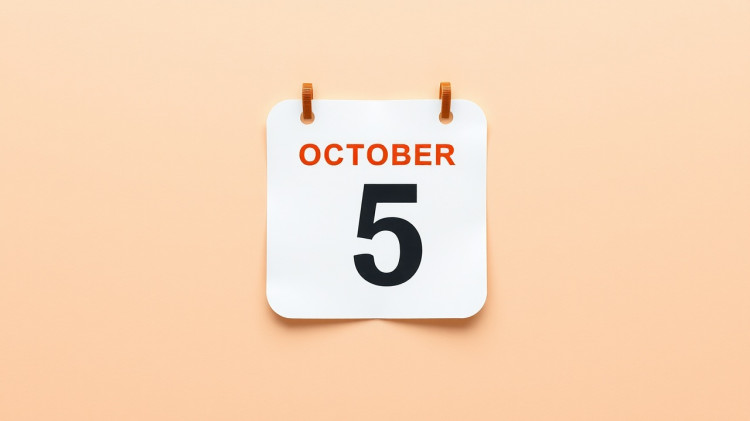
The registration deadline for those who have never completed a self-assessment is October 5.
There is another deadline that you should be aware of. HMRC may automatically modify your PAYE tax code to collect the tax due if you are currently employed or receiving a company pension and your self-employment income tax debt is less than £3,000.
Your self-assessment return must be turned in by midnight on December 30 rather than January 31 if you wish to pay your taxes in this manner. The 31 October deadline is still in effect if you are filing your taxes on paper.
What occurs if the deadline for filing my self-assessment tax return is missed?
You will be penalized if you submit your self-assessment tax return after the due date.
A day after the fact.
Even if you file the return one day late, you will still be fined £100.
Three months after the fact.
You will be hit with additional daily penalties of 10 up to 900 after three months (so if you file an online tax return, that means from May 1).
It's six months late.
A further penalty of either 5% of the tax owed or £300, whichever is higher, is applied after six months.
One year late.
After 12 months, the same fine (5 percent or 300) is imposed once more.
Even if you filed your taxes on time, there are still penalties for paying them after the due date. Five percent of the outstanding tax at thirty, six, and twelve months is one of these. Interest is currently at an eye-watering 8 percent since it is charged at base rate plus 4 percent.
"It is likely that hundreds of thousands of people have yet to file their tax returns, even though the deadline was back in January," stated Alastair Douglas, CEO of the financial services firm TotallyMoney.
According to Douglas, penalties must be paid within 30 days of being notified of them. There are multiple ways to pay, such as sending a check, using a debit or credit card, or transferring money via bank transfer.
If you can provide a valid reason for the late filing of your tax return, you can contest your penalty. A death or serious illness in the family, or issues with HMRC's online service, could be examples of this.
It is a bad idea for some people to put off handling their paperwork because they are unable to pay their taxes.
"If you're having trouble paying your bill in full, you may be able to set up a payment plan under a Time to Pay arrangement on the HMRC website," Douglas advised.
What occurs if I submit my tax return incorrectly?
Even after the deadline, you can still make corrections to your tax return if you make any mistakes. Tax return errors can be fixed within a year of the return being filed, and the amended return will result in a new tax bill.
Any changes must be made at least 72 hours after your return is filed.
What is the process for account payments?
A payment on account is one that you make in advance of the January 31 deadline for your subsequent tax bill.
Two payments, each equal to about half of the tax bill from the prior year, are due on account. Following the filing of your tax return, you can ascertain whether you are eligible for a refund or if a top-up payment is required to settle the outstanding balance.
By January 31st, the first payment on account must be made, and by July 31st, the second.
In the event that your tax bill for 2023 - 2024 was £20,000, for instance, you will have to pay £10,000 each in two installments for the 2024 - 2025 tax year by January 31, 2025, and July 31, 2025.
You can request that your account payments be lowered if you think your tax bill will be less than it was the year before.
Tips for meeting the tax return deadline without going over budget.
There are a few things to consider if you wish to eliminate the anxiety associated with accurately and timely filing a self-assessment tax return.
First and foremost, it's a great idea to allow more time for yourself.
With the postal service providing you with a Unique Taxpayer Reference (UTR) number, registering to file a tax return can take some time. It is best to begin this process as soon as possible. Keep in mind that the self-assessment registration deadline is October 5.
Similarly, before you begin filling out the return, it is important that you take the time to collect all the necessary documentation. This entails gathering your paystubs, information about your other sources of income, investments and savings, pension contributions, and charitable contributions.
You may be able to lower the amount of tax you actually owe if you are aware of the tax breaks and exemptions that apply to you.
This can include up to £1,000 in trading allowance for casual income, uniform allowance, and working from home allowance.
After gathering that data, it's crucial to verify the calculations one last time to ensure accuracy before submitting. HMRC has the authority to impose penalties, even if you make mistakes in good faith.
After the submission is complete, it can be helpful to learn from it in order to figure out how to lower your tax liability in subsequent years. Specifically, increasing your pension can help fund your retirement and reduce your tax obligation.
Additionally, you should confirm that your tax code is still appropriate for your situation and monitor any changes to it.
Who is required to submit a self-assessment tax return?
If you are not self-employed and your salary is your only source of income, you most likely do not need to file a tax return. PAYE, or "pay as you earn," will take your income tax out of your paycheck before you get it.
In general, pension income that exceeds the personal allowance is also subject to PAYE taxation.
You will probably have to file a tax return, though, if you also receive income from investments and savings that are not held in an ISA, a business, a second residence, or another source. If you work for yourself, it's the same.
The effects of fiscal drag have resulted in an increase in the number of people trapped in the self-assessment net in recent years. This is because tax thresholds have stayed frozen despite high inflation. As a result, the tax-free allowances have lost some of their original real value.
Certain allowances, such as the capital gains and dividend tax allowances, have even been reduced. This implies that investors will be able to accumulate less tax-free income and gains prior to the due date of their taxes.
HMRC's online tool assists you in determining whether you are required to file a tax return.
Learn More about HM Revenue and Customs.




Leave a comment on: The self-assessment tax return deadline is when?