
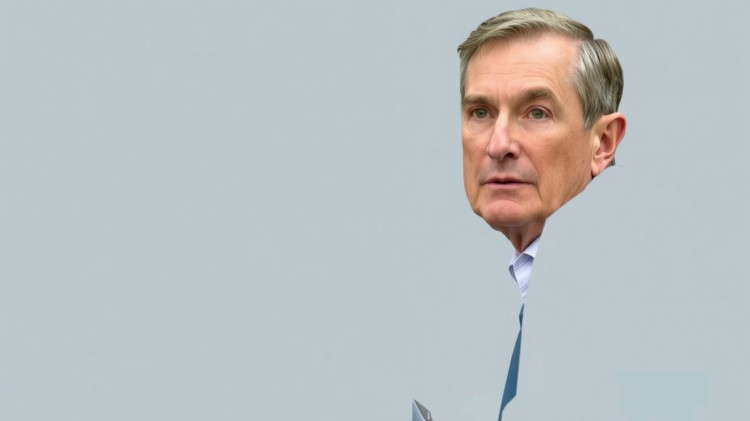
Trump's desire to fire Jerome Powell if he could only find a constitutional reason for doing so is evident
What would it mean for financial markets, and why?
Why are Donald Trump and Jerome Powell at odds?
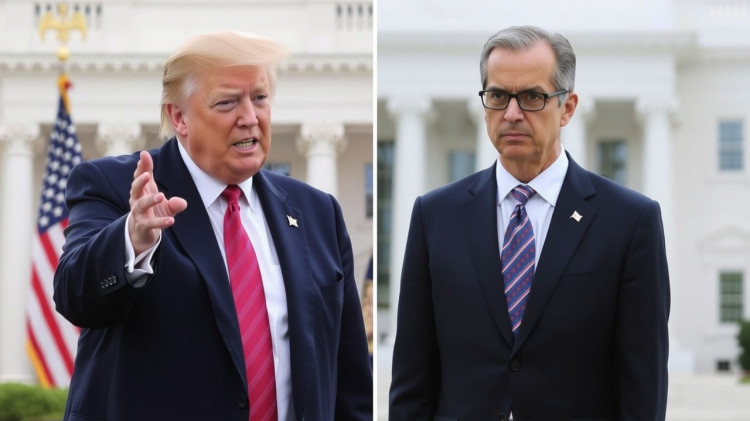
President Donald Trump of the United States wants to reduce interest rates and loosen monetary policy in order to boost economic growth and lessen the effects of the nation's soaring national debt. The chairman of the Federal Reserve, the US central bank, Jerome Powell, believes it is his responsibility to withstand such political pressure and is committed to continuing to target inflation as the most effective means of guaranteeing long-term economic growth and stability. The conflict between elected officials and "independent" central bankers is not new, but it has persisted for decades. The stakes are very high, though, and there is real hostility between Trump and Powell. Powell, a Republican who had previously worked as an investment banker, was appointed by Trump himself to serve as chairman of the Federal Reserve during his first term in 2018. However, Powell's refusal to give in to political pressure caused Trump to quickly regret his choice. Within months, Powell was being publicly criticized by the president as "crazy" for his continued gradual interest rate hikes and unwinding of America's quantitative easing.
How about firing Jerome Powell?
A president cannot fire a Fed chair because of disagreements about monetary policy. He can only fire them "for cause," which refers to some sort of misconduct. By May of next year, Powell's tenure as Fed governor (but not as a board member, if he decides to remain on) will come to an end, and Trump will undoubtedly look for someone more flexible. Powell has become poisoned by Trump's undermining of him in the interim. Despite other central banks making cuts this year, the Fed has maintained borrowing costs at 4 percent to 4 percent. Powell claims that this is partially because of the "liberation day" tariffs imposed in April and their upward effect on US inflation projections. Powell said last month that the Fed "would probably have cut rates again by now" if it weren't for that new negative factor. Trump has responded by calling Powell a "numbskull" and a "complete moron," becoming more and more abusive.
What is causing Trump's rage?
The US federal debt is abnormally high, Trump is an unusual president, and the political stakes are unusually high. Former Fed Vice-Chairman Don Kohn says, "It's pretty universal having a president who wants lower rates." "What is unprecedented is that Trump wants to lower the cost of the debt, not boost the economy with lower interest rates. Using monetary policy to ease budgetary pressures is a surefire way to increase inflation, which is why it's concerning. Powell's unwillingness to lower rates was deemed "at least three points too high" by Trump last month, who also claimed that Trump was "costing the US £360 billion a percentage point in refinancing costs." That is a trillion dollars' worth of rage, and it has manifested itself in growing public annoyance, including the president's thoughts on firing Powell and a heated on-camera argument about the expense of Fed renovations as Trump reportedly looks for a legitimate "cause" to remove the governor.
What is the significance of all this?
When investors demand higher interest rates because they fear their loans will be repaid in a depreciated currency, it has caused the dollar to drop sharply this year and increased the likelihood of a bond market crisis by undermining market confidence in the Fed's independence and the stability of US policymaking. Its largest shareholder, the International Monetary Fund, issued a rare warning last week that undermining central bank independence could lead to a debt crisis and that independent monetary policy is "a cornerstone of macroeconomic, monetary and financial stability." However, the warning did not specifically mention the United States. That is important to all of us in the case of the US. Financial markets may become unduly volatile if US credit risk rises as a result of worries about fiscal sustainability.
Does the independence of central banks exist?
It has become commonplace in wealthy nations over the past 50 years for central banks to be at least ostensibly independent. The premise is that politicians are too swayed by immediate political concerns to be trusted to manage monetary policy. Nigel Lawson first suggested giving the Bank of England independence in the 1980s, and Gordon Brown eventually did so in 1997. Germany's Bundesbank, on the other hand, was crucial to the Federal Republic's relative price stability and economic superiority. It was the first central bank to achieve full operational independence in 1957. Since 1951, the Fed has supposedly been independent in the US. Arthur Burns, the institution's chairman, made a mistake in the lead-up to the 1972 election when he lowered interest rates under pressure from President Richard Nixon, which resulted in catastrophic "stagflation."
Isn't independence preferable?
It's merely a way to provide better economic performance and price stability. Evidence has shown that independent central banks tend to promote greater price stability since the 1980s. In the wake of the 2007 - 2008 financial crisis, however, the argument that independence eliminates democratic accountability gained strength as banks gained power and adopted divisive and highly politicized policies like quantitative easing. Additionally, there has been a lot less agreement on the goal of monetary policy during a period of low growth and low inflation. The post-pandemic inflationary shock further eroded confidence in central banks' technocratic omniscience, as they struggled to handle it. Why target inflation when the real problem is stagnation?
Trump is correct, then?
There is some truth to it, just like with many of his opinions. However, financial markets would suffer greatly from any attempt to limit the independence of the Federal Reserve, particularly with regard to rate-setting. John Authers states on Bloomberg that, aside from all the other forms of central banking, independence might be the worst.





Leave a comment on: Will Jerome Powell, the head of the Federal Reserve, be fired by Donald Trump?