
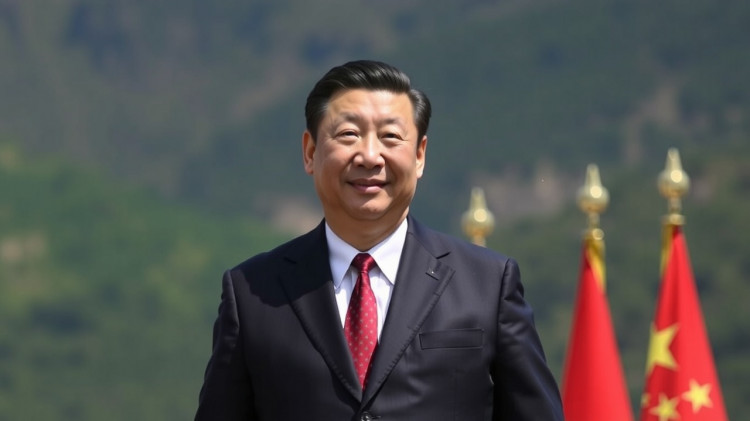
It used to seem unrealistic that China could surpass the United States in technological capabilities
That isn't true anymore.
Is China already a technological leader?
It's either there or close by. Harvard researchers released a technology index last month that ranked 25 nations in five categories: semiconductors, biotechnology, space, artificial intelligence (AI), and quantum technology. China came in second, but the United States was ranked first in every category. However, according to a recent study by the Australian Strategic Policy Institute, China has already made significant progress in a number of important areas. Between 2003 and 2007, the think tank discovered that China led the US in only three of 64 cutting-edge technologies, including artificial intelligence and cryptography, while the US led China in 60 of 64. In 2019 - 2023, the situation had changed. The US currently leads in just seven of the 64 major technologies, while China leads in 57.
Where is China superior?
Chinese start-ups, none older than thirty, are the biggest and most inventive manufacturers of solar wafers (LONGi), drones (DJI), EV batteries (CATL), and electric vehicles (BYD) in the world. In other cutting-edge industries where the US has long held a dominant position, such as solar energy, communications, robotics, nuclear power and fusion research, quantum computing, biotech and pharmaceuticals, and aviation, Chinese companies are fiercely competing. According to Christopher Mims of The Wall Street Journal, "the US and its allies (including Taiwan) maintain a narrow lead in advanced microchips and AI for the time being, but the gap is closing faster than ever before." According to industry analyst Patrick Moorhead, the notion that China's domestic chipmaking network is or will continue to lag behind is "flies in the face of history." He contends that China will soon be able to source all it needs to match or surpass the capabilities of companies like U.S.-based Intel and Taiwan-based TSMC.
What about artificial intelligence?
The Economist claims that China is "snapping at the heels" of the US, as evidenced by the "DeepSeek moment" in January when the Chinese company unveiled a large language model (LLM) that nearly matched the capabilities of OpenAI's ChatGPT, but for a fraction of the investment. It was a shocking moment, but it hides the reality that Chinese policymakers are engaging in a different kind of strategic race, concentrating on real-world AI applications for consumers and factories. Chinese players prioritize the practical application of AI, while US companies concentrate on the model, according to Zhang Yaqin, a former Baidu CEO who is currently at Tsinghua University. This is the same pattern by which China gained a competitive edge in e-payments and e-commerce. According to Kyle Chan of the RAND Corporation, China is spending heavily on the entire AI technology industry at the same time, including chips, data centers, and energy.
What is China doing successfully?
Previous opponents of US hegemony did not have the advantages that China does. It can nurture businesses domestically before they expand internationally because of its sizable domestic market. It has a decades-long strategy of aiming for self-sufficiency in high-tech sectors, despite still being dependent on the US and other countries for many raw materials and specialized goods. That implies that it is generating an increasing portion of everything it requires. According to Lee Jong-Wha of Project Syndicate, education is an additional illustration of a sustained dedication to planning and carrying out a strategy. High-quality higher education has been shown to be a key factor in winning the race for leadership in the global economy, technology, and politics. Hangzhou has become a Chinese Silicon Valley thanks to Chinese investments in the construction of top-tier universities like Zhejiang University, which is based on Stanford.
On the other hand, the United States is "actively undermining its elite institutions of higher education, not least by alienating foreign talent." Suing colleges for ideological transgressions and discouraging international students are two policies of the current administration that are wildly misguided. Graduates of prestigious US universities, many of whom were not Americans, founded some of the most valuable companies in the world, such as Google, Meta, Nvidia, and Tesla. One quarter of US billion-dollar start-ups were founded by foreign students who initially came to the country, and more than half of them have at least one immigrant founder.
How should the United States proceed?
Essentially, US policymakers must shift their attention from the past to the future, according to David Autor and Gordon Hanson in The New York Times. The US still uses the first "China Shock" of 1999 - 2007, when China's shift to a market economy contributed to the loss of almost 25% of all US manufacturing jobs, to frame its strategic rivalry with Beijing. However, that is the past, and the United States now faces the possibility of waging the final conflict. The "China Shock 2.0" that is currently approaching will be much more significant and protracted. "China Shock 2.0 will continue as long as China has the resources, patience, and discipline to compete fiercely," the statement reads. The initial manufacturing shock subsided when China ran out of inexpensive labor.
What response should the US give?
According to Autor and Hanson, the strongest way for the US to counter that threat is to work with commercial allies like the EU, Japan, Canada, the UK, Australia, and South Korea. Chinese companies should be urged to establish manufacturing plants in the US and other countries at the same time. Similar to how China once urged Western businesses to do the same in China as a means of accelerating technology transfer, that may seem counterintuitive. The "catfish effect" is the term used by Chinese policymakers to describe how a powerful foreign rival influences weak domestic "sardines" to swim more quickly or risk being devoured. The US should also emulate China's strategy of "aggressively promoting experimentation in new fields," which was implemented in the US and Europe during World War II. In order to achieve the desired result, the US must lastly "choose the battles" it can win (semiconductors) or those it cannot afford to lose (rare earths) and invest sustainably.






Leave a comment on: Is it possible for the United States to overtake China in the global AI technology race?