

In a surprise move, your executors will have to find all of your unused pots as pensions will be included in inheritance tax calculations starting in April 2027
Despite strong opposition, the government has stated that it will proceed with its plans to impose inheritance tax on unused pensions upon death. But if you don't take action right away, a sudden change in the policy might cause your loved ones a lot of administrative stress.
Beginning in April 2027, estates will include pensions in the computation of inheritance taxes. In the 2024 Autumn Budget, chancellor Rachel Reeves first announced the policy, and this is the result of a government consultation on it.
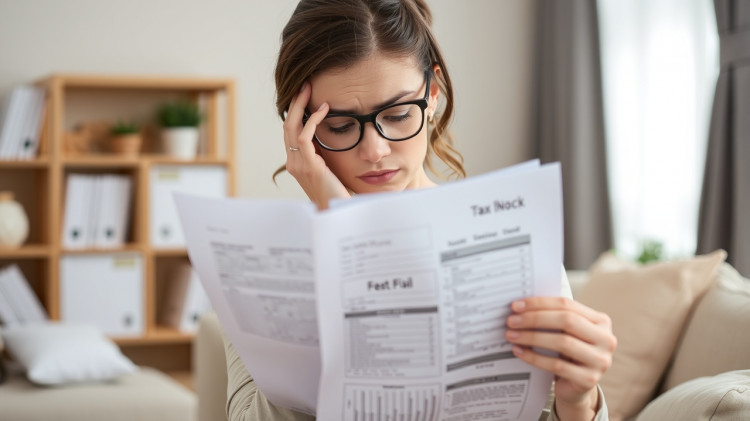
There is now confirmation that the executors of the estate, also referred to as personal representatives, will be responsible for locating all of those pensions. Choosing a family member as an executor, as many people do, may leave your loved ones to play detective.
The government is still requiring them to pay any inheritance tax bill within six months, so they won't have much time to find all the unused savings. If the deadline is missed, there will be fines ranging from 100 to 3,200.
"Bereaved families have a significant administrative burden," stated Rachel Vahey, AJ Bell's head of public policy. It may not be easy to pay the inheritance tax bill right away because many people have complicated financial situations, particularly those who pass away suddenly," she continued.
Beneficiaries may be able to use other estate assets to cover the entire IHT bill, which could speed up the settlement process. However, even with the new regulations, it is still far from an easy process.
Vahey stated that "the addition of unspent pension funds into the IHT liable assets will still cause additional complexity and confusion for bereaved and grieving families."
"This feels like HMRC is doubling down by giving the bereaved even more issues to deal with, rather than sparing them from a grueling process.
In separate articles, we examine strategies for lowering your IHT bill and avoiding inheritance tax entirely.
How to get your estate ready for changes to the pension inheritance tax rule.
To ensure that your loved ones or the executor have a less stressful time managing your estate after your death, it is best to get ahead of the upcoming changes now.
In order to prevent inheritance tax pension paperwork headaches, former pension minister Steve Webb, who is currently a partner at pension consultancy LCP, shared his three best tips.
1) Preserve your documents.
In this manner, there's a chance that a loved one who has to handle your affairs after you're gone will be able to identify the pension plans you were a part of and know your policy numbers to make it simpler to locate them.
2) Make a pension identification document of your own.
Some people go one step further and create a brief, easily accessible document that provides their executor and heirs with important details about all of their financial matters.
A helpful template document called When I'm Gone, developed by pension provider Royal London, enables users to include a variety of financial details, along with funeral preferences, the location of their will, and other crucial information.
3) Take into account a power of attorney for finances.
Now is a good time to establish a financial power of attorney. Because you will be handling someone else's estate before you have probate, financial institutions might be reluctant to provide you with any information at all.
However, you can sometimes get the deceased to be much more cooperative with you if you can demonstrate that you already had a financial power of attorney for them.
What your executors must do after your death.
Finding all of the pensions will be the first step under the new pension and inheritance tax regime.
"In theory, you need to get in touch with all the pension providers and plans, but the defined contribution or pot of money pensions are the most important," Webb stated.
These are often administered by well-known insurance companies, so if there is no documentation, Webb advises looking at bank statements for things like one-time withdrawals (from a drawdown account, for example) or (for younger deaths) regular direct debits to collect premiums.
They should be contacted if the person had a financial advisor. They ought to have a complete picture.
Webb noted that HMRC has committed to providing information and guidance for executors regarding the necessary actions as the new policy's implementation date approaches, which is set for April 2027.
Webb stated, "HMRC has also promised a number of online tools and calculators, so you won't actually have to figure things out for yourself. You just need to enter the facts, and they'll apply the rules and figure out what's due (if anything) and from whom."
An IHT bill is generally unlikely, but you should still collect all the information to be sure.






Leave a comment on: The paperwork nightmare of pension inheritance taxes: how to get ready to prevent fines