
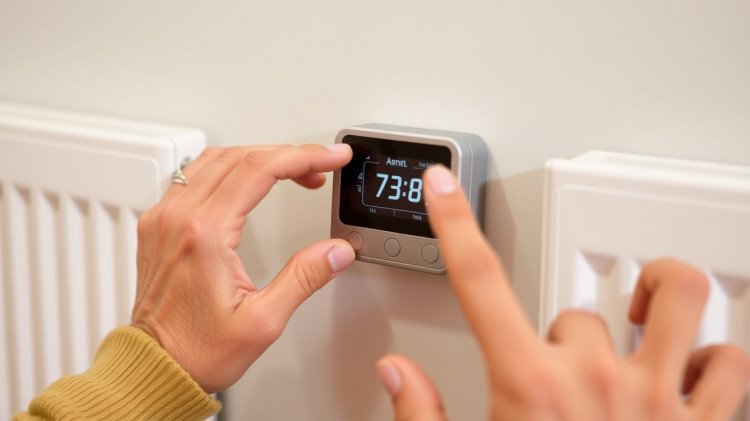
From January next year, as many as 20 million households are due to get £100 toward their energy costs. Charities say the payment falls short.
Early next year, millions of households will get a 100 payment toward their energy bills after the price cap rises by 26%.
The government said about 20 million households in England qualify for the Household Energy Payment, with payments beginning in January.
Energy regulator Ofgem said the price cap will increase by 26% in January. For the period from 1 January to 31 March, that will add 443 to the average household's annual energy bill as tensions in the Middle East push up wholesale prices.
Chancellor John Healey said: "Families are concerned that energy bills will rise again this winter. We cannot control global energy markets, but we are taking steps to ease pressure on household finances and give families some breathing space."
Latest videos from BFIA
Watch the full video here:
How will the payment work?
From 4 January, the government will pay 100 directly into the bank accounts of 13 million households. To qualify, households must pay their energy bills by direct debit and be in council tax bands A to D.
Around seven million people in bands A to D who do not pay their energy bills by direct debit will hear from their council. They will be asked whether they prefer the money transferred to their bank account or credited against their council tax.
Eligible households must contact their councils by the end of May 2027 to claim the payment. The deadline is 31 May 2027, and no payments will be issued after that date.
The Scottish and Welsh governments have also received funding for similar energy payment schemes, which they have confirmed they will provide.
Councils in England will share a 100 million Discretionary Fund, offering help to households facing higher costs but unable to claim the 100 energy payment.
Each local authority can decide who qualifies for support under this separate scheme.
However, the government expects billing authorities to make a genuine effort to find households under fuel stress, including those where health conditions or disabilities result in greater energy use.
Charities call for stronger government action
The 100 payment is due in the same month that Ofgem's energy price cap is set to jump by 26%.
From the first quarter of 2027, a typical dual-fuel household paying by direct debit will see its annual bill rise by 443 - from 1,723 to 2,166.
Conflict in the Middle East has driven up wholesale energy costs, especially gas. The Bank of England's Monetary Policy Committee has warned that inflation could reach 5% next year.
Research by the charity Nesta estimates that households will be 174 worse off than last winter, even after the 100 payment is included.
Katy King, the director of Nesta, said the 100 payment won't come close to covering the shortfall.
She added: "The government and energy companies should make the free, easy steps impossible to miss. Turning down a combi boiler's flow temperature or adjusting the radiator valves can cut hundreds of pounds from a winter bill."
Debt advice charity StepChange has also called on the government to create an energy social tariff, which would give people on low incomes a discounted rate and reduce their bills.
Vikki Brownridge, the charity's chief executive officer, said the government's 100 energy support payment was well-intentioned but urged it to improve how quickly and accurately it reaches those most in need.



Leave a comment on: Millions of households will receive a £100 energy payment as bills soar