
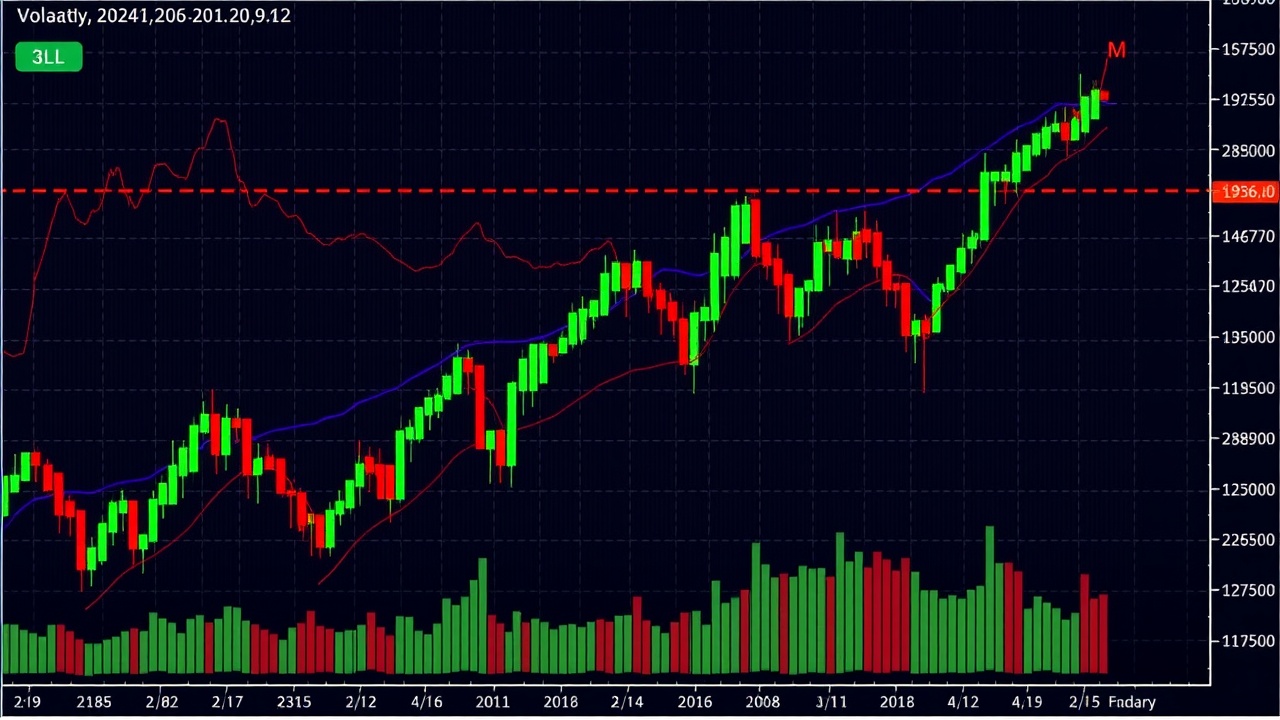
Debates and concerns about artificial intelligence are driving sharp day-to-day swings. Experts warn investors not to panic.
?
For investors, sharp swings are becoming harder to avoid. Your portfolio's value may rise or fall over short periods. So how can you protect it when markets grow more unsettled?
Anthropic's 19 November IPO was widely seen at first as fresh evidence that investors still believed in the AI boom. Its stock jumped 17% on the first day, while the broader market also rose despite the recent controversy involving former market favorite Nvidia (NASDAQ:NVDA).
Anthropics (NASDAQ:ANT) dropped 8.5% the next day, while the S&P 500 lost 3.7%. At the next trading session, 23 November, Anthropic opened 5% above its previous close, then slipped back below that level within hours. Nvidia had fallen 22.9% in the week ending 20 November, but opened 36.5% higher on 23 November after its board reappointed co-founder Jensen Huang as CEO.
Sharp moves in some of the world's biggest stocks are happening more often. Whether AI is in a bubble or not, one thing is clear: right now, your portfolio's value can change dramatically overnight.
Latest Videos FromBFIA Watch the full video here:
Is the AI bubble bursting?
Growing doubts about AI's economics have helped drive the market's increasingly sharp swings.
Since OpenAI launched ChatGPT four years ago, most people assumed AI companies - and businesses connected to them - would keep growing rapidly, perhaps even exponentially, for decades. Public and private firms in the sector saw their valuations soar as a result.
AI may still raise productivity over time, but the story is no longer straightforward. Spending on AI infrastructure and hardware has drawn growing scrutiny, particularly as more of it is financed with debt. Investors now want clearer answers about whether that spending will produce profits - and when.
In November's US midterm elections, Democrats won control of both the House and Senate, even as many of their candidates opposed the rapid construction of the data centres that support AI. Recent turbulence at Nvidia has only deepened doubts about the technology.
From 6 October, when the AI market peaked, to 20 November, global stock markets lost £12 trillion in value - an approximately 11% drop.
Markets are now in correction territory: a decline of more than 10% from the latest peak, according to Dan Coatsworth, head of markets at the investment platform AJ Bell. Some areas have fallen much further. The SOX semiconductor index, for instance, is down 36% since the tech selloff gathered force.
How can you protect your portfolio against AI volatility?
Prices will move sharply from time to time. That short-term volatility is simply part of investing.
"Market volatility isn't a defect in the investment system; it's the cost of pursuing higher long-term returns," said Harry Bell, director of financial planning at investment bank Raymond James. For wealth managers, the real issue isn't whether markets will go through periods like this - they will - but whether your finances can withstand them.
Money might be safer in sectors or regions less exposed to AI and other volatile forces. India is one possible refuge: its economy has relatively little concentration in the industry, and its market held up broadly well during the recent tech selloff.
European shares have remained fairly steady. AJ Bell's analysis shows that from 6 October to 20 November, Germany's Dax index dropped 2.5%, compared with a 1.9% decline for the UK's FTSE 100 and a 0.8% fall in France's CAC 40.
Holly Mackay, who runs the financial consumer website Boring Money, warns that selling when stock prices fall may feel sensible - but often isn't.
"Humans are wired to fight or flee when things go wrong," she said. Falling markets often punish that impulse; when prices flash red, doing nothing may be the wiser choice. "I'm sure we'll see more volatility and more red days, but selling would only lock in the losses."
Mackay added that markets recovered after major selloffs, including the Global Financial Crisis, 9/11, Covid and last year's Liberation Day.
Raymond Jamess Bell said that keeping enough cash on hand and spreading investments across a diversified portfolio may prevent investors from selling during a downturn and locking in losses.
That means having enough cash to cover immediate needs, spreading investments across different areas, and building a plan that can withstand markets when they stop rising, he said.






Leave a comment on: How can you protect yourself when markets grow more volatile?