

Investors worry that robo-taxis could push Uber out of the market. Helen Xiong, co-manager of The Monks Investment Trust, sees the situation another way.
?
As with any investment, capital is at risk.
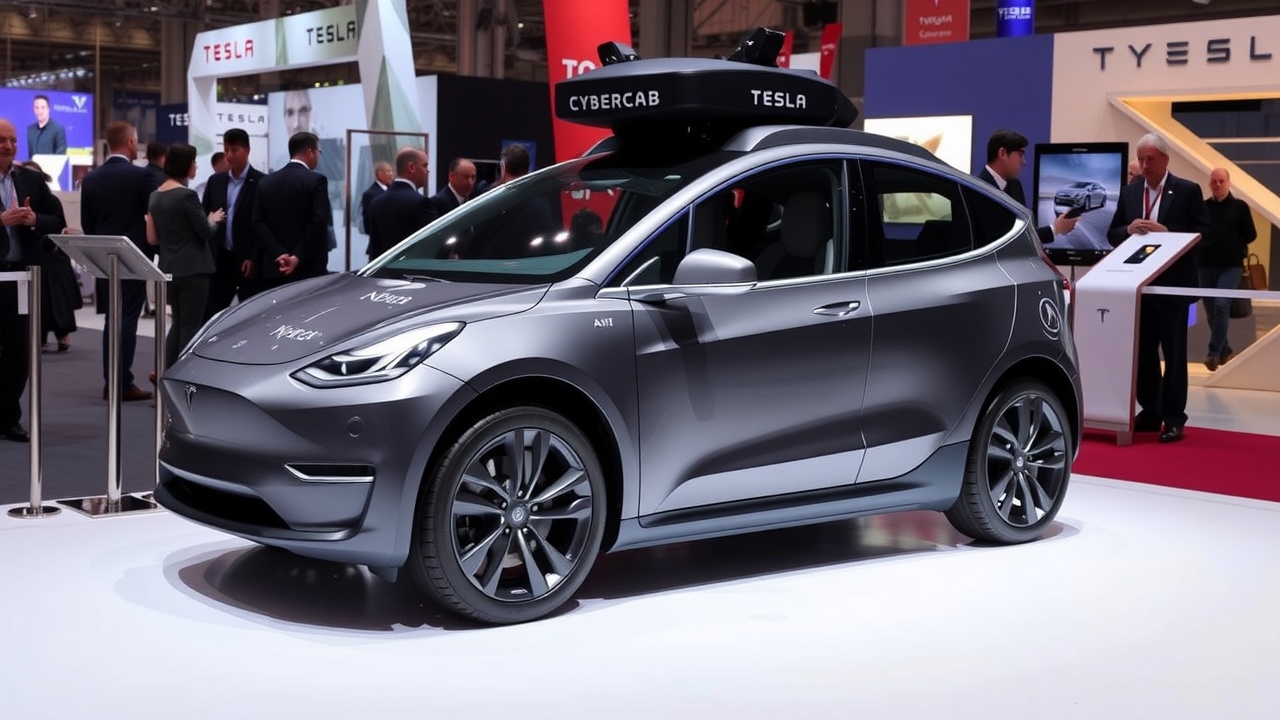
In early 2024, Tesla founder Elon Musk described his plans for a fully autonomous robo-taxi service. He suggested that Tesla might one day go beyond Uber's achievements in changing personal transport.
Human drivers, he said, would eventually be as uncommon as lift-operators. "You'll summon a car on your phone, climb in, and it will take you where you need to go. Then you'll get out."
For a while, the prospect of competing with Tesla in a technology capable of sharply cutting ride-hailing costs weighed on Uber's share price.
Monks, however, thought the market had missed something obvious: Uber had already begun delivering Musk's frictionless future by pairing human drivers with robo-taxis.
Why Monks bought when others sold
In Phoenix, Austin, and Atlanta, Uber's app connects passengers with autonomous vehicles (AVs) operated by Alphabet's Waymo. Riders get in, take the trip, and leave when they arrive. Uber also works with leaders in AV and AI technology, giving the company a strong position to gather future global demand for robo-rides.
When the market writes a company off, Monks managers pause before accepting the verdict. They look at the situation from another angle, while recognizing that the market is often right: revolutionary technologies can undermine even relatively young incumbents such as Uber. Their approach is not contrarianism for its own sake.
In Uber's case, we reached a different conclusion. When markets wobbled early in 2025, we bought a stake in the company for our shareholders, convinced that its stock price sat well below its value.
Growing current markets
Uber is now so familiar that people can forget how much it changed transportation. More than 180 million customers use the app, taking over a billion trips each month.
Uber's main product still has considerable room to grow. It could enter more countries, attract additional riders in markets where it already operates, and persuade existing users to open the app more often.
The company recently reported that weekly Uber use among adults stands at only about 0.5 percent in India and Spain. Australia is higher, at 6.5 percent.
Uber can keep drivers working and earning more because they can switch between carrying passengers and delivering meals through Uber Eats.
Monks sees a powerful engine in those forces, with plenty of room to grow: as more people request Uber rides, drivers stay busier and fares fall, which draws in still more riders.
Leading the robo-taxi field
Anyone thinking about buying an AV and listing it on a ride-hailing network will need to work out whether the income justifies the investment.
Two figures matter most: the vehicle's price and how much time it spends earning money - its utilisation rate. That rate depends on the number of customers the vehicle can reach.
Uber's size gives it a built-in edge: once a driver joins the network, that vehicle can immediately reach Uber's entire customer base, keeping it busier.
Uber's experience with Waymo points in that direction. In Phoenix, Waymo autonomous vehicles operating through Uber were busier than 99 percent of comparable vehicles driven by people. Uber can also handle the fleet's day-to-day ground operations, including charging, cleaning and servicing.
Uber could run one network that combines human drivers with autonomous vehicles, adding or removing capacity as demand shifts. Customers will eventually favor whichever network gets them - or their food - to the right place fastest and cheapest.
We don't see autonomous ride-hailing as a winner-takes-all business. As costs fall and rides improve, more people may use the service, expanding the market rather than simply shifting customers between companies.
New technologies that change an industry are rarely zero-sum. The opportunity often appears when investors assume otherwise; that is when flexible thinkers can find room to move.
More than a ride app
Uber One's subscription programme has attracted over 36 million members. Some users may also have booked flights or train trips through Uber's travel service, while in-app advertising has become another growing source of profit.
These additions point to Uber broadening its services and giving people more reasons to stay in the app. If the strategy works, the company could move toward the Asian super-app model, where one platform handles much of everyday life.
The company has announced a partnership with NVIDIA to bring level-4 autonomous vehicles onto Uber's network. Within a pre-defined zone, these cars could handle every driving task, allowing owners to earn money while they work or sleep - a vision that echoes Musk's plans for Tesla.
To Monks, it all points to a company operating at full strength. We're excited to see Uber help drive the global shift toward autonomous transport.
Important information
This article is not independent research and does not receive the protections that apply to it. Baillie Gifford and its staff may have traded in the investments mentioned. The opinions expressed here are not factual statements, nor should they be taken as advice or a recommendation to buy, sell, or hold any particular investment. Baillie Gifford & Co and Baillie Gifford & Co Limited are authorised and regulated by the Financial Conduct Authority (FCA). The investment trusts managed by Baillie Gifford & Co Limited are listed on the London Stock Exchange and are not authorised or regulated by the FCA. A Key Information Document is available at bailliegifford.com.




Leave a comment on: Is a driverless future good news for Uber investors?