
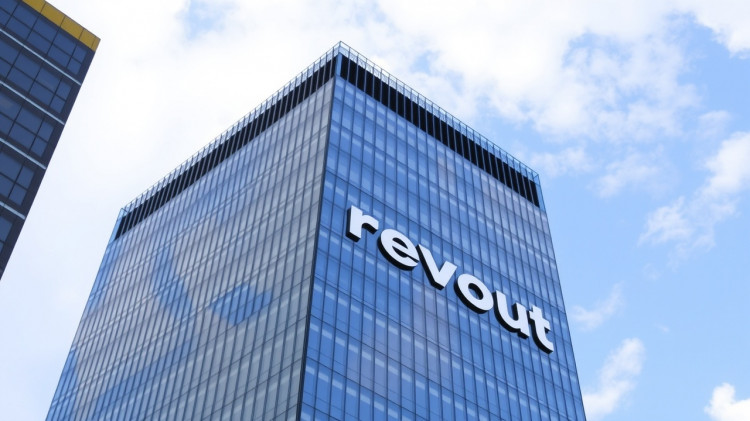
Revolut may choose to list in New York and London, giving the UK a rare chance to show that the City still counts.
A few years back, London would have seemed the obvious place for Revolut to list. The company is British, grew its business here, and the city was still one of the world's major stock markets - a sensible home for a rapidly expanding firm. Sadly, that assumption no longer holds.
Last week, Revolut confirmed that it was considering a dual-listing IPO on both the Nasdaq in New York and the London Stock Exchange. The fact that London's inclusion feels reassuring to people in British finance says a great deal about how far the City has fallen.
In 2024, CEO Nikolay Storonsky called a London listing "not rational," pointing to thin liquidity and the 0.5% stamp duty charged on every trade. At the time, he said New York was the only market that made sense. He has since eased that position and floated a dual listing in both cities, with New York still taking priority. It's better than nothing.
It may also alter how people see London. Once a global financial center, it had become a backwater by 2024, recording fewer IPOs than Malaysia or Oman. Companies continue to leave, while almost nothing arrives to take their place. During the first half of this year, just seven new listings raised less than 600 million in total. The large firms still listed in London are mainly banks, oil majors, and pharmaceutical conglomerates - hardly the kind of companies to excite investors.
How the government can make the Revolut IPO a success
Revolut would bring something different to the market: it is a fast-growing technology company with a familiar brand. A London listing could persuade international investors to look at the broader UK market again, but only if the flotation performs well. So what could the government do to improve its chances? The chancellor has already suspended stamp duty on the Revolut IPO and for its first three years of trading, a decision that may have influenced the company's choice. That should give trading and liquidity a major lift. Without the exemption, anyone thinking clearly would buy the shares in New York instead, where they are tax-free. Why stop at three years, though? Extending the exemption to ten years could be a useful step toward abolishing the tax altogether.
Why not give Revolut IPO investors a capital-gains-tax exemption? That could create a solid group of "buy and hold" shareholders and give the company a stronger base from day one. An additional 5,000 IPO allowance on existing ISAs might also draw small investors back into new issues. Together, those measures would make a London listing more appealing and show companies that the City can match New York - or perhaps beat it. If Revolut goes public within the next year or so, it may be London's final opportunity to prove that the City still matters.






Leave a comment on: Revolut's IPO could be London's last real shot