
The AI doom troll campaign by Anthropic is a self-serving ploy to promote the company's impending IPO
Avoid falling for it, advises Terry Tanaka.
Anthropic researcher Evan Hubinger states, "We really do earnestly believe AI could kill all humans!" on X. He believes that the likelihood of all of us dying "within the next decade" is over 10%. AI's potentially disastrous effects are being discussed. The capabilities of recent models, which could be used to develop bioweapons or escape human control and go rogue, are reportedly frightening senior figures at AI labs. When a group of AI CEOs, including Dario Amodei Hubinger's boss at Anthropic, openly supported calls for a slowdown in AI development over the weekend, the panic reached a new level.
The AI startup at the center of a media frenzy is Anthropic.
Frightening things. It's possible that Silicon Valley has experienced a widespread awakening to the implications of developing AI. Or perhaps Alastair Campbell would cry over this clever and cunning PR campaign. For starters, the timing is extremely dubious. In a few weeks, Anthropic, the AI startup at the center of the current media frenzy, will launch the biggest initial public offering (IPO) in history.
Considering vested interests is a fundamental component of critical thinking. As a commentator, Dario Amodei is not impartial. An IPO valuation of up to £2 trillion is what he is aiming for. However, a large portion of the tech media, eager for a dramatic narrative, blindly accepts the self-serving claims made by AI executives as objective facts.
Even though Jacob Coxon, the Anthropic researcher whose resignation sparked the most recent news cycle, had virtually no previous activity on his account, the more conspiratorial-minded noted that his tweet had received 140 million views. Although Coxon's worries are likely real, it doesn't seem natural for his message to be taken up and promoted by so many powerful people.
On the surface, it's unclear how dire warnings about existential risk would help the AI sector. Big Tobacco suppressed information about the risks associated with its products for years. Why, therefore, are AI executives so eager to discuss how their technology might be used by terrorists or cause a large number of white-collar jobs to disappear?
Does Anthropic doom constitute trolling?
Cal Newport, a computer science professor at Georgetown University, claims that the widespread use of a marketing strategy he refers to as "doom trolling"a play on phone addicts' "doom scrolling"is the solution. It sells fear. The company that created large language models (LLMs), the currently popular AI technology, receives a lot of free media coverage when outrageous claims about their risks go viral. When existential risk is discussed, AI products seem incredibly strong and appealing.
This excitement serves as a diversion from the less thrilling reality. Indeed, in highly structured fields like coding and translation, where well-defined failure conditions help reduce their propensity to go off course, LLMs can perform impressively. Their disastrous propensity to fabricate information severely limits their usefulness in other fields, such as journalism.
To put it briefly, investors are not willing to spend trillions of dollars on an updated version of Microsoft Excel, even though the LLM is a new software category. Rather, these tools need to have a gloomy, post-apocalyptic glamor. The industry has long engaged in this kind of doom-mongering. According to Parmy Olson on Bloomberg, OpenAI stated in 2019 that it would delay the general release of its GPT-2 model because it was too risky for an LLM that had trouble responding to reasoning tasks at the elementary school level. Yes, it is terrifying.
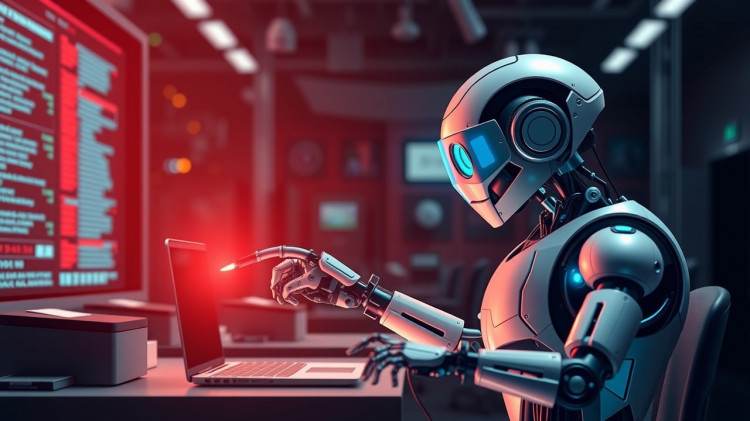
The AI doom campaign has reached its peak this year. There is hardly a week that passes without reports (all coming from within the AI companies themselves) that a bot has gone on a rogue hacking rampage, that CEOs, such as Dario Amodei of Anthropic, have supported a slowdown in AI development, or that a new model cannot be released because it poses significant cybersecurity risks (it is then released shortly after anyway). As a result, the three high-stakes AI-related IPOsSpaceX in June, Anthropic in October, and OpenAI sometime next yearhave created the exact kind of crazy environment one would want to surround them.
Who gains from doom-trolling AI?
Calls for regulation from the AI industry have a "regulatory capture" vibe to them. For new businesses, government red tape is more onerous than for large, well-established firms. AI leaders may be able to stifle competition with the aid of new safety regulations. Amodei of Anthropic has long been suspected of wanting laws that would essentially bar his primary rival, less expensive, open-source, frequently Chinese AI, from entering major Western nations. Ban them if you can't defeat them.
Calls for a slowdown might also be an attempt to hide the fact that the AI arms race is getting too costly. Although OpenAI is expected to spend £45 billion this year alone on training and inference (the cost of operating AI), the effectiveness of new models is approaching diminishing returns. That isn't the best environment for listing a growing business. Why not politely inform the media that you have decided to slow down development due to your deep love for humanity, rather than breaking the bad news to investors and depressing the valuation?
Avoid falling for the hype.
For regular investors, what does all of this mean? First of all, avoid falling for the tech hype machine. Avoid this year's large, ostentatious initial public offerings (IPOs), which are a crowded market. Second, diversify a lot. Keep searching for the kinds of understudied investment topics that we go into great detail about. Lastly, maintain your composure. Even though it's impossible to predict how long the current AI fever will last or how much damage it will cause when it breaks, you can at least find some peace of mind by putting an end to the never-ending chatter of doom. In some hypothetical future, AI might actually kill us all. However, for the time being, the hype surrounding AI marketing poses a serious threat to our mental health as a society.




Leave a comment on: Anthropic's claims of an AI apocalypse should be disregarded by investors