

As semiconductor companies report record profits, chip stocks are declining
Is demand for AI peaking?
The most valuable manufactured product in the world is semiconductors. More calculations can be completed in a second by these minuscule, highly engineered silicon pieces than in 30,000 years by a single person. A semiconductor boom for all time has occurred this year. In the last 12 months, the US PHLX chip index has almost doubled. When large US tech companies announced plans to spend almost £1 trillion on AI data centers next year, investors followed the money to chip stocks that supply AI hardware.
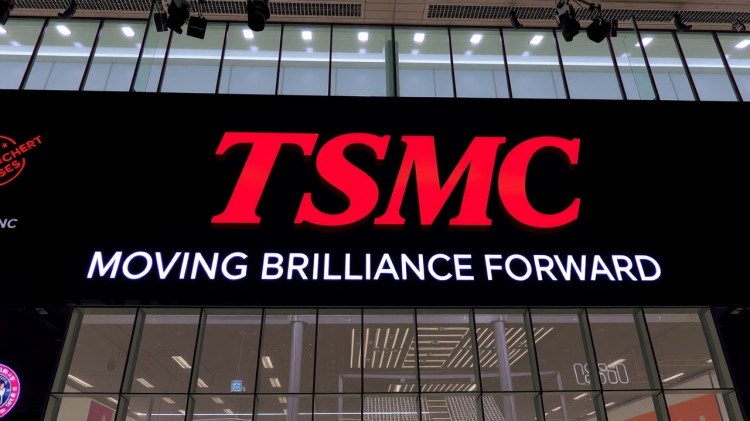
There is a highly concentrated global supply chain for semiconductors. The majority of profits are taken by a small number of manufacturers and designers, including Taiwan's TSMC, South Korea's Samsung and SK Hynix, and America's Nvidia. However, expectations have outpaced reality. SK Hynix announced a 557 percent increase in operating profit this week, with margins exceeding 80 percent. Investors in Korea were still not satisfied with that Midas-like profitability, which caused the shares to plummet 19%. On Tuesday, the Korean Kospi fell 11%, and on Wednesday, it fell an additional 6%. According to Eva Roytburg of Fortune, the Nasdaq 100 technology index in the United States has dropped 9.7 percent from its peak.
Talk of fresh competition from China, where chipmaker CXMT went public on Monday, was the direct cause. These concerns are probably unfounded because China still lacks access to the state-of-the-art extreme ultraviolet lithography equipment needed to produce the best chips in the world. However, the chip stock selloff isn't unreasonable; for months, the "going trade" has been to "buy the semis"companies like Samsung that are making money off of Silicon Valley's extravaganceand sell the hyperscalers, like Microsoft and Meta, that seem to be overspending on data centers. Investors are now aware of the clear contradiction: if Big Tech's AI expenditures are as wasteful as they believe, then eventually that spending will be reduced, which would also be disastrous for chip stocks.
According to Moses Sternstein for a16Z, the semiconductor boom is founded on very real profits. Falling valuations have coincided with rising earnings, an uncommon sign of a purported bubble. Micron is trading on just six times forward earnings, despite the fact that its earnings are expected to increase by 60% annually. Compared to the five-year average of 23.8, the broader US semiconductor complex trades at roughly 21 times forward earnings.
The semiconductor market is notoriously cyclical.
In one sense, semiconductors are inexpensive, but the market is notoriously cyclical. When demand returned to normal in 2023, a severe shortage that had occurred during the pandemic turned into a huge bust. This time, "investors are wondering if semis can keep it up." Dynamic random-access memory (DRAM), which is used for computer memory, is severely limited this year, as laptop buyers will be well aware.
According to Song Jung-a and Michael Acton in the Financial Times, Samsung and SK Hynix intend to invest up to £1.5 trillion in order to double Korea's DRAM output in five years. However, there is a chance that the chip cycle will reverse. There might be a glut as early as 2028 if Chinese supply increases or AI demand falls short.






Leave a comment on: Despite record profits, semiconductor stocks decline