
The El Ni�oo this year appears to be especially powerful
Prices for agricultural commodities have previously skyrocketed due to the weather system.
Geopolitics caused a disruption in the first half of 2026. Could the weather play a significant role in the second half as we sweat through a hot summer?
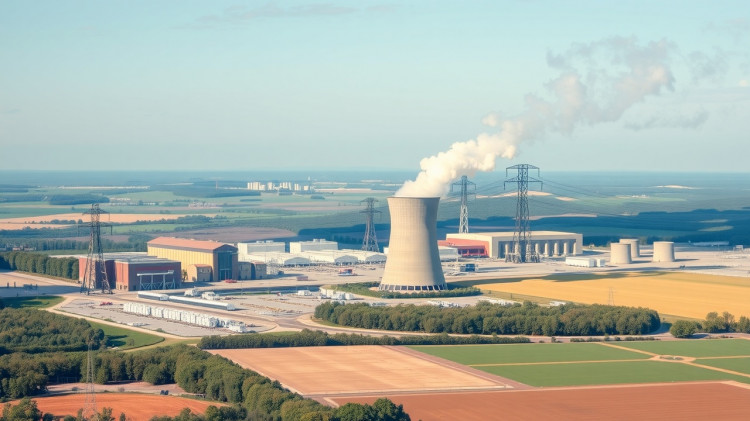
Heatwaves in Europe have already had observable effects on the economy. Lower water levels have forced barges carrying cargo along the Rhine to reduce their capacity, and rivers were too warm to cool reactors, forcing France to reduce its nuclear power output.
Furthermore, these effects may be made worse by the impending El Nio, a weather pattern marked by rising sea temperatures, especially in the equatorial Pacific Ocean.
According to Sophie Chardon, head of sustainable investments at private bank Lombard Odier, "the macroeconomic impacts of El Nio are hard to both quantify and predict but affect everything from crop production and food prices to hydroelectric power generation and demand," in a study note.
Watch the entire video here. "A warming world is thus raising long-term physical climate risks, with implications for infrastructure and security in sectors from power and mobility to natural resources and food production," Chardon continued.
What might happen to your finances and investments as a result of global warming?
There may be an increase in commodities.
An increase in commodity prices, particularly for some agricultural products, could be one consequence of an El Nio weather system.
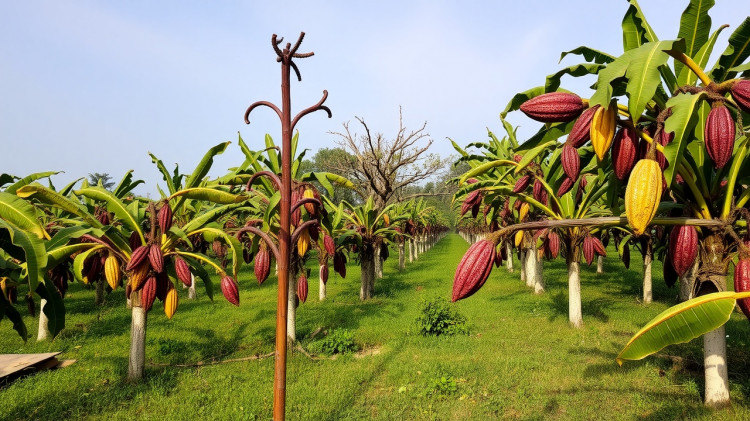
The last significant El Nio occurred in 2023-2024. Aneeka Gupta, director of macroeconomic research at asset manager WisdomTree, stated that cocoa increased by 250%. "The price of sugar reached its highest level in more than ten years. The borders of rice exporters are closed."
Even though those events seemed dramatic at the time, Gupta warns that given the effects of the US-Iran war and the fertilizer shortage, the consequences could be even more severe this time. The Middle East provides more than a fifth of the world's urea, a crucial component of agricultural fertilizer, so the conflict has also affected its supply.
Since the last significant El Nio, global baseline temperatures have increased, which could make this one more severe.
Additionally, the National Oceanic and Atmospheric Administration (NOAA) of the United States is forecasting a 63 percent probability of a powerful El Nio this year.
"On its own, that would already be worth watching," Gupta stated. "This event comes at a time of unusual fragility for global food production, on top of the disruption caused by the Strait of Hormuz, which has reduced fertilizer flows from the Middle East at the exact moment farmers need to be securing inputs."
The combination may have a particularly significant effect on wheat, corn, rice, and soybeans, according to Lombard Odiers Chardon, "with the risk of farming and power interruptions in many key emerging markets."
Food prices may rise as a result, particularly for items based on the goods most severely affected by El Nio.
"Soft commodities have consistently performed the best during El Nio episodes," Gupta stated. "In 2022-2023, three of the five soft commoditiescotton, coffee, and sugarreached multi-year highs, and in late 2024, orange juice and cocoa hit record highs. Over the previous 55 years, every strong El Nio has decreased global cocoa production."
A coffee plantation on the island of Kauai at dawn.
One of the goods whose prices have increased during past El Nio events is coffee.
How can you consider climate change when making investments?
Some of the economic effects that El Nio and climate change are likely to have will affect your finances in ways that are beyond your control, like possibly higher food prices. Increased food costs may have an impact on inflation.
However, there are ways to invest so that you can at least profit from some of the solutions and responses to climate change.
For instance, you could invest in funds that hold renewable energy suppliers or in energy transition commodities, which are expected to see a spike in demand as governments realign their power supply to cut greenhouse gas emissions. Foresight Environmental Infrastructure (LON:FGEN), an investment trust, is a prime example.
Chardon discusses climate adaptation as a topic for investments.
She stated, "Adaptations to improve the resilience of our economy's infrastructure can enhance productivity, boost resource efficiency, and create value, with opportunities in public and private markets."
Water is one of this type of investment's main pillars. Droughts and floods, which can cause just as much disruption to water suppliers as droughts, are becoming more common due to climate change. By 2030, some experts predict that the world's water supply will be up to 40% less than its demand.
Pictet Water, the Regnan Sustainable Water and Waste Fund, and Allianz Global Water are funds that demonstrate this trend.
The WisdomTree Agriculture ETC (LON:AGAP) is an exchange-traded commodity (like an exchange-traded fund but for commodities) that tracks a basket of agricultural futures contracts, such as those for soybeans, coffee, sugar, cotton, and cocoa, for exposure to the soft commodities that might see price increases after El Nio.




Leave a comment on: What possible effects might climate change and El Ni�oo have on your investments?